Checking Web Copy for a Research-Only Blend, Claim by Claim
A cautious last line cannot rescue a headline that promises too much. Here is a claim-by-claim check for any page you write about a research blend.
If you write or edit pages about a research blend, whether that is a product page, a shortlist note or a newsletter blurb, remember that readers take in the whole page. They read the headline, skim the captions and click the buttons. Very few reach the small print, and a cautious final line cannot undo a headline that promises more than the evidence supports.
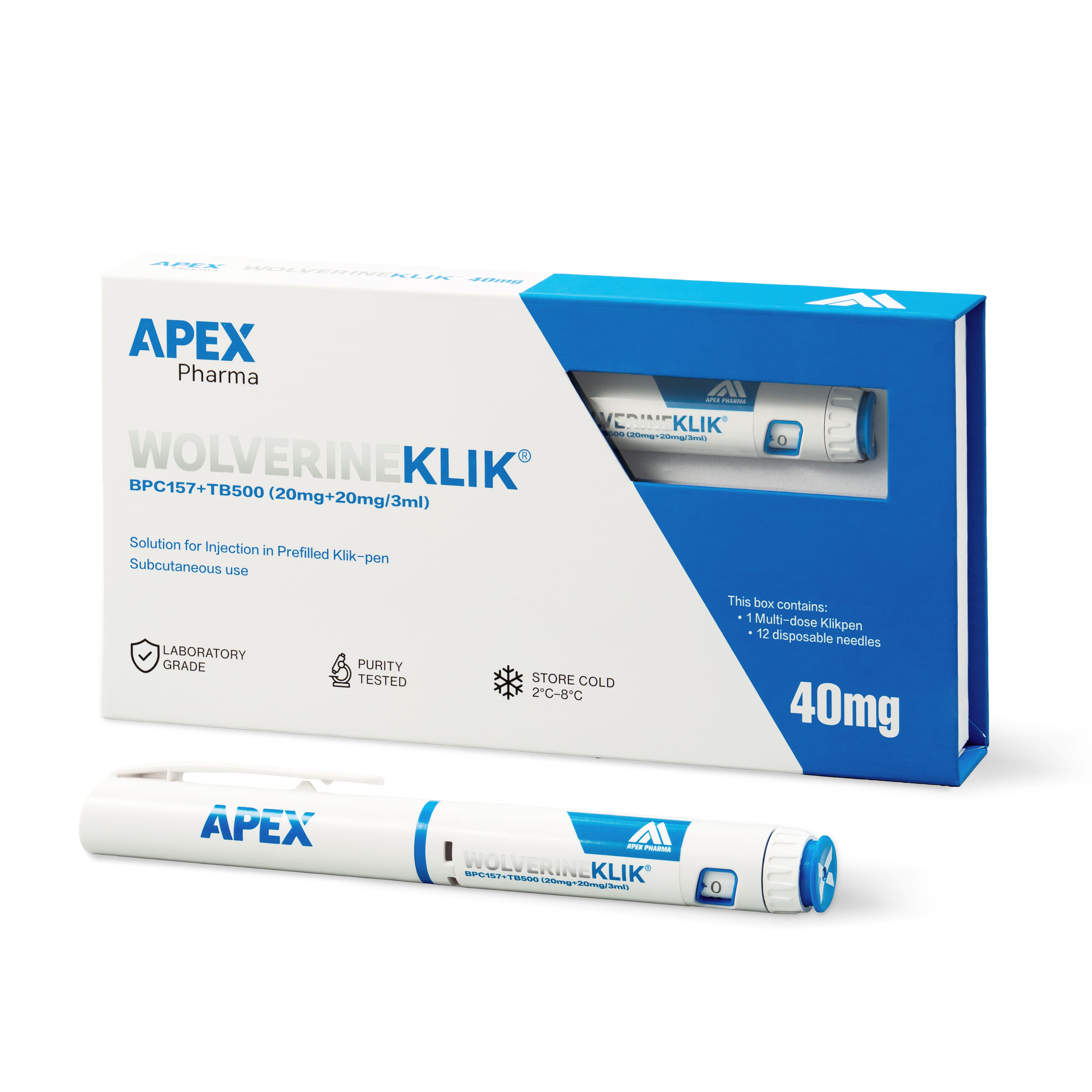
This is a practical, claim-by-claim check for copy about a blend such as the Wolverine blend, which combines BPC-157 and TB-500 in one pen. It will not make your copy more persuasive. It will make it accurate, and consistent from top to bottom.
Read it as a stranger would
Take the headline, first paragraph, image caption, button text and last line, and read only those. Then ask what a stranger would think the product does.
If your honest answer includes an outcome the page never evidences, fix the sentence itself. Softening the footer leaves the first impression intact. The correction has to change what the reader is invited to believe, not add a counterweight somewhere they will not look.
Tie every statement to a source
Each sentence about the product should belong in one of three buckets:
- The listing or label. For Wolverine, that is BPC-157 20mg and TB-500 20mg in one 3ml pen (40mg in total), with the label name WOLVERINEKLIK.
- The paperwork. A Certificate of Analysis, where one is published for the product, and the batch number it relates to.
- Your own reasoning. Why the material might suit a project, clearly written as an opinion or an assumption.
Anything that sits in none of the three has to go. That includes quiet extras such as "premium", "pharmaceutical-grade" or "guaranteed pure", which sound like facts but point at no document.
| Weak line | Why it fails | Sourced alternative |
|---|---|---|
| "The complete lab solution" | Says nothing checkable | "Supplied as one 3ml pen containing both peptides" |
| "Independently verified quality" | No report named | "A report is published where available; match the batch number on your label" |
| "Our most trusted blend" | Opinion with no basis | Describe the contents and leave the judgement to the reader |
Check the small places and the pasted text
Claims hide in the places editors skim past: image captions, alt text, link anchors, meta descriptions and email subject lines. An anchor that reads "get the best results blend" makes a promise even if the paragraph around it is careful. A product link should describe the item, not predict what happens when it is used.
The same goes for scientific references. A paper about one individual material is not a study of a branded combination, so do not let a sentence blur the two.
Pasted text needs a second look in its new home. A paragraph lifted from a product page into a newsletter often loses the qualifier that made it accurate, because layout cuts trim the sentence saying what the evidence covers first. After any copy-and-paste, check that the shortened version still states the same bounded claim.
Keep the supply wording short and plain
Everything CLOVA lists is supplied for laboratory research use only, and that statement belongs near the product, said once and plainly. If readers may be unfamiliar with it, link to a page that explains what the label means. The wording describes how a product is supplied. It does not turn an unsupported claim into a supported one, and it is not a clearance for every activity. If your organisation has a regulatory question, put it to the people who deal with compliance.
A pre-publish checklist
- Does the headline say only what the listing, label or paperwork shows?
- Does the last paragraph answer the same question as the first, rather than changing purpose at the end?
- Are product names and amounts copied exactly from the listing and label?
- Is every mention of testing tied to a named report and batch, or removed?
- Have captions, alt text, anchors and subject lines been read as claims?
- Is your own reasoning marked as yours?
- Would the page still read accurately if only its first three lines were shown?
Frequently asked questions
Is one line of supply wording at the bottom enough?
No. It describes how the product is supplied, but it cannot repair a sentence that implies something the evidence does not show. Correct the sentence.
Can I quote a figure from a Certificate of Analysis?
Quote exactly what the report shows and say which batch it covers. Do not stretch one batch's result to every batch. Reports sit on the COAs page and on product pages where one is available.
What if the listing and the label disagree?
Raise it with the supplier before you publish. Until it is resolved, copy only what both sources agree on.