GHK-Cu vs Copper Tripeptide-1 and What a Shared Name Proves
Two names, one compound identity. What that settles, what it leaves open, and how to note it before you compare copper peptide listings.

If you've seen GHK-Cu on one document and copper tripeptide-1 on another, you're looking at two names for the same compound identity. Public chemical reference databases such as PubChem list them as synonyms, along with prezatide copper. So as far as naming goes, the GHK-Cu vs copper tripeptide-1 question has a short answer.
What the shared name doesn't tell you is anything about a particular product: its amount, its format, its batch or what an analytical report found. Those are separate questions, and they still need answering for the listing you're actually considering. Keeping the two kinds of question apart makes your enquiries sharper and your records more honest.
Where the different names come from
GHK is shorthand for a three-amino-acid sequence, glycyl-histidyl-lysine, written with one-letter codes. The "-Cu" shows the peptide is complexed with copper. Copper tripeptide-1 comes from an ingredient-naming convention used outside the laboratory, while prezatide copper is a further name you'll find in reference records.
Different naming systems, same subject. That's useful to know when you're reading labels, reports and listings that weren't all written by the same people or for the same audience.
What a synonym match does and does not settle
A synonym record helps you interpret terminology. It confirms that two terms refer to the same chemical identity. It does not:
- confirm what is in a specific pen or batch
- establish purity or content
- describe the format a product is supplied in
- show that two products carrying either name are interchangeable
So if one document says GHK-Cu and another says copper tripeptide-1, the naming question is resolved. Whether the two documents describe the same product, or the same batch, is a different question you still need to ask.
How the name appears across CLOVA listings
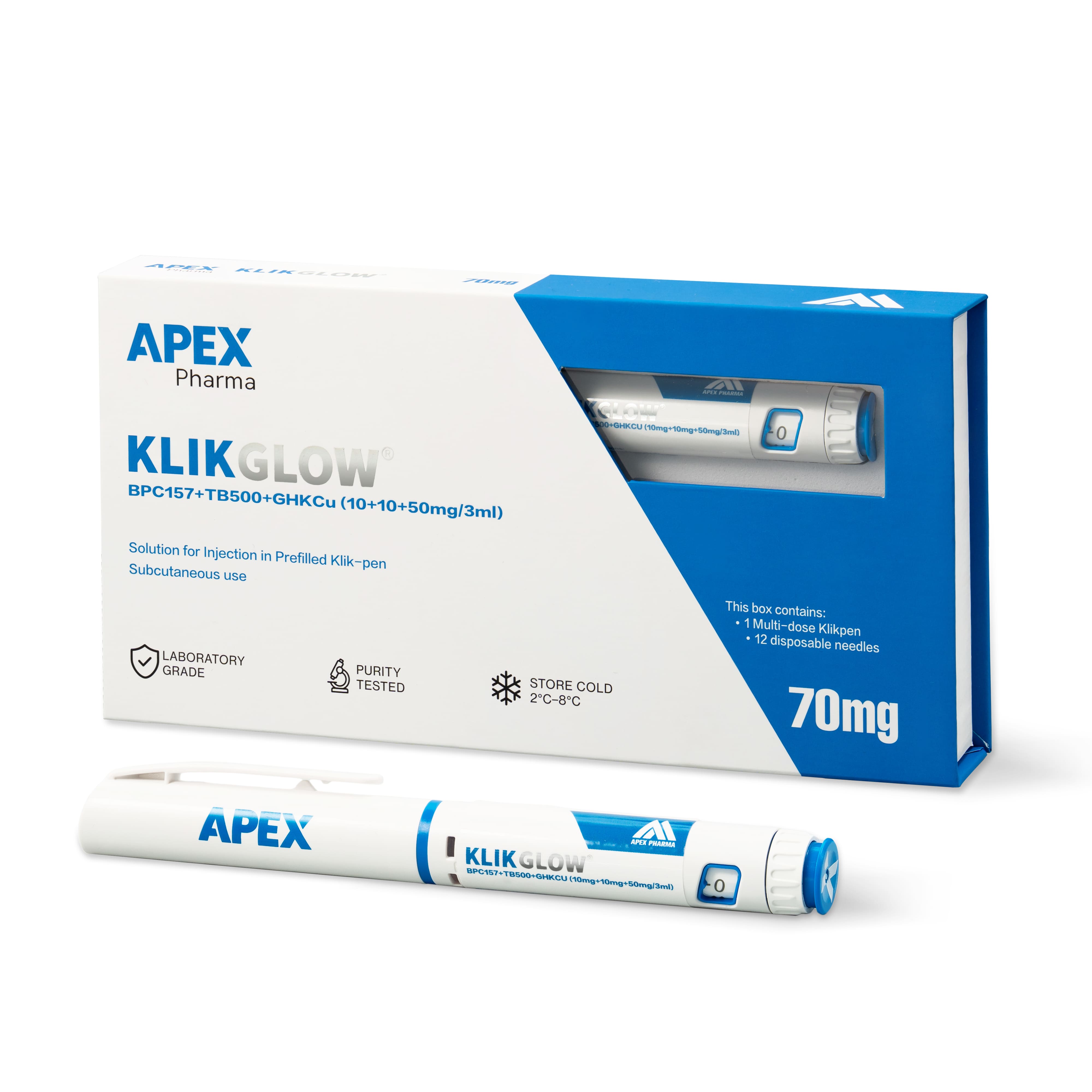
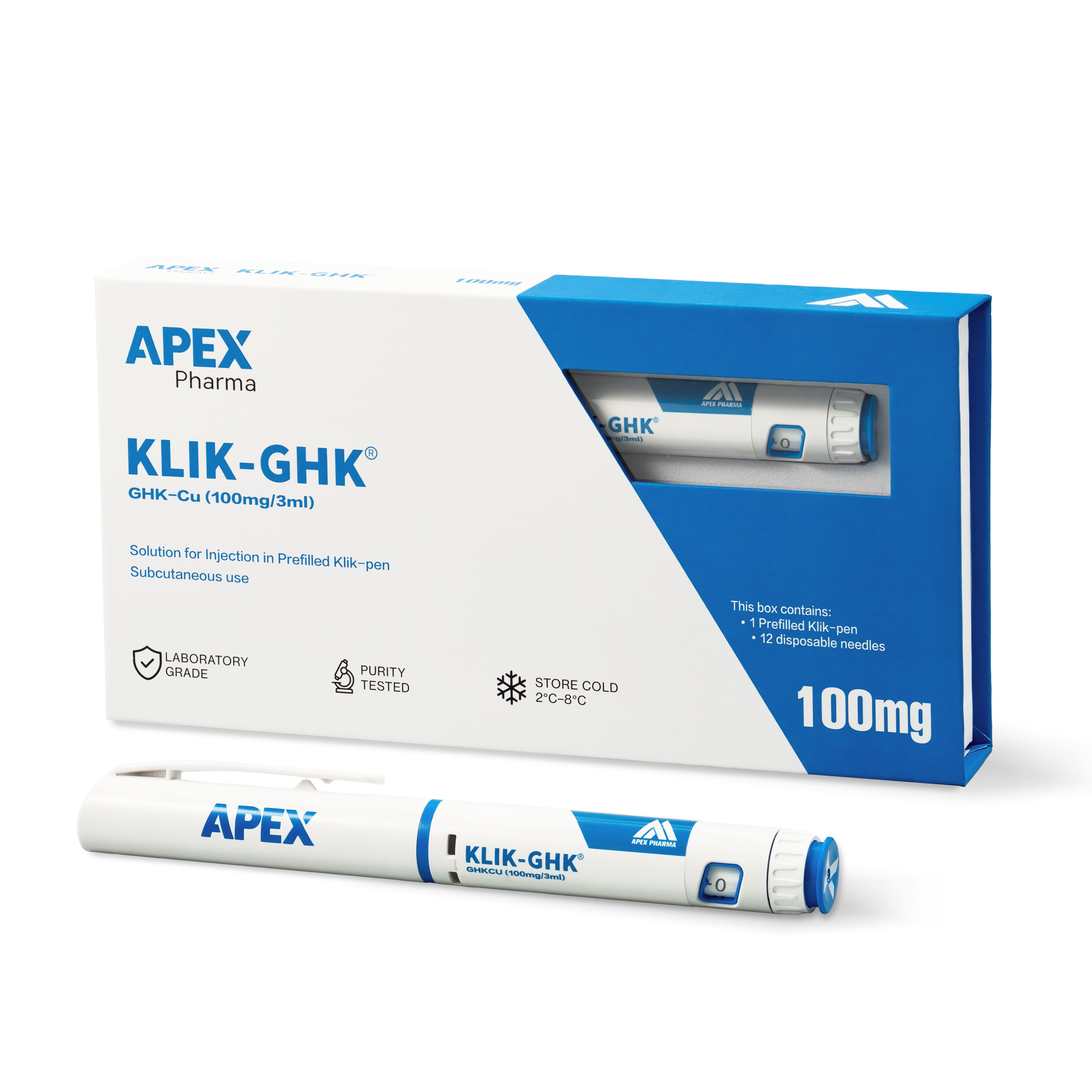
Within the CLOVA catalogue, GHK-Cu appears in two quite different products. The GHK-Cu listing, labelled KLIK-GHK, is a standalone product. The GLOW blend, labelled KLIKGLOW, combines GHK-Cu 50mg with BPC-157 10mg and TB-500 10mg in one 3ml pen.
Both use the same component name, and both are accurately described as containing GHK-Cu. They're still different proposals. Resolving a naming question doesn't make one a substitute for the other.
Building a terminology note for your file
A short note saves the next reader from repeating the same lookup. Record:
- Each name you encountered and exactly where it appeared: listing, label or report.
- The reference you used to check the relationship, and the date you checked it.
- Your conclusion on naming, stated narrowly, for example "GHK-Cu and copper tripeptide-1 refer to the same compound identity".
- Any product question still open, such as which batch a report relates to.
- Who owns the next step.
Keeping points three and four apart is the whole value of the note. One records a terminology fact; the other records what you still don't know about the material on offer.
Keep names out of claims about behaviour
A difference in preferred wording isn't evidence that one product is better research material. Equally, related naming doesn't prove that every product bearing those terms behaves identically. Any statement about what a material does needs its own support for its actual subject.
That matters for copper peptides in particular, because the alternative names travel with plenty of marketing language from other contexts. A laboratory listing supplied for research use only doesn't pick up purposes or instructions from wherever else the name happens to be used.
Frequently asked questions
Is copper tripeptide-1 a different peptide from GHK-Cu?
No. They are alternative names for the same copper complex of the GHK tripeptide. Which name you see usually depends on who wrote the document and which naming convention they follow.
Will a Certificate of Analysis use the same name as the listing?
Not necessarily, as a report might use any accepted synonym. What matters more is that the report's subject and batch number match the label on the product you have, which you can check on the Certificates of Analysis page where a report is available.
Does knowing the synonym help when comparing two GHK-Cu products?
It removes one source of confusion, but only that. You still need to compare stated amounts, formats and documentation for each listing on its own terms.