Lab Tested or Verified? What Those Words Answer on a Blend Listing
Phrases like lab tested, verified and high purity sound reassuring but answer very little. Sort them by what they actually tell you about a three-peptide blend.
Read enough blend listings and a pattern appears. "Lab tested." "Verified." "High purity." "Premium quality." They look like answers, but most are descriptions of a feeling, not of a measurement. When you are checking BPC-157 TB-500 GHK-Cu blend purity, the wording on the page is only the starting point.
This article takes the phrases you are most likely to meet and sorts them by the question they actually answer: is it the right material (identity), or how clean is it (purity)? Often the honest answer is "neither", and knowing that saves a wasted purchase.
Two questions that get blurred
Identity asks whether the material is what it is said to be. Purity asks, of what was measured, how much is the named material and how much is something else. A report might speak to one, both or neither.
Quality copy tends to blur the two into a single reassurance. That is fine for a brochure, but it leaves your review with nothing to check. Separating the questions lets you ask for precisely the missing piece.
Five phrases and what each leaves open
- "Lab tested." Says a test took place. It doesn't say which test, on what sample, from which batch or what was found. Identity and purity both remain open.
- "High purity." A purity claim with no figure and no source. Ask what was measured, what the result was and which batch it belongs to.
- "Premium quality." Answers neither question. It is a marketing judgement.
- "Verified." Verified by whom, and verifying what? Without that, it is a decoration.
- "COA available." The most useful of the five, but only once you read the document. The words say a report exists, not what it covers.
Where a CLOVA product has a published report, you will find it on the Certificates of Analysis page or on the product page. Not every product or batch has one, so check the listing you are actually buying instead of assuming.
The extra wrinkle in a three-peptide pen
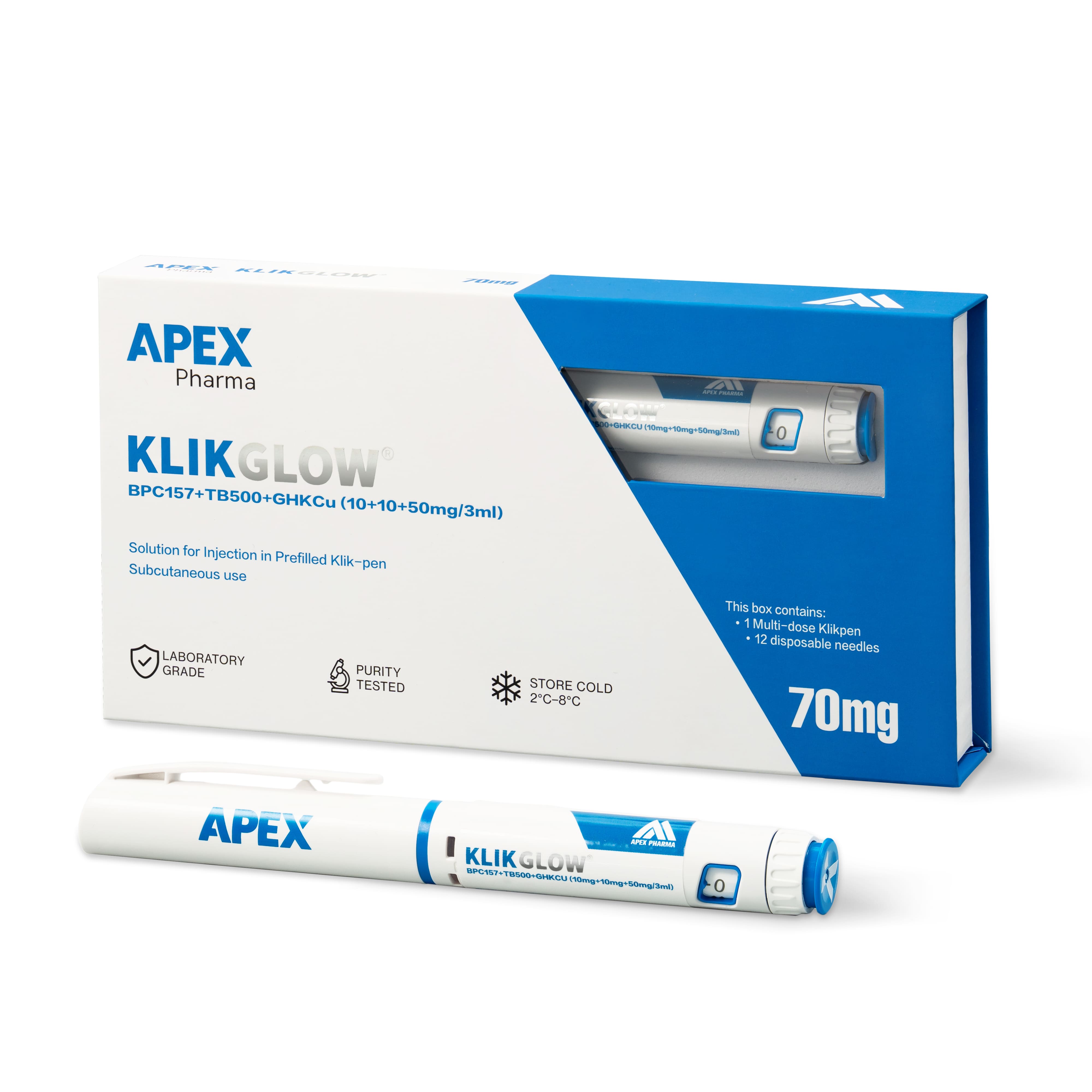
The GLOW blend puts three materials in one 3ml pen: BPC-157 10mg, TB-500 10mg and GHK-Cu 50mg, 70mg in total. That raises questions a single-peptide listing doesn't.
When you read a report for a blend, check whether it names each of the three components or only some of them. Check whether a purity figure refers to one component or to the whole sample. If the report is unclear on either point, treat that part of the question as open. Don't assume that a statement about one component covers the other two.
A checklist before you accept a purity statement
Use these checks on any wording or document you are about to rely on:
- Does the statement name the product, and does the product match the pen you ordered?
- Is there a batch number, and does it match the label on your pen?
- Does it say what was measured, not just that something was?
- Does it cover all three components, or is the scope stated?
- Is it dated, and does the date make sense for your batch?
- Can you tell whether it speaks to identity, purity or both?
A "no" to any of these doesn't prove a problem. It simply means that part of your question isn't yet answered, and you should record it that way.
Who interprets the answer
Purchasing staff can collect documents and put them in the file. Deciding whether a document answers the research question is a separate job, and it belongs with someone who can read the report in context. An attachment landing in a folder is not the same as an assessment.
Where a report already exists but hasn't been read by the right person, the next step is internal. Another request to the supplier for "the test results" will only bring the same document back. The blend is supplied for laboratory research use only, as our page on what that wording means explains, so the question to settle is always whether the documentation fits your project.
Frequently asked questions
If a listing says "high purity", is that enough?
On its own, no. A purity claim without a figure, a method description and a batch reference gives you nothing to check. Ask what was measured and for which batch, and read the report where one is published.
Does a report for one peptide cover the whole GLOW pen?
Not necessarily. The pen holds three components, so look at which materials the report names. If it covers only some, the others remain unconfirmed until you see evidence for them.
What should I write in my notes if I can't tell?
Write that the information is unavailable for that item, not that the result was good or bad. Missing information and an adverse finding are different things, and your record should keep them apart.