Confirmed or Estimated? Labelling Delivery Dates for a Research Blend
A plan that says the pen arrives on a given day often rests on a guess. Label each date as confirmed, estimated or assumed, and plan the receiving end too.

A project plan that says "pen arrives Thursday" looks like a fact. Often it started life as a hopeful guess, and by the time the plan is passed around nobody remembers which. When you plan research blend UK delivery, that gap matters, because other people book instruments, staff and fridge space around the date.
The fix is a labelling habit. Mark every date in your schedule as confirmed, estimated or assumed, and plan the receiving end with the same care as the ordering end. This article uses the GLOW blend as the working example.
Three labels for every date
Give each delivery-related date one of these tags:
- Confirmed. The supplier has stated it for your order: a dispatch notice, a tracking update, a delivery confirmation.
- Estimated. Based on the supplier's published delivery information but not promised for your particular order.
- Assumed. Your own expectation, such as "it should be here by the time the assay starts".
The point is not bureaucracy. When someone asks whether they can rely on the date, the answer is already written next to it. If the plan is handed to a colleague, the tags travel with it.
What the published information can and cannot confirm
CLOVA publishes a dispatch rule: orders paid before 1pm UK time Monday to Friday are dispatched the same working day. Parcels go by tracked delivery in discreet, unbranded outer packaging, and the products ship cold.
That tells you when an order is due to leave. It does not tell you when it will arrive, because arrival depends on the delivery service involved. Treat the dispatch date as an estimate until the dispatch notice confirms it, and treat any arrival date as an estimate until tracking says otherwise. The delivery information page is the place to read the current wording before you write anything into a plan.
Plan the receiving end as well
A schedule that stops at "delivered" leaves the most practical questions unanswered. Before you order, check that:
- Whoever handles deliveries knows an unbranded parcel is expected, and who it is for.
- There is space at 2–8°C ready, as set out in the storage guide. The pens should not be frozen and should be kept away from light.
- One named person will log the receipt on the day: date, time, packaging condition, label name and batch number.
- You know what happens if the parcel arrives when nobody is in.
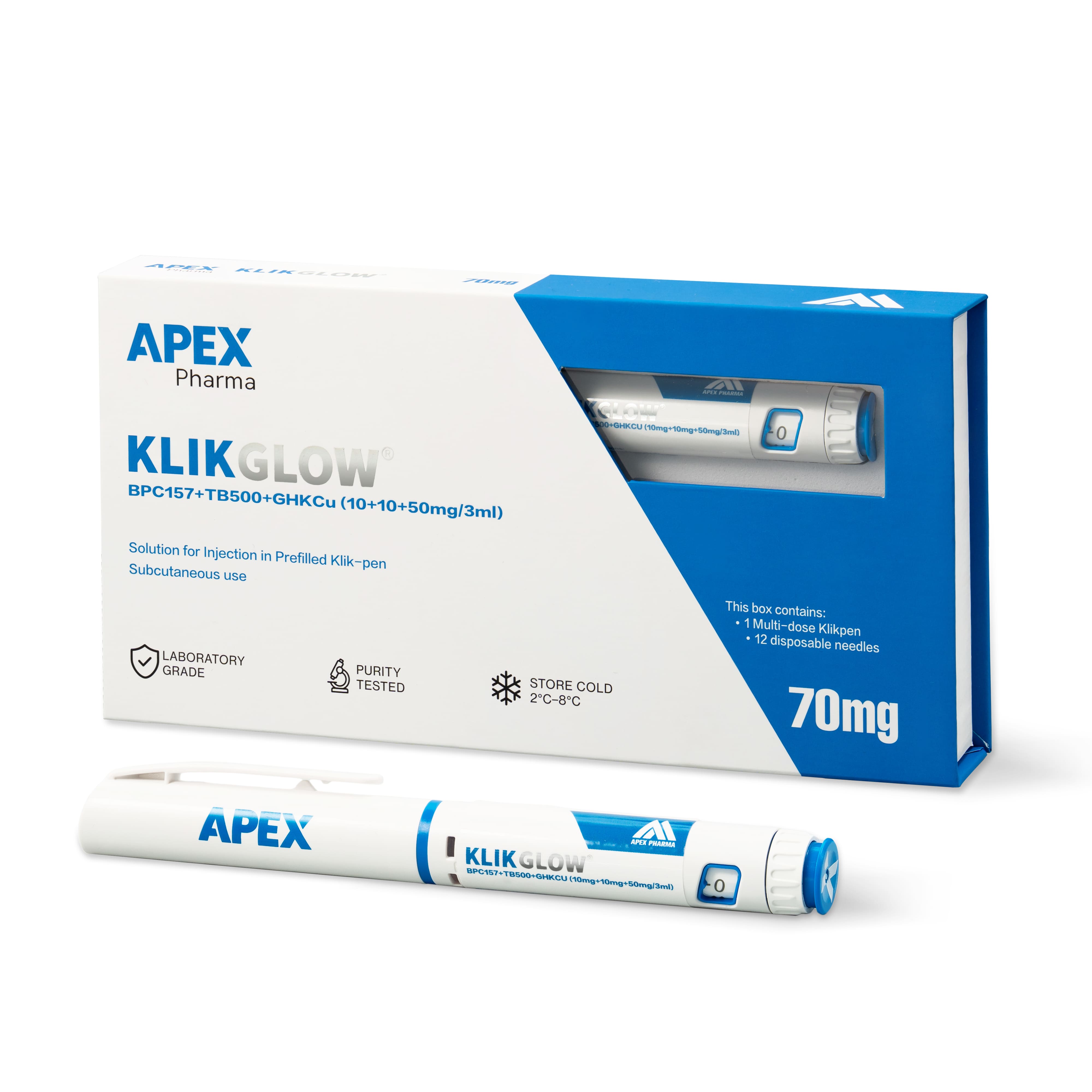
- Pen details are to hand for the goods-in check. For the GLOW blend that means label name KLIKGLOW, a 3ml pen, BPC-157 10mg, TB-500 10mg and GHK-Cu 50mg, 70mg in total.
If any of these answers is "not sure", it belongs in the plan as an open item with an owner.
Keep timing separate from acceptance
An on-time parcel is not the same as an acceptable one. Arrival at a convenient moment says nothing about whether the material matches your requirement. At goods-in, check the label against your order and look for a report that carries the same batch number on the Certificates of Analysis page, noting that reports are published only where available. GLOW is supplied for laboratory research use only, so keep the batch record with the delivery record.
Asking a question that closes the gap
If your schedule depends on a date, check the delivery page first, then ask the supplier something specific. "When will it arrive?" invites a general answer. Compare it with this:
I plan to place the order on [day] before 1pm. Under the published delivery information, what is the expected dispatch and delivery window for a tracked order to [postcode area]? I will treat the reply as an estimate unless it is confirmed after dispatch.
Record the answer, who gave it and when. If it contains conditions, copy those into the plan as well, so a caveat is never lost in the retelling.
Frequently asked questions
When will my order arrive?
Orders paid before 1pm UK time Monday to Friday are dispatched the same working day. Arrival depends on the delivery service, and the delivery information page sets out what is published. Once the order has been dispatched, tracking gives you the best view of progress.
Should I add a buffer to my schedule?
It is sensible to, and the buffer should be labelled as an assumption. A visible buffer tells colleagues the date is not a promise, which is more honest than a precise-looking date with nothing behind it.
What should I do when the pen arrives?
Log the receipt, check the label and batch number against your order, and store the pen at 2–8°C, not frozen and away from light. The storage guide has the full wording.