What GLOW Peptide Purity Means for a Three-Peptide Blend
Asking how pure GLOW is bundles several questions into one. Split them apart before you order and you get answers you can actually use.
"How pure is it?" is usually the first quality question a buyer asks, and for a single peptide it's a reasonable place to start. For a blend, it's not quite the right question. GLOW peptide purity can mean several different things, and a single reassuring percentage may answer only one of them.
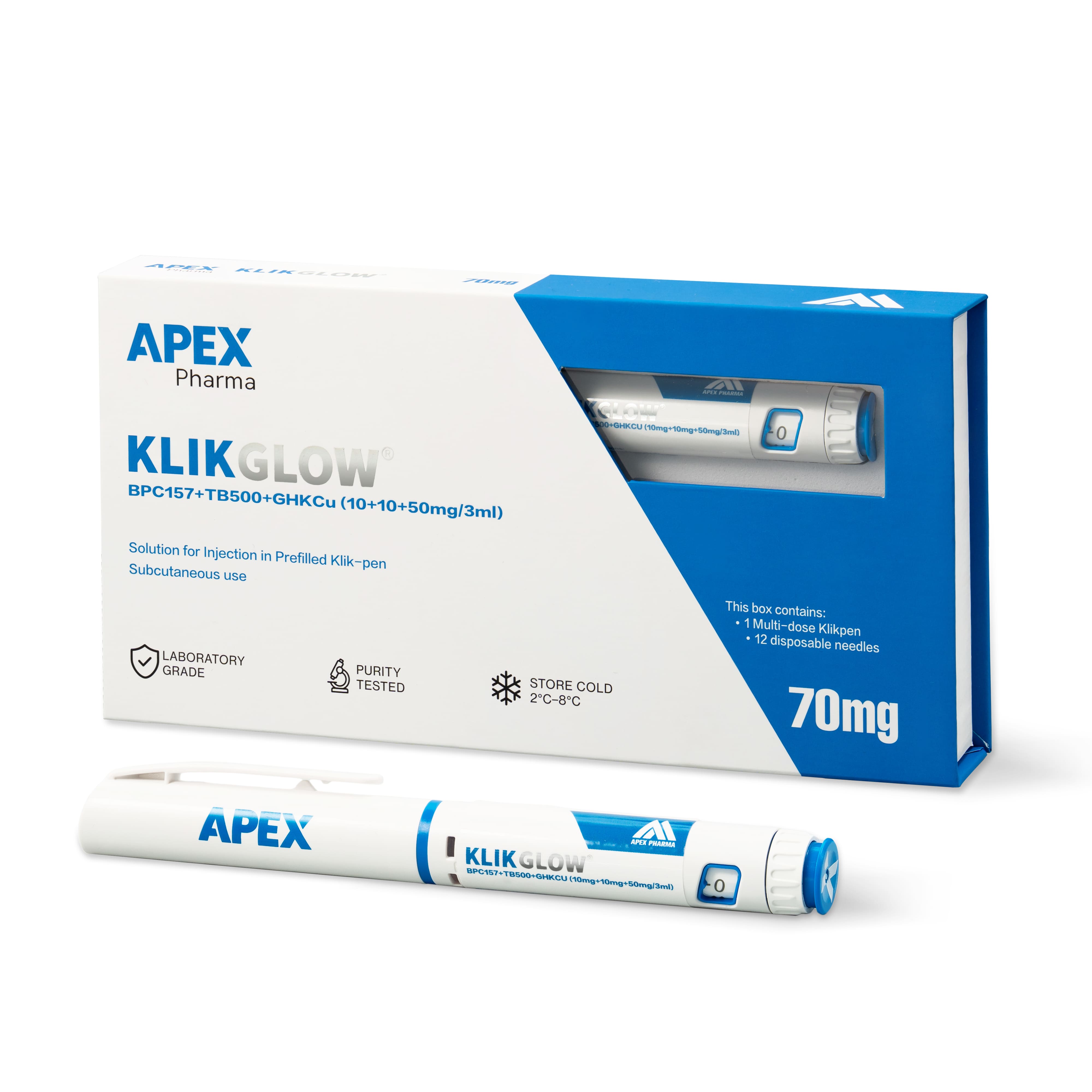
GLOW combines BPC-157 10mg, TB-500 10mg and GHK-Cu 50mg in one 3ml pen. That's three components, each of which can be asked about separately. Add questions about which batch a report covers and how the product has been kept, and "quality" turns out to be at least five questions.
Splitting them apart before you order makes each one easier to answer, and makes it obvious when one is still open.
Why one question becomes five
When people ask about quality, they usually mean some mix of the following. Each needs a different kind of answer:
- Identity. Is each expected component actually present? A report's identity findings address this.
- Content. How much of each component is there, compared with the stated 10mg, 10mg and 50mg? Measured content figures address this.
- Purity. What proportion of the sample is the expected material? A purity figure addresses this, for whatever the figure refers to.
- Applicability. Does the report relate to the batch you'd receive? The batch number on the report and on the label settles this.
- Handling. Has the product been stored and shipped as it should be since it was tested? Storage and delivery information addresses this.
A strong answer to one doesn't stand in for the others. A high purity figure says nothing about whether the report matches your batch, for example.
Why one purity figure can't speak for a whole blend
With three components, a single percentage raises an immediate question: a percentage of what? It might refer to one component, to each separately, or to something else in the report.
So when you see a headline figure for a blend, find out what it describes before comparing it with anything. Check the Certificates of Analysis page for a report on the relevant batch, where one is available, and note which components the purity findings cover. If the report gives results for some components and not others, write down which are missing.
Avoid averaging or combining figures to produce a single number for the blend. That creates a statistic the report never stated.
Where handling fits into quality
Laboratory results describe a sample at the time it was tested. What happens afterwards matters too, which is why storage and delivery belong on a quality checklist.
CLOVA ships products cold, in discreet unbranded outer packaging, by tracked delivery. Once received, GLOW should be stored at 2–8°C, kept away from light and not frozen. The storage guide covers this in more detail. Plan for receipt before the order arrives, so the pen goes straight into appropriate storage rather than waiting at a reception desk.
Turning the questions into one clear enquiry
Once you've separated the questions, you'll often find that most are already answered by the listing, the label and a published report. Whatever remains can go into one focused message. For example:
"We're considering the GLOW blend. The report we found covers batch [number]. Can you confirm whether current stock is from this batch, and whether results are available for all three components?"
That's far more useful than "Can you confirm the quality?", which invites a general reassurance rather than an answer.
Record the replies against the numbered questions above. If identity and content are answered but applicability isn't, your file should say exactly that, rather than marking the whole quality review as done.
GLOW is supplied for research use only, so these questions are about what the material is and how it has been handled. They aren't about what it does.
Frequently asked questions
Is a higher purity figure always the better offer?
Only if the figures describe the same thing. A percentage for one component isn't comparable with a percentage for a whole product or a different component. Check what each figure refers to before comparing sellers.
Does every GLOW batch have a published report?
No. CLOVA publishes Certificates of Analysis where a report is available for a batch. Match the batch number on your label to the report, and ask CLOVA if you can't find one.
Does storage really affect quality questions?
It's part of the picture. A report describes the material when it was tested, and correct storage at 2–8°C, away from light and unfrozen, is part of keeping the product in the condition it was supplied.