Standalone GHK-Cu or the GLOW Blend? Choosing the Right Listing
GHK-Cu appears in both listings, but they are different purchases. Here is how to pick the one that matches your brief before you send an enquiry.
Standalone GHK-Cu or the GLOW blend? Before you write to CLOVA, decide which listing your project needs, because the two are different purchases that happen to share an ingredient. Making that choice at the start saves you a round of clarifying emails later.
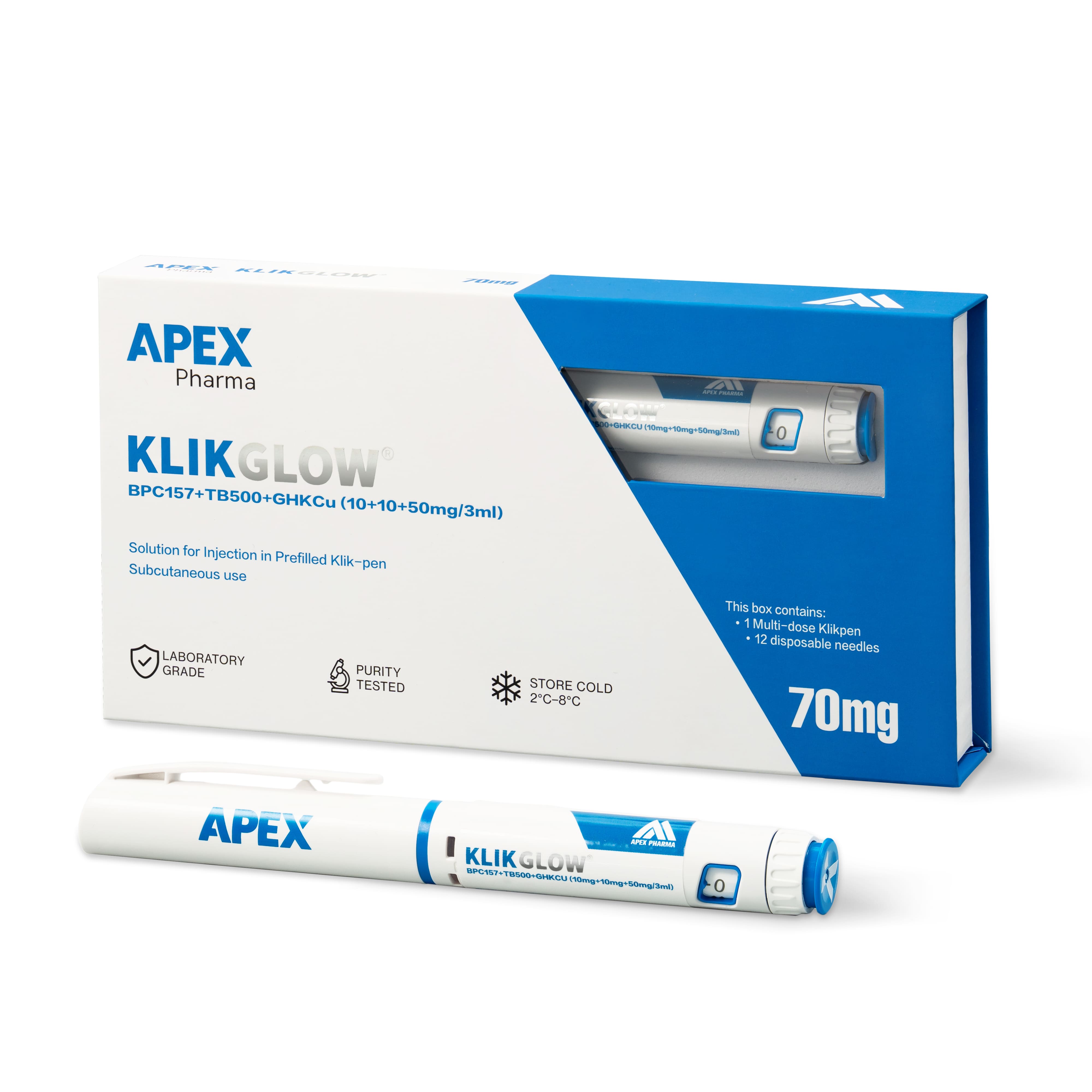
The GHK-Cu listing is a single-component product. GLOW is a 3ml pen containing BPC-157 10mg, TB-500 10mg and GHK-Cu 50mg, 70mg in total, with the label name KLIKGLOW. Read the pack size on the GHK-Cu page itself rather than assuming it matches the 50mg inside the pen.
One shared ingredient, two different subjects
A project written around GHK-Cu alone has one material as its subject. A project built around all three components has a combination as its subject. Neither listing is the "bigger" version of the other. They answer different questions, and a name that appears in both does not turn them into a ladder.
This matters most when someone else suggests a swap. "GLOW already includes GHK-Cu" is true, and it is also beside the point if the brief never mentions BPC-157 or TB-500.
Which listing fits your brief?
Match the listing to what the brief actually says:
- The brief names GHK-Cu and nothing else. The standalone listing matches it. GLOW would add two materials the brief does not mention.
- The brief names GHK-Cu, BPC-157 and TB-500 together. GLOW is the listing that names all three in one pen. Check whether the brief also cares about the amounts, since those are stated per component.
- The brief gives only a loose description. Go back to the researcher before anyone spends money. A brief that does not name the material precisely cannot be matched to either page.
If you land in the third group, resist the urge to pick the listing that sounds more complete. That is how a purchase ends up justified after the fact.
Read the page, not your memory of it
Before you enquire, copy these details from each listing into your notes, exactly as the page shows them:
- Product name and label name
- Pack size and the amount of each named component
- Whether a Certificate of Analysis is shown for that listing (reports sit on the Certificates of Analysis page and on product pages where available)
- The storage and delivery notes that apply to the pen or vial
Two listings that look similar from memory often differ in exactly these fields. Your notes also give a colleague something to check later without having to reconstruct what you saw.
A worked example
Suppose a researcher has spent a week reading around GHK-Cu and now wants stock for a project. A colleague points to GLOW and says it already contains GHK-Cu. The reading covers one material. GLOW has two others, and the researcher has not read about the three together.
The purchasing note should say so plainly. If the project really concerns the combination, more background reading is needed first. If it concerns GHK-Cu alone, the standalone listing is the match and GLOW adds items the brief never asked for. Either way, the call belongs to the researcher, not to whoever found the page first.
Writing the enquiry
A good enquiry names the exact listing, says what you need confirmed and states your stage: gathering background, or a defined proposal awaiting approval. It asks about the listing in front of you, not about "the best option". When you have chosen, you can look at delivery information to plan around dispatch and storage.
Both listings are supplied for laboratory research use only, so keep the wording of your enquiry in the language of the research brief and leave out any personal-use framing.
Frequently asked questions
Is GLOW just GHK-Cu with extras?
No. GLOW is a three-component blend in which GHK-Cu is one named ingredient. The two listings are separate products with their own labels and records, and one should not be used to describe the other.
What if my brief changes after I have shortlisted one listing?
Treat the new brief as a new comparison. If the original brief named GHK-Cu alone and the revised one names all three, you are now looking at a different proposal, and the earlier notes should be marked as background.
Does switching listings need fresh approval?
That depends on your organisation's procedures, which only you can check. As a rule of thumb, an approval given for one named product should not be assumed to cover a different one.