Is Your Wolverine Blend COA Genuine, and Is It About Your Pen?
A report can be real and still be about a different pen. Here is how to check a blend COA for authenticity and for relevance, and how to label each honestly.
A Wolverine blend COA raises two questions that tend to get squashed into one. Is the report genuine, meaning a laboratory really issued it? And is it about the pen you are about to buy? A document can pass the first test and still say very little about the second.
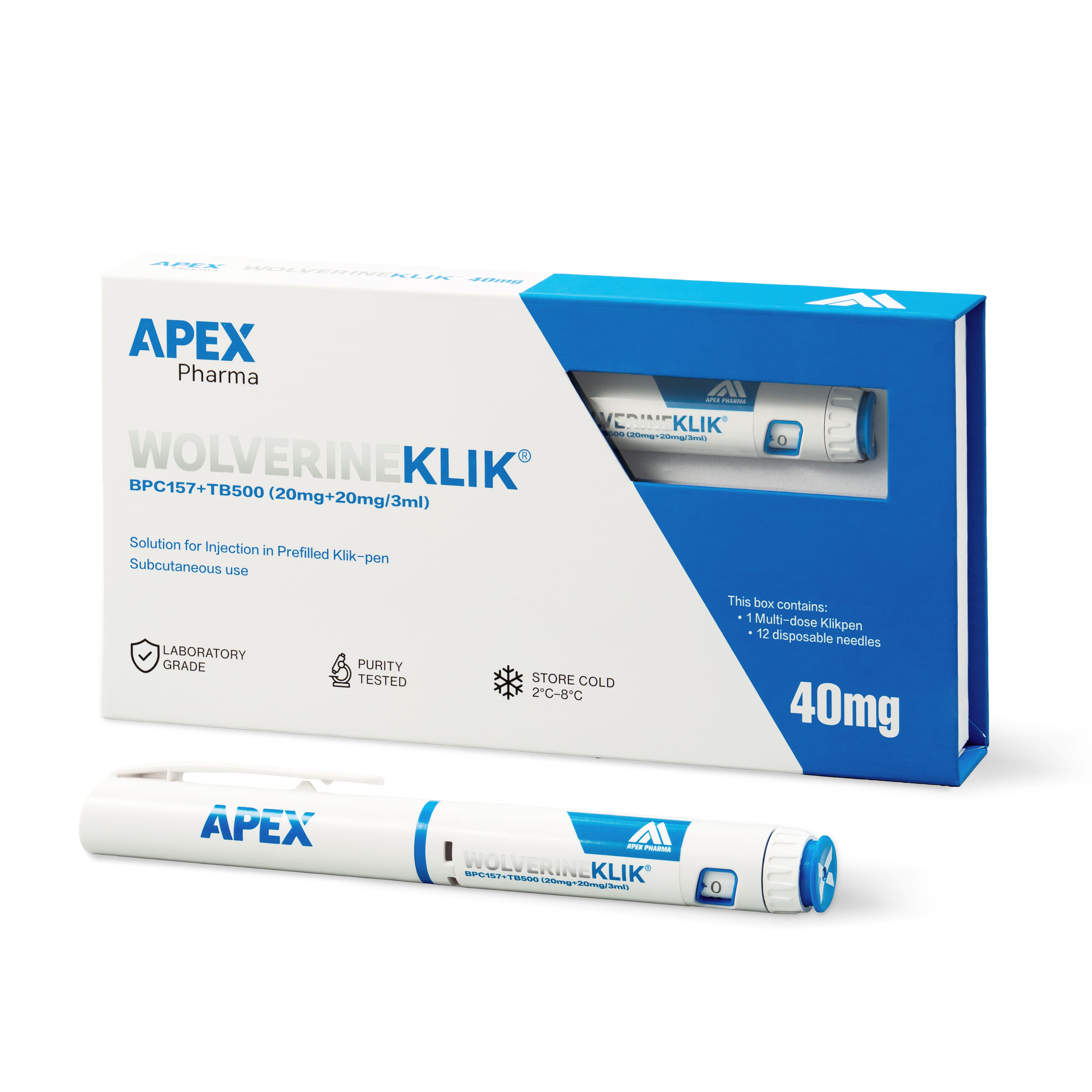
That distinction matters because the Wolverine pen is a specific item: BPC-157 20mg and TB-500 20mg in one 3ml pen, 40mg in total, labelled WOLVERINEKLIK. A report is only useful to your order if its sample description lines up with that. Reports appear on the Certificates of Analysis page and on product pages where one is available, so check each listing rather than assuming a report exists for every batch.
Get the whole report, not a cropped screenshot
Suppliers sometimes paste a slice of a report into an email. A crop can hide the laboratory name, the date, the sample description and the batch reference, which are exactly the details you need. Ask for the full document.
An incomplete image is a gap in your review, not proof that anything is wrong. Note it as a limitation and ask for a readable copy, without implying that the underlying report is false.
Save the original exactly as you received it. Keep your own commentary in a separate note, so nobody later mistakes your summary for the laboratory's wording.
Check one: is the report genuine?
Be honest about what you actually did. These are three different actions and they deserve three different labels:
- Received. Someone sent you a file or an image.
- Read. You opened it and the content is legible.
- Confirmed with the issuer. You used a verification route offered by the issuing laboratory, or the laboratory itself told you the report is theirs.
Only the last supports the word "authenticated". A polished PDF is not enough, and if you never contacted the issuer, your note should not suggest that you did. If no verification route is open to you, "not independently confirmed" is a perfectly respectable status.
Check two: does it describe this pen?
Authenticity says nothing about relevance, so run through the report's subject line by line against the Wolverine listing and the label on the pen in front of you:
- Sample name. Does it name both BPC-157 and TB-500, or only one?
- Stated amounts. Are they given per component, and do they match what the listing states?
- Batch number. Is the one on the report the same as the one on the label?
- Date and issuer. Are both present and readable?
A report for a single BPC-157 pen is not a report for the blend, even though one peptide name appears in both. A familiar ingredient list is a reason to ask a question, not a match. Resist the urge to pick the nearest-looking report just to fill in a form field. Ask the supplier to explain how the report relates to the item.
What an honest status note looks like
Imagine a supplier emails a cropped image of a blend report. A truthful entry in your file might read: "Image received. Full report requested. Not confirmed with issuer. Batch match to pen label not yet established."
It is dull, but it is accurate, and it tells the next person exactly what is still open. Compare that with a one-word "verified", which hides two separate questions. If either one is unresolved, the file is overstating its position.
Before you close the certificate field
- You hold the full report, not an excerpt.
- The original is saved unchanged, with a note of where it came from.
- Your note says whether the issuer confirmed it, and how.
- The sample description names both peptides.
- The batch number on the report matches the batch number on the label.
- Anything still unresolved is written down as open, not rounded up to a pass.
If what remains is interpreting the findings, hand that to a technical colleague rather than asking the supplier for the same paperwork again. Everything CLOVA lists is supplied for laboratory research use only, which is why a certificate review is a documentation exercise: it tells you what a record covers, not what anything is for.
Frequently asked questions
Can a COA be genuine and still not apply to my order?
Yes. A genuine report describes one defined sample. If that sample is a different product, strength or batch from the pen you ordered, the report is real but not relevant to your purchase.
Is a screenshot of a COA good enough?
It is a start, not a finish. A screenshot may leave out the issuer, date or batch reference, so ask for the full report and record the screenshot as received but incomplete.
Who should judge the analytical findings?
A technical reviewer in your organisation. Purchasing staff can gather and file the documents, but deciding what the results mean for a project is a different job.