When a BPC-157 Paper Is Cited on a Wolverine Blend Listing
A published paper describes what its authors studied, not the pen on a listing. Four checks for deciding whether a cited source really relates to the product.
Search for BPC-157 TB-500 blend research and you will find two very different kinds of page. Some are research papers. Others are product listings that mention a paper, or borrow its vocabulary, to make the product sound well supported.
A paper describes what its authors did in their own setting. A listing describes what a seller is offering. The two can sit in the same browser tab without having anything to do with each other, and a purchasing file is the wrong place to let them merge. This article gives you four checks for deciding whether a cited source really relates to the item you are buying.
Two kinds of page behind one search
Scientific literature is written to report a study: what material was used, in what model, with which measurements, and what the authors observed or proposed. A proposed mechanism in a paper is an explanation put forward in that context. It is a statement about the study, not a specification of any product.
A listing is a commercial document. It should tell you what is in the pen, in what amount, how it is packaged and what paperwork exists. When a listing starts to talk about mechanisms, it has moved from product description into territory that needs its own source.
What the Wolverine listing actually specifies
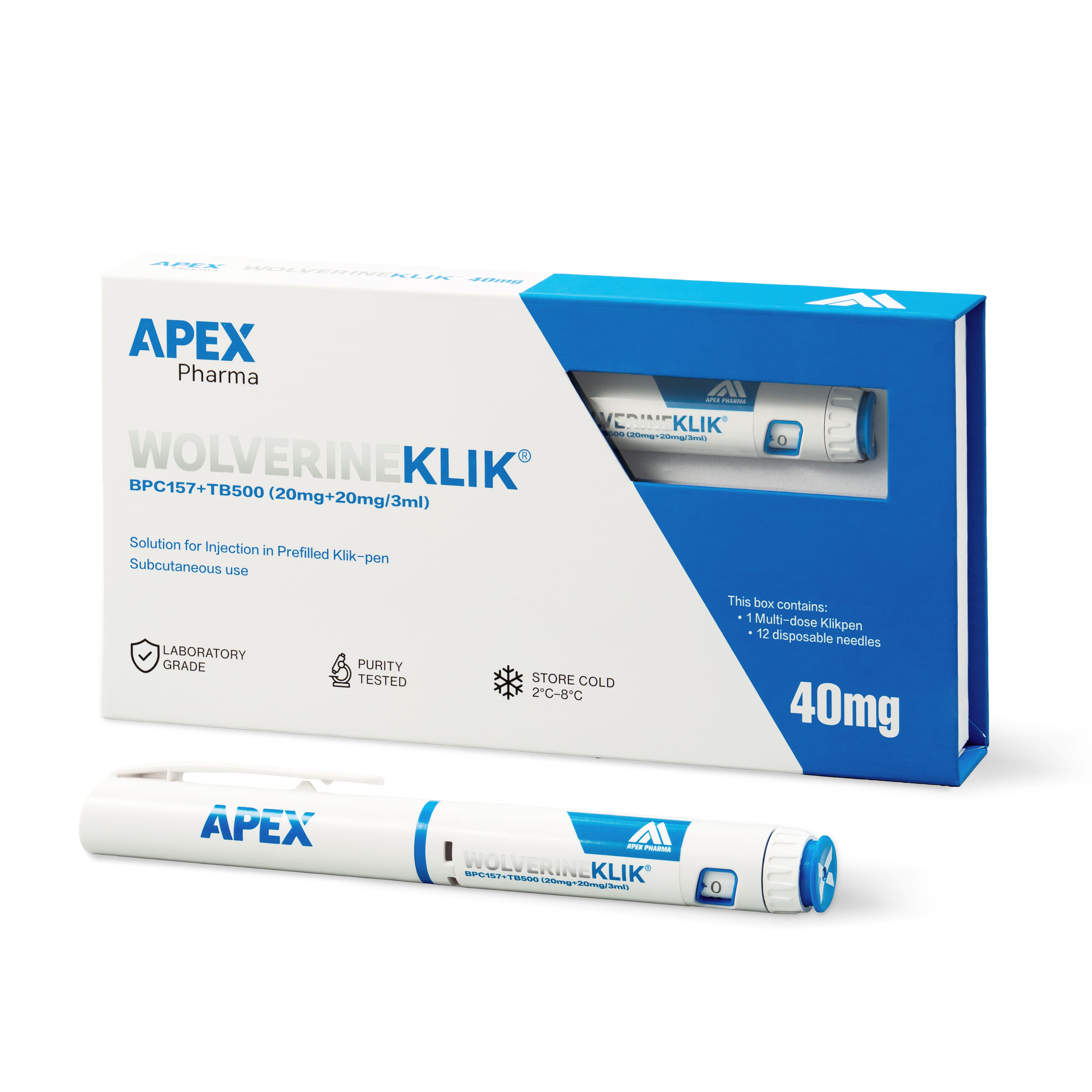
The Wolverine blend is BPC-157 20mg and TB-500 20mg in one 3ml pen, 40mg in total, with the label name WOLVERINEKLIK. That is the extent of the product facts: two named materials, stated amounts, one pen.
Everything else you might want to know about a particular batch, such as identity or content as reported for that batch, needs a document that names the batch. Where one is published, it appears on the Certificates of Analysis page or on the product page. Not every product or batch has one.
Four checks before a paper is attached to a purchase
Take any cited source and put these four questions to it.
- Same material? Does the paper study the same named compound, or a related one? Different forms of a name can mean different materials.
- Same presentation? Many papers examine a compound on its own. A listing for two peptides in a single pen is a different arrangement, and a paper on one component doesn't describe the combination.
- Same setting? Note the model, the conditions and what was measured. A finding stays attached to those details. Shortened, it starts to sound like a general statement the authors never made.
- Same sample? A paper reports on the material its authors used. It doesn't tell you anything about a particular batch that arrives at your lab.
If the answer to any of these is "no" or "unclear", the paper is useful background reading at most. It is not support for the product.
Writing the link between paper and product in your file
When someone attaches a paper to a purchase request, ask them to complete a short two-line note:
- What the paper studied: material, setting, measurement.
- What the listing offers: product name, pen count, component amounts.
Then add a third line: "Relationship between the two:" and let the author say it in their own words, including "none established". If that line can't be completed honestly, the paper stays in the reading list and out of the procurement case.
A few habits help the whole team:
- Record the full reference, not just a headline or a link to a summary.
- Keep paper-based background and batch-based documents in separate folders.
- Never use a quotation from a paper as a product attribute in a specification.
When the listing says more than its sources
Sometimes a page makes a claim and cites nothing, or cites something that doesn't contain it. You don't need to argue the point. Mark the claim as unsupported in your notes and carry on with the parts you can check: the contents, the amounts, the documentation position and delivery arrangements.
It is entirely reasonable to ask a seller where a statement comes from. If the answer is unclear, treat the statement as unavailable rather than either true or false. The decision to proceed or stop should rest on what you can verify. The product is supplied for laboratory research only, as our page on what research use only means explains, and your file should read the same way.
Frequently asked questions
Can a paper tell me what is in a batch I'm buying?
No. A paper reports on the material its authors used. Only a document naming your batch can speak to your batch, and even then only to the characteristics it states.
Why does it matter that a paper covers one peptide and the listing covers two?
Because the paper's observations belong to what was studied. A pen holding two peptides is a different arrangement, and nothing about a single-compound study carries across automatically.
Should I leave papers out of procurement files altogether?
Not at all. Keep them as clearly labelled background. Just don't let them stand in for product documentation or be quoted as if they described the item on the listing.