Peptide Identity, Content and Purity Are Three Different Questions
One "tested" label can hide three different questions. Here is how to tell identity, content and purity apart and ask a supplier for exactly the evidence you need.
Peptide identity, content and purity are three separate questions, and research peptides purity testing only makes sense once you know which one you are asking. "Tested" can mean three quite different things, and one report may cover a single one of them while saying nothing about the others.
Keep the three apart in your notes and you will know exactly what to ask a supplier for, and exactly what a document does and does not settle.
Three questions in plain terms
| Question | What you are asking | A report answers it only if it says so |
|---|---|---|
| Identity | Is this the named peptide, or something else with a similar name? | A result describing what the sample is |
| Content | How much peptide is in the pen compared with the label? | A stated quantity, with its unit |
| Purity | What share of the analysed sample is the target peptide? | A percentage, with the method and basis behind it |
A result in one row does not carry over to the others. A strong-looking purity figure says nothing about how much material is in the pen, and an identity result tells you nothing about purity.
Decide which one your project needs first
Before you email anyone, write one sentence: "We need to establish ___ for this item." A vague request for quality paperwork gives the supplier little to work with and gives you little to assess when something arrives. A specific request is quicker to answer and easier to check.
Keep what you require separate from what has been established, too. If your project needs content confirmed, typing "content confirmed" into a form beside the product name does not make it so. Leave the gap visible until a document closes it.
What blends do to the question
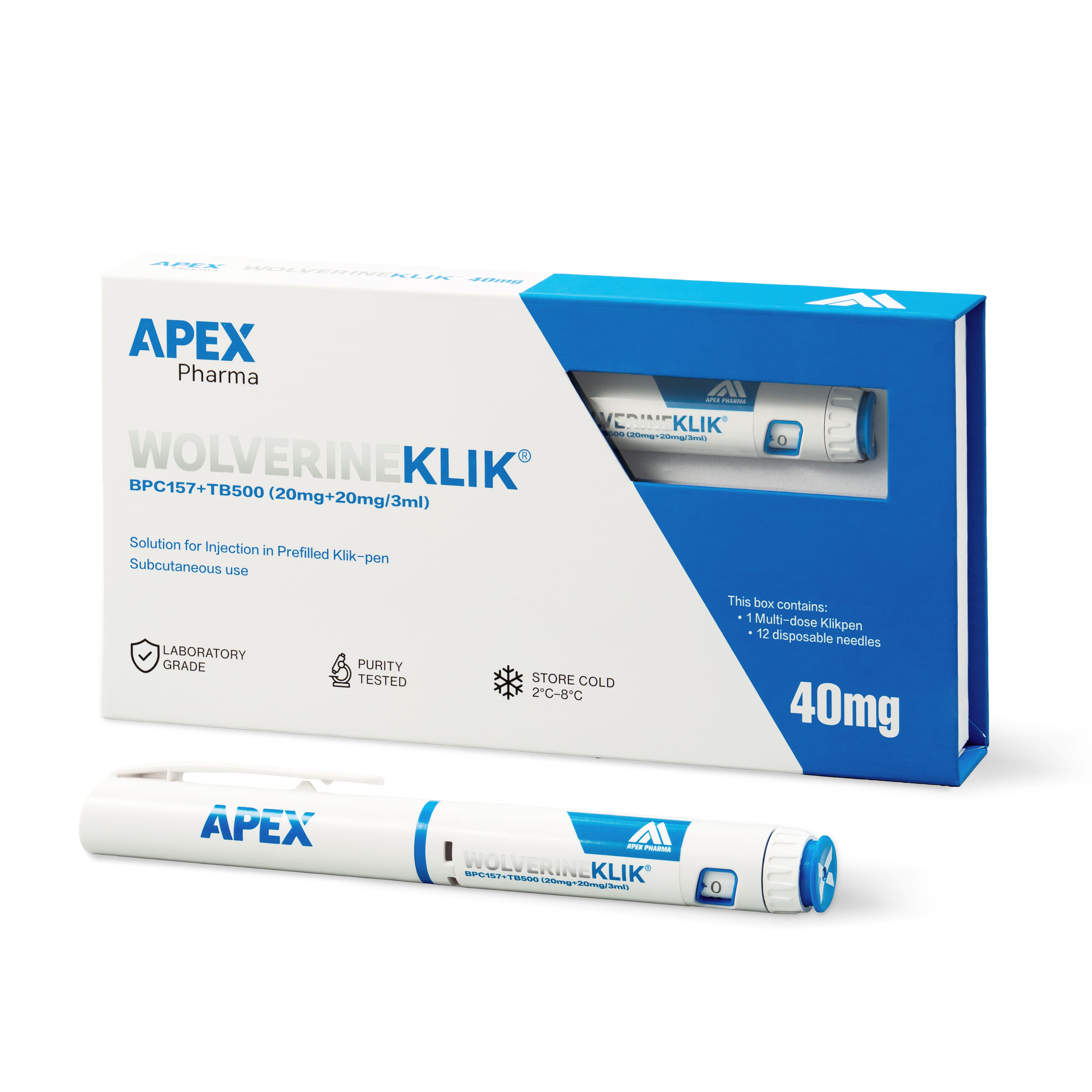
Combined pens make the distinction sharper. The Wolverine pen, for instance, lists BPC-157 20mg and TB-500 20mg in one 3ml pen, so a content question has two parts, one for each peptide. A report about a single-peptide item does not answer either part just because the name matches.
The compare tool is handy for keeping listings distinct while you work. Whichever listing you are assessing, record its own description in your notes rather than a blended summary of several.
Partial answers still count as progress
Say a supplier replies and makes clear which material a report concerns, but a quantity line is still hard to interpret. That is a real step forward. Record it, record what remains, and ask the next specific question. Do not flatten the outcome into pass or fail, and do not send the same broad request a second time.
An open point is not a failed test either. Unless an applicable result actually shows a problem, "not yet answered" is the honest label.
It is also worth deciding who does what. Purchasing staff can collect and file documents, while a technical colleague interprets what the results mean. If the report is already in hand but unread, the next move belongs inside your organisation, not with the supplier.
Checklist before you accept "tested" as an answer
- Write down which of the three questions you need answered.
- Find the line in the report that addresses it, rather than the line that looks most impressive.
- Copy each number with its unit and its label.
- Match the batch number on the report to the one on the pen label. Reports are published on the Certificates of Analysis page and on product pages where one is available, so look there first.
- Mark anything the report does not address as open.
- Name the person who will interpret the findings.
CLOVA's catalogue is supplied for research use only, so the documentation is the part that tells you what sits behind a listing. A short log that separates the three questions will stand up far better than a single reassuring word.
Frequently asked questions
Does a purity percentage tell me how much peptide is in the pen?
No. Purity describes the share of the analysed sample that is the target peptide. The amount in the pen is a content question and needs its own stated quantity, with a unit.
Can one report answer all three questions?
It can, if it reports each of them. Check line by line rather than assuming. A report that covers identity and purity but gives no quantity leaves content open.
Is a missing result the same as a failed test?
No. Missing means unanswered. Record it as open, ask the specific follow-up, and keep any partial answer you have already received.