Order BPC-157 TB-500 GHK-Cu Blend in the UK With Clear Status Labels
Three plain status labels keep a price enquiry from turning into a paid order by accident, with the checks that should be true before a GLOW blend request moves to approved.
Someone in your team types "order BPC-157 TB-500 GHK-Cu blend UK" into a search bar, lands on the GLOW listing and forwards the link with the message "order this one". It sounds decisive. In practice it can mean anything from "find out what it costs" to "the budget is signed off, go ahead".
That gap matters because the shop side moves quickly. Orders paid before 1pm UK time, Monday to Friday, are dispatched the same working day, so a payment is hard to pause once it has been made. A short set of status labels on your own request avoids the awkward conversation afterwards.
Why "order" is the wrong word too early
An internal form headed "Order: GLOW blend, ready" reads as finished work. Look closer and you will often find the technical question is still open, or the person who holds the budget has not seen the request at all.
The word also muddles the conversation with a supplier. A message that names a precise product and a quantity can still be only an exploratory question. Precision is not the same as permission. If you want the reader on the other end to understand where you stand, you have to say so.
Three labels that keep the stage honest
Give every request one of these labels, and change it only when the conditions are met.
- Information requested. You are collecting details or asking for price information. Nobody has agreed to spend anything, and nothing here should be read as a commitment.
- Reviewed, decision pending. The researcher has read the listing, looked at the batch documentation position and written down any open points. The request is waiting for whoever holds the budget.
- Approved to order. A named person has agreed to this specific item, in this quantity, at the price recorded on a stated date.
The labels are deliberately dull. Their value is that a colleague picking up the file on Thursday can tell at a glance whether they are allowed to click "pay".
Describe the item and the quantity so nobody has to guess
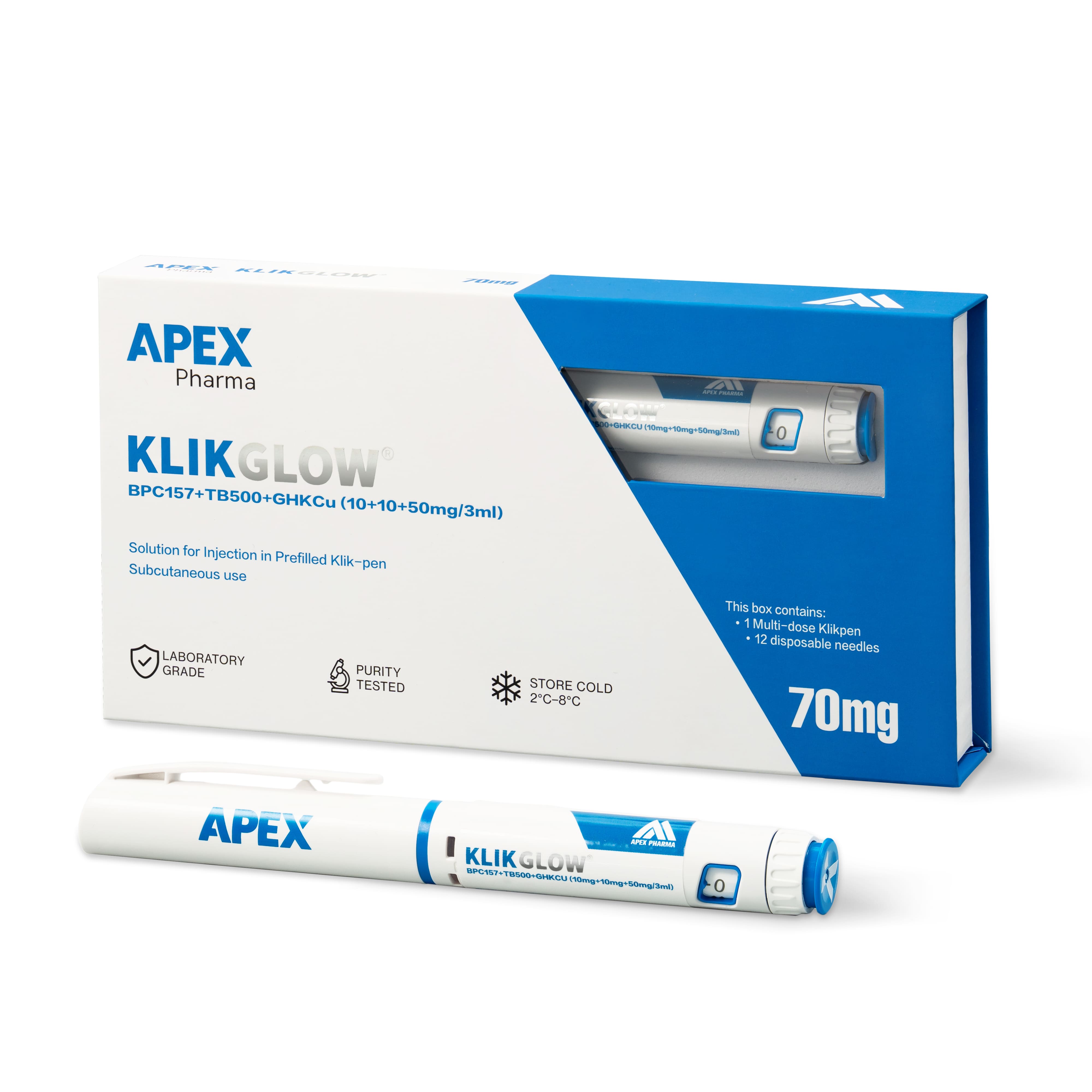
The GLOW listing is one 3ml pen containing BPC-157 10mg, TB-500 10mg and GHK-Cu 50mg, 70mg in total, with the label name KLIKGLOW. If your purchasing system has a single quantity box, a bare "1" is ambiguous. Does it mean one pen, or one of something else?
Write the line out in words: "1 pen, GLOW (KLIKGLOW), 3ml". Keep the product page for the GLOW blend open beside the form and copy the description from it, rather than from a shortened internal nickname. A nickname can quietly turn into a different product when someone else reads it.
What must be true before the label becomes "approved"
Run through this list before anyone moves a request to the final stage:
- The item on the form matches the item on the live product page, including pen count and the component amounts.
- The batch documentation question is answered. If a report is published on the Certificates of Analysis page or on the product page, the batch number on the label should be matched to it. If no report is available for your batch, record that as an open point so the approver knows.
- Quantity is written as a number of pens, not left as a bare digit.
- The price is recorded with the date it was seen, and delivery is shown as its own line.
- Someone is named to receive the parcel and has fridge space ready, as the storage guide sets out for chilled stock.
- The approver's name and the date of approval are on the file.
If any line fails, the label stays where it is. That is not a delay; it is the review doing its job.
Put the stage in the first line of every message
Whoever writes to the supplier should open with the stage, in plain words. "We are gathering price information on the GLOW pen and are not placing an order yet" leaves no room for doubt. Once approval exists, the opening line can say the opposite: "This is an approved order for one GLOW pen; please confirm dispatch details."
The same habit helps internally. When the approver receives a request, the first line should tell them whether they are being asked to agree to a purchase or simply to note progress. The person managing the correspondence should not have to make the commitment by default because nobody else was clearly asked. Keep the wording factual throughout: the pen is supplied for laboratory research use only, and the request should describe it as a research item and nothing more.
Frequently asked questions
Can I ask about price without committing to buy?
Yes, as long as you say that is what you are doing. State in the first line that you are gathering information, and keep your own request at the first label until the review and approval steps are complete.
Does a price from the supplier mean my own approval is done?
No. A price tells you what the supplier is offering at that moment. Internal technical acceptance and authority to spend are separate decisions, and they may belong to different people in your organisation.
Who should sign off the final stage?
That depends on your organisation's own procedures. What matters is that the file names the person and records the date, so nobody has to guess later who agreed to what.