Why the GLOW Name Isn't a Claim About What the Blend Does
A memorable product name isn't evidence. Here's how to write about GLOW in lab notes and purchase requests using only what is actually known about it.
Product names are chosen to be memorable. GLOW, Wolverine and STRENGTH are all names that stick, and that's the point of them. The risk comes later, when the name starts doing the work that evidence should be doing, and a short word turns into an implied promise.
Many GLOW peptide claims you'll come across online lean on exactly that. A paragraph opens with an accurate ingredient list, then drifts into what the blend supposedly does, and the familiar name makes the leap feel natural. For anyone writing a purchase justification, a lab record or an internal summary, that drift is worth catching.
This article is a short editing guide: how to separate what the name tells you from what it doesn't, and how to describe GLOW accurately in your own documents.
A name is a label, not a finding
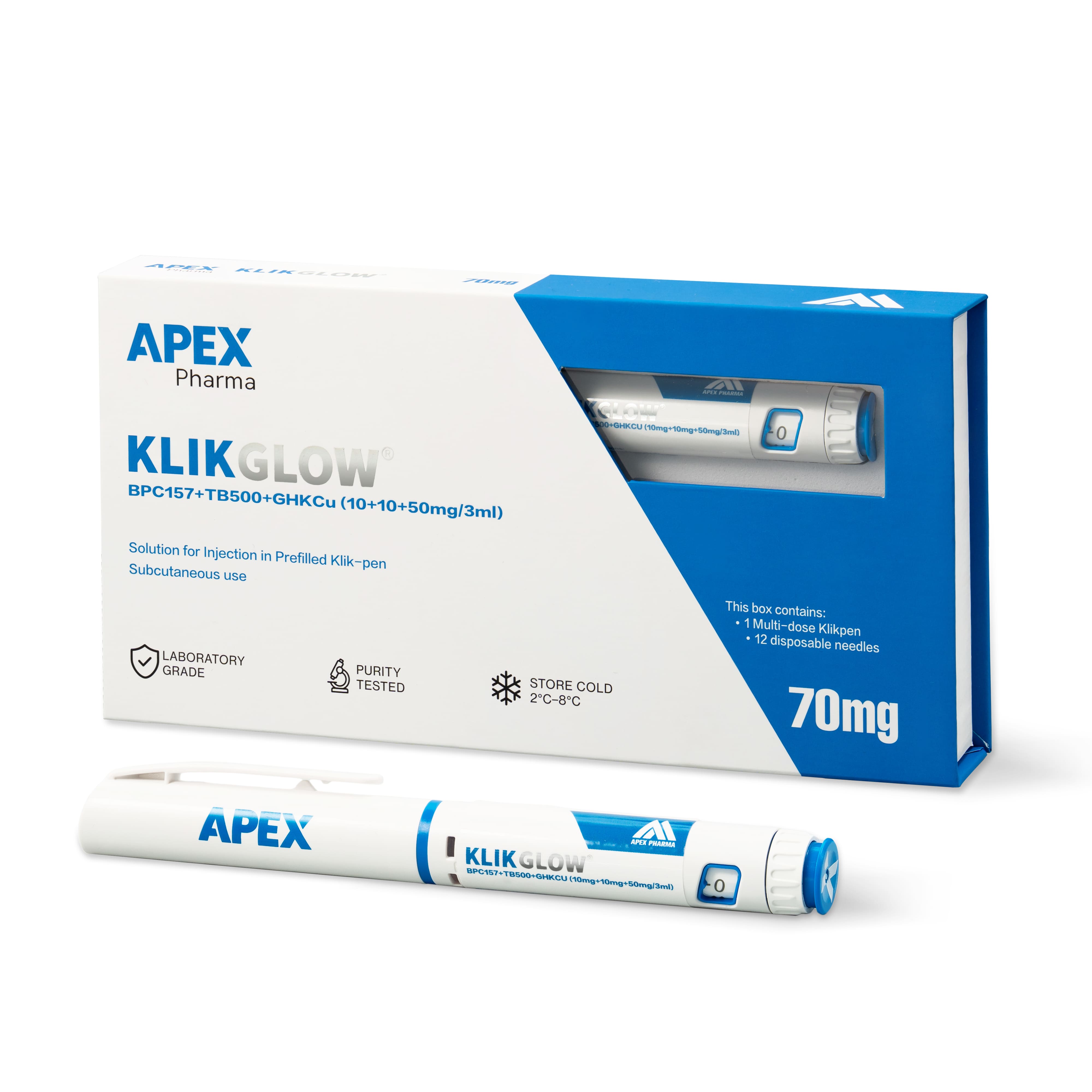
GLOW is CLOVA's product name for a three-component blend. On the pen itself the label name is KLIKGLOW. Neither tells you anything about results. Whatever a word suggests to a reader, it isn't data.
That's true of every product name, not just this one. A record that says "GLOW" with nothing else is only identifying a product, and that's fine as long as nobody reads more into it.
Three kinds of statement
Most sentences written about a product fall into one of three types, and each needs a different kind of support:
- Naming, such as "We are ordering GLOW." The listing supports this.
- Describing contents, such as "GLOW contains BPC-157 10mg, TB-500 10mg and GHK-Cu 50mg in a 3ml pen." The label supports this, and a Certificate of Analysis can add a measured basis for a specific batch where one is available.
- Asserting an outcome, meaning any claim about what the material does. This would need applicable published research, and a product name or listing can't provide it.
CLOVA's listings stick to the first two. If a sentence in your document belongs to the third type, it needs a properly cited source, or it should come out.
Rewriting a paragraph
Here's a typical example of drift, written the way promotional copy often reads:
"GLOW is a powerful triple blend that delivers the results researchers are looking for."
Every word after "triple blend" is an unsupported claim. "Powerful" and "delivers results" sound informative but say nothing checkable. A rewrite using only what's known:
"GLOW is a three-component blend supplied as a single 3ml pen labelled KLIKGLOW, containing BPC-157 10mg, TB-500 10mg and GHK-Cu 50mg (70mg in total)."
It's less exciting, but every part of it can be checked against the GLOW product listing and the label. That's what a lab record needs.
A checklist for reviewing copy about GLOW
Before a document goes to a manager, an ethics panel or a budget holder, read it once with these points in mind:
- Does any sentence describe an outcome rather than a name or contents?
- Are words like "powerful", "proven", "boosts" or "delivers" doing work that a source should do?
- Does each figure have a unit and name its component?
- Is the label name KLIKGLOW recorded alongside the product name?
- If a source is cited, is it about this blend, or about a single ingredient in a different setting?
- Does the conclusion match the opening, or has it drifted further than the evidence?
A cautious disclaimer at the end doesn't fix an overstated sentence earlier on. Correct the sentence itself.
Reading other people's claims
The same habits apply when you're assessing a seller or reading a forum. Outcome language attached to a product name isn't information about the product. If anything, it's a reason to look harder at what the page actually documents: the label name, the stated composition, the format and whether a batch report is published.
A listing that describes contents plainly and points to supporting documents gives you more to work with than one built around what a name suggests.
Frequently asked questions
Does CLOVA make claims about what GLOW does?
No. CLOVA describes GLOW's composition, format, storage and available documentation. It's supplied for laboratory research use only, not for human or veterinary use, and the listing makes no claims about outcomes.
Is it fine to use the name GLOW in our records?
Yes, as an identifier. Pair it with the label name KLIKGLOW, the stated composition and the batch number, so the record describes the product rather than relying on the name alone.
What if a paper about one ingredient seems relevant?
Cite it for what it actually studied, and say so. A paper about a single component in a particular setting isn't a statement about a three-component blend, so keep that distinction visible in your summary.