Which Documents Cover Which? GHK-Cu vs GLOW Peptide
A report for a standalone GHK-Cu listing does not describe the GLOW blend. Here is a simple way to keep each document attached to the product it covers.
A Certificate of Analysis describes one batch of one material. That is the whole reason a report for a standalone GHK-Cu listing cannot stand in for a report on the GLOW blend. If you are weighing GHK-Cu vs GLOW peptide, the document question is worth settling early, because it shapes what you ask for and what you can honestly write in your purchasing file.
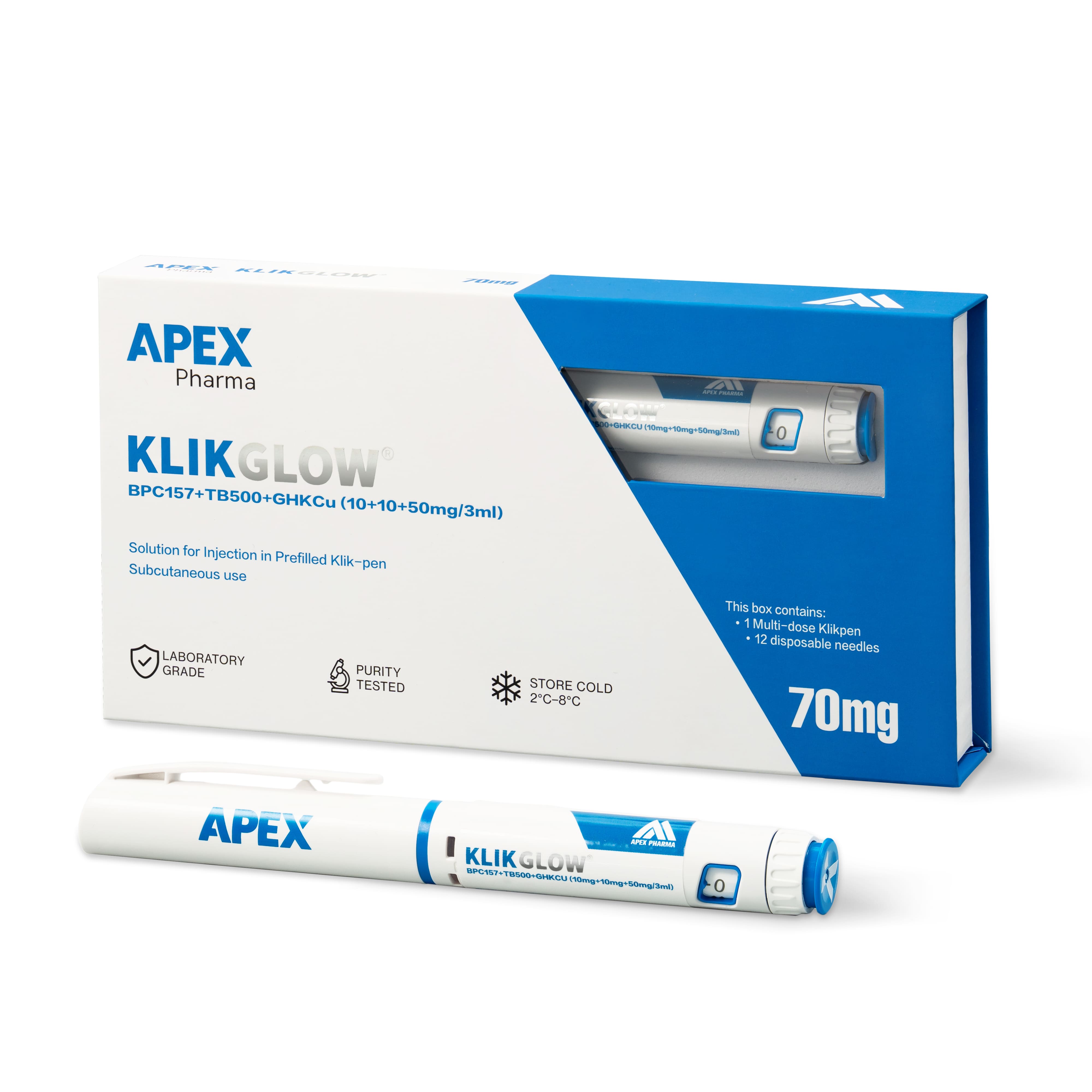
The two listings overlap on a single ingredient. The GHK-Cu listing is a single-component product. The GLOW blend is a 3ml pen holding BPC-157 10mg, TB-500 10mg and GHK-Cu 50mg, which makes 70mg in total. A shared ingredient name does not make their paperwork interchangeable, and the rest of this article shows how to keep the two apart.
What a report actually tells you
Every Certificate of Analysis is tied to a sample. It carries a product name and a batch number, and the tests it lists were run on that sample. Read those details as written and leave them alone. If the report says GHK-Cu, it is a report about GHK-Cu, however closely the product you are buying resembles it.
CLOVA publishes reports on the Certificates of Analysis page and on product pages where a report is available. Not every product or batch has one, so your first job is simply to find out which listing has what.
Four checks before a document goes in the file
Run each report through the same short list, and do it separately for each listing:
- Name. Does the report name the same product as the listing you plan to buy?
- Batch. Does the batch number on the report match the batch number on the label of what you receive?
- Scope. Does it cover the characteristic your brief cares about, and for a blend, does it say anything about each component?
- Status. Which of "readable", "matched" and "relevant" have you actually confirmed? Record only the ones you have.
The fourth check is the one people skip. Being able to open a PDF shows that it exists. It does not show that it describes your stock or answers your question.
Why counting links is a poor comparison
It is tempting to glance at two product pages and decide that the one with more links is better documented. Resist that. Three documents can all answer the same narrow question while the thing you need goes unaddressed, and one report that speaks directly to your requirement can be worth more than the lot.
Compare coverage question by question instead. Write down what the project needs to know about each candidate, then mark which document, if any, speaks to each item. The gaps will be obvious, and they are the useful part.
What to do when a listing shows no report
A missing link is a prompt to ask, not proof that nothing exists. Email CLOVA, name the listing and the batch you are considering, and ask which report applies. What you should avoid is filling the gap with the report from the other product because the ingredient names overlap.
A worked example
Imagine a lab file that holds one batch report for the standalone GHK-Cu listing, plus a web description of GLOW naming three components. Someone writes in the summary, "GLOW composition verified." That sentence borrows evidence from a different product.
A more accurate note would read, "GHK-Cu batch report on file for the standalone listing. No GLOW report reviewed yet; requested from supplier." It is less impressive, but the next colleague can trust it. Both items are supplied for laboratory research use only, and a file that keeps its evidence honest is easier to defend if anyone reviews the purchase later.
The split of responsibility matters here too. Purchasing can request documents and keep the file tidy. The researcher responsible for the work decides whether what comes back is relevant and sufficient. Those are different jobs, and neither should quietly absorb the other.
Frequently asked questions
Can I use the GHK-Cu report for the GLOW blend?
No. It describes a different sample. It may be useful background for the GHK-Cu component, but file it as exactly that. Ask for the report that applies to the GLOW batch you are considering, where one is available.
Does opening a report mean the product matches it?
No. Opening it shows you can read it. A match means the batch number on the report is the same as the one on your label, and you can only confirm that when the pen arrives.
Is there a quick way to see both listings together?
The product comparison tool is a fast way to line up names and contents. It does not replace reading the report for each listing.