Two GHK-Cu Descriptions That Disagree? Compare Before You Merge
Two descriptions of a GHK-Cu listing rarely match word for word. Here is how to compare them side by side, and what to write when the gap can't be closed.
Two descriptions of what looks like the same copper peptide listing rarely match word for word. One says "GHK-Cu", another gives the longer product name, and a third, perhaps a line from a project brief, quotes an amount. The pull is to merge them into one clean sentence for your records.
Hold off. A GHK-Cu description comparison is far more useful when you first record what each source says and what each source is actually describing. Standardising comes afterwards, and only for the fields that survive the comparison.
The worked example below uses CLOVA's GHK-Cu listing. Keep its product page open beside whichever other source you are checking it against.
Why tidying descriptions too early backfires
Different documents do different jobs. A catalogue title names a product. A report refers to a tested sample. A project brief states what you need. All three can use the words "GHK-Cu" while describing different things, and a merged summary hides which job each phrase was doing.
It also makes problems harder to find later. If a colleague asks where a figure in your summary came from, "it was in the paperwork" is not an answer anyone can check.
Lay the descriptions out side by side
Before rewriting anything, copy each description word for word into a simple table.
| Source | Exact wording | What it describes |
|---|---|---|
| Product page | (paste it) | The listing as published |
| Report or COA | (paste it) | A tested sample, identified by batch |
| Internal requirement | (paste it) | What your project needs |
| Email or colleague's note | (paste it) | A summary, so find out where it came from |
The third column is the one people skip, and it matters most. If you cannot fill it in, you have found your first question.
Same listing, related material or something else?
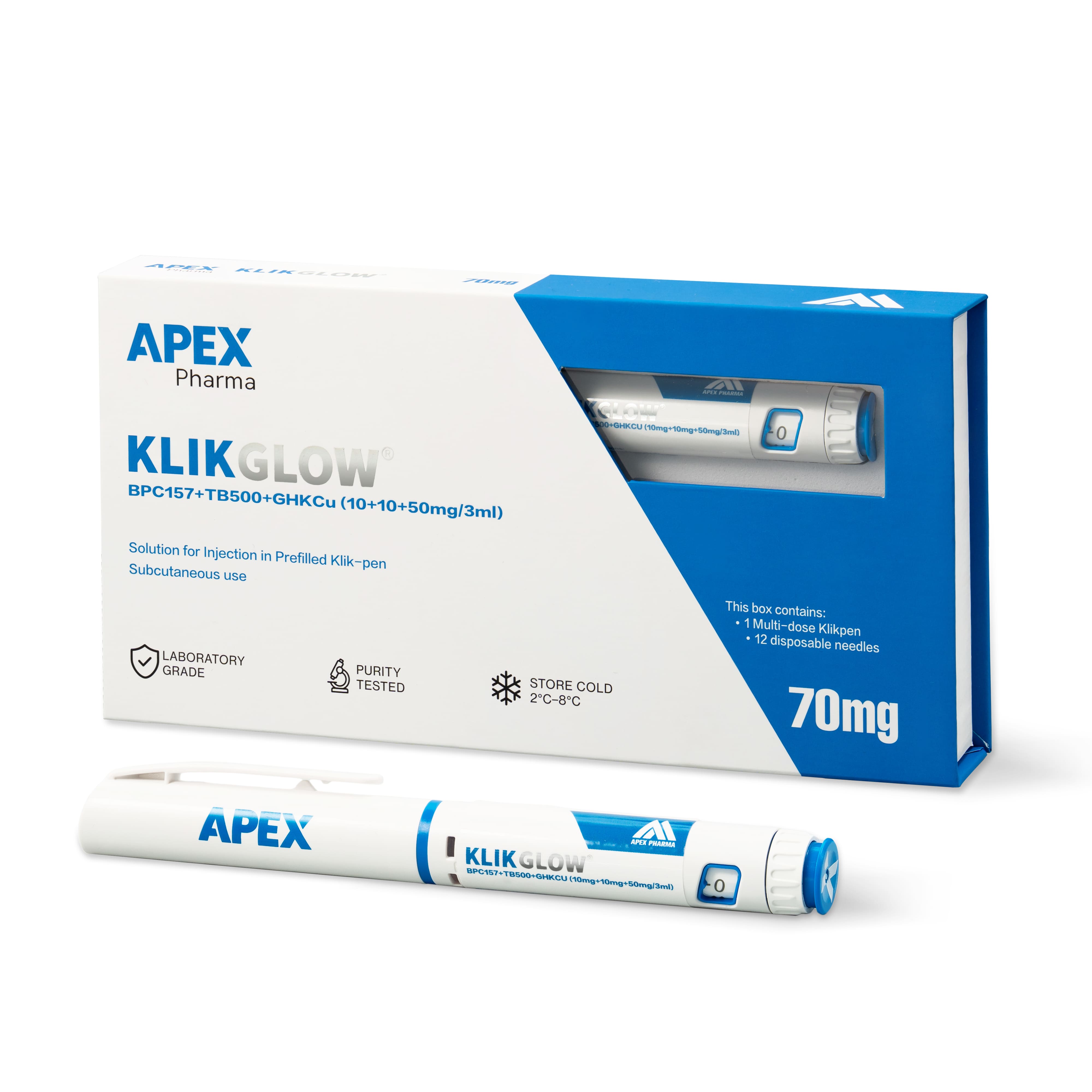
Similar names do not prove that two records concern the same offer. Suppose a colleague's note says "GHK-Cu 50mg". That figure matches the GHK-Cu content of the GLOW pen, which holds BPC-157 10mg, TB-500 10mg and GHK-Cu 50mg in a single 3ml pen. If the note was written while browsing GLOW, it describes one component of a blend, not the standalone product.
The fix is to go back to the standalone product page and record what it actually states. Where it does not give a detail you need, ask the supplier about that listing. Do not build a "complete" candidate from one record's title, another record's amount and a third record's format. The result may describe an offer nobody made.
A longer, clearer description is not proof that two materials are equivalent, and identical wording does not guarantee identical supply. Leave that judgement to the technical reviewer, who knows what your research brief needs.
A checklist before you standardise
- Copy each description verbatim, with its source and the date you saw it.
- Name the subject of each one: a listing, a tested sample or an internal requirement.
- Keep every figure with its unit and the thing it refers to (per pen, per component, per sample).
- Mark any amount that appears in only one source.
- Treat the product page as the reference for the listing, and match the others to it.
- If a report is cited, compare the batch number on the label with the one on the report. Reports are published on the COAs page and on product pages where one is available.
- Describe each difference in terms of the decision it affects.
- Only then draft common wording, limited to the fields where the sources agree.
What to write when a gap stays open
A note saying "the paperwork doesn't match" leaves the next person guessing. Be specific: "The product page names the item and format. The requirement quotes an amount that the page does not show. Question for the supplier: which amount applies to this listing? Affects: purchase approval."
One sentence per gap is plenty. A comparison can legitimately finish with "these fields can be compared, these cannot yet", and that is more honest than a tidy summary built on assumptions. CLOVA supplies this material for laboratory research use only, so your summary should describe the listing and your own records, nothing wider.
Frequently asked questions
Should the final summary use the supplier's wording or mine?
Quote the product page wording for anything that describes the listing. Use your own words only for your internal requirement, and label it as yours so nobody mistakes it for the supplier's statement.
Does the same name on a report mean it covers the item I'm buying?
No. A report describes a particular tested sample. Compare the batch number on your label with the report, and ask the supplier if no report is linked for your item.
What if two sources contradict each other?
Keep both, note where each appears and ask the supplier a question about that single field. Resist choosing whichever version is more convenient, because the choice will be questioned later.