Reading a GHK-Cu COA Linked From a Product Page
A report link on a product page is a starting point, not a finished check. How to tell whether a copper peptide report covers GHK-Cu alone or the GLOW blend.
GHK-Cu, the copper peptide, appears in two places in the CLOVA range. It is sold on its own, and it is one of three components in the GLOW blend. So when you follow a GHK-Cu COA link from a product page, the first thing to establish is which of those two products the report actually describes.
A link is a route to a document, not a completed check. This article explains how to read a linked copper peptide report, how to tell a single-material report from a blend report, and how to record what you have and have not confirmed.
Start from the product page, not a saved file
Open the report from the listing you are considering, whether that is the standalone GHK-Cu listing or the GLOW blend. Note which page you came from and the date you viewed it.
This sounds fussy, but it matters. A PDF saved to a shared drive soon loses its context, and six weeks later nobody can say which product page it was linked from. A one-line note beside the file avoids that.
Is the report about GHK-Cu alone or the GLOW blend?
The answer is in the sample description at the top of the report, not in the file name or the page it was linked from. Read it before you read any results.
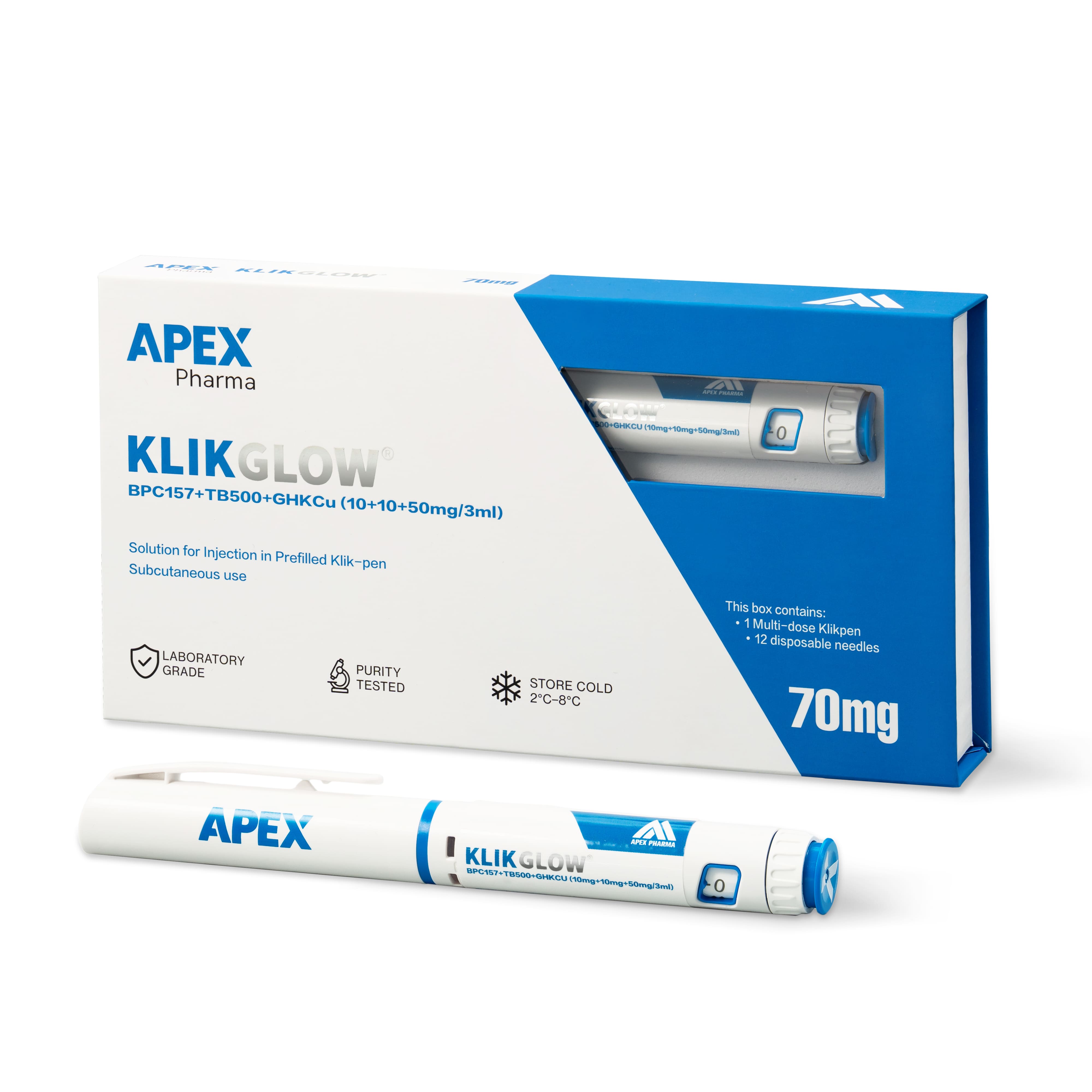
The two products are genuinely different materials. The GLOW blend combines BPC-157 10mg, TB-500 10mg and GHK-Cu 50mg in one 3ml pen, 70mg in total, labelled KLIKGLOW. A report on GHK-Cu alone describes a sample of GHK-Cu alone. It may be useful background for a GLOW purchase, but it is not GLOW's own documentation.
The reverse also holds. A report on the GLOW blend describes a three-component material and should not be filed as the record for the standalone product.
Reading the amount on a copper peptide report
Reports often state an amount for the tested sample. That figure describes the sample that was submitted, which is not always the same thing as the stated amount on the listing you are buying.
Compare the two, and write down both. If they correspond, note that. If they differ, ask which report applies to your listing rather than adjusting either figure to make them fit. A number that is accurate on the report can become misleading when copied into the wrong field of an internal form.
Keep each result with its method, too. A figure for one characteristic does not answer questions about another, so resist filling every quality box on a template from a single line of the report.
Recording what you checked, and what you didn't
Reading a report, matching it to your batch and confirming where it came from are three different actions. A purchasing note that just says "COA checked" hides which of them happened. A short record makes it clear:
- Report opened from: the listing name and date viewed.
- Sample described as: the wording on the report, copied exactly.
- Batch reference on report: as printed.
- Matched to label batch: yes, or not yet.
- Origin confirmed with the issuer: yes, or not attempted.
- Used to support: the specific question the report answers for you.
- Not used for: anything outside what the report covers.
That final line is worth keeping. It stops a later reader from assuming the report settled more than it did.
When the report and your stock meet
Once the pens arrive, compare the batch number on the label with the batch reference on the report. Certificates are published on the COA page and on product pages where a report is available, so if your batch is not covered, ask CLOVA whether a report exists for it. Because these products are supplied for research use only, your own procedures decide whether an open item can wait or must be closed first.
Frequently asked questions
Does a report link on the product page mean it matches my batch?
No. It means a report is available for that product. Whether it covers your stock depends on the batch number on your label, which you can only compare once the pens arrive.
Can a GHK-Cu report be used for the GLOW blend?
Not as the blend's own record. GLOW combines three peptides in one pen, so a report on GHK-Cu alone describes a different material. Ask which report applies to GLOW itself.
What if the amount on the report differs from the listing?
Record both figures as they appear and ask which report applies to the listing you are buying. Do not edit either figure in your records to make them agree.