A Six-Box Grid for BPC-157 TB-500 Bundle Purity Review
A simple grid of identity, content and purity for each pen in the STRENGTH bundle, so a gap in the paperwork shows up as a gap and not as a failed test.
A search for "BPC-157 TB-500 bundle purity" usually means something broader than purity. The buyer wants to know whether the material is what the label says, whether the amount is right, and whether it is clean. Those are three different questions, and each is answered by different evidence.
A two-pen bundle doubles the work, because each pen needs its own answers. The simplest way to keep track is a grid with six boxes: identity, content and purity, once for each pen. This article shows how to fill it in without claiming more than the paperwork supports.
Why purity is only one of three questions
Think of the three questions in plain terms.
- Identity. Is this material the named peptide?
- Content. Is the amount in the pen the amount the label states?
- Purity. Of what was measured, how much is the named peptide, and what else is there?
A report can speak to one of them and be silent on the others. If you let a single word like "tested" stand in for all three, you will finish the review believing more has been checked than actually has.
Setting up the grid for the STRENGTH bundle
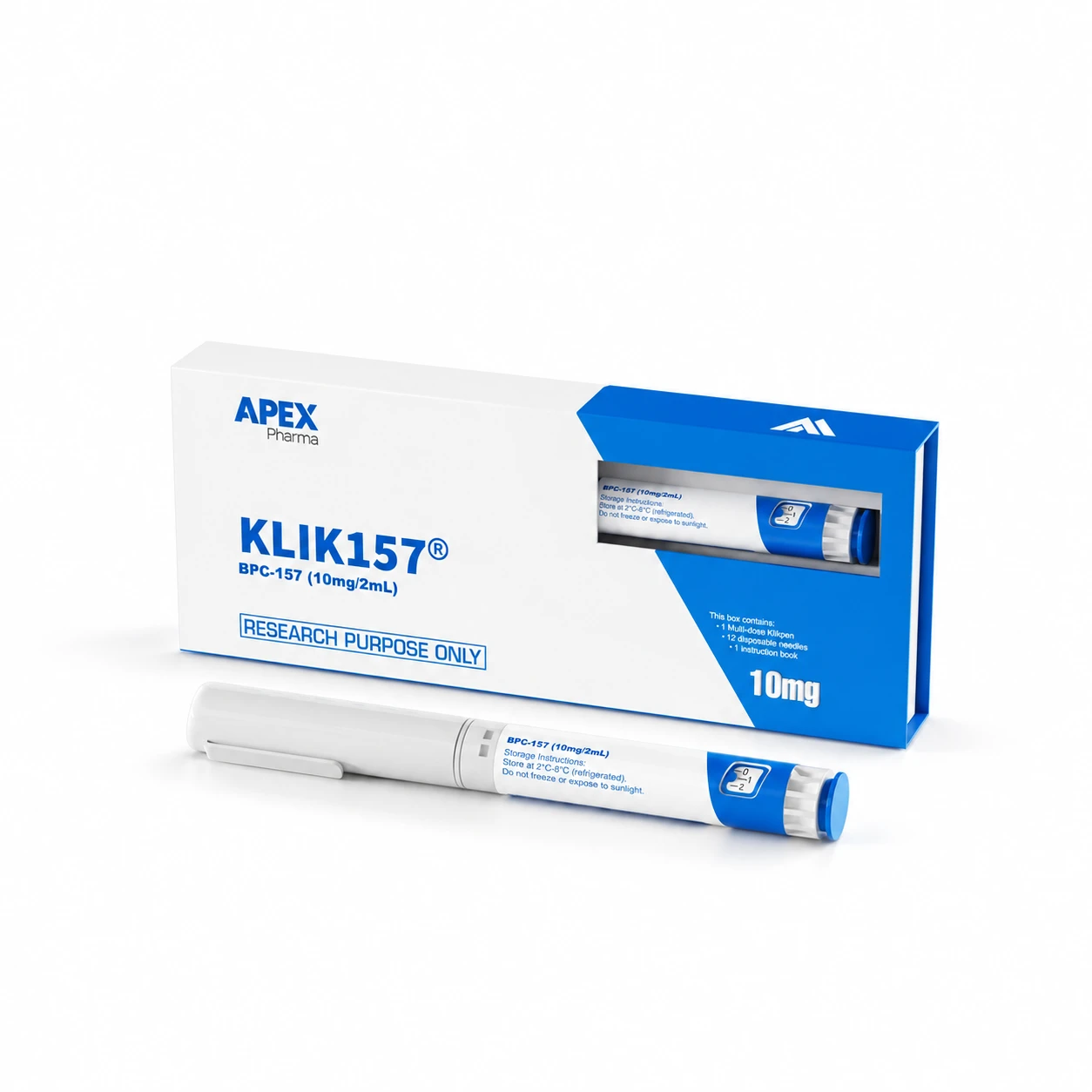
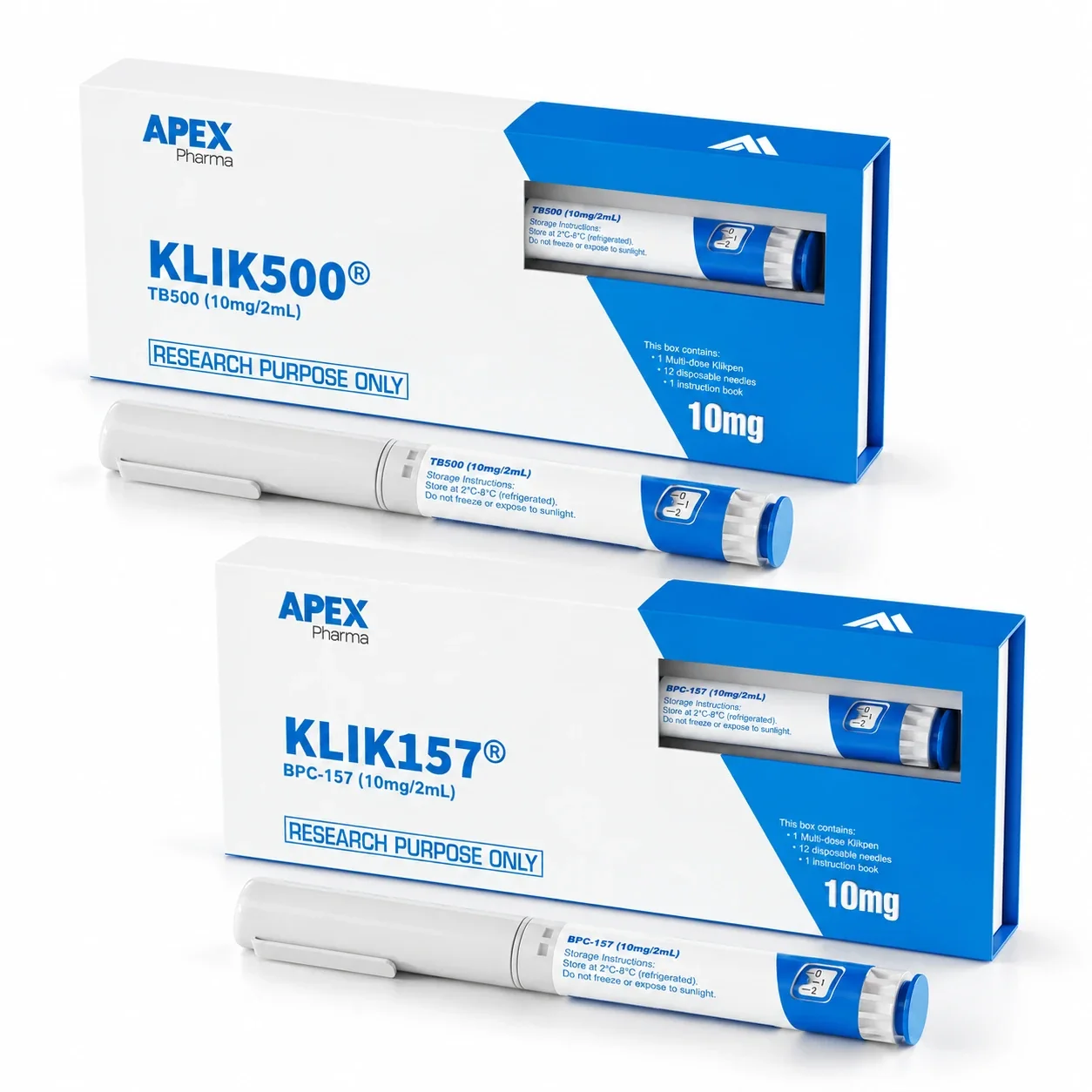
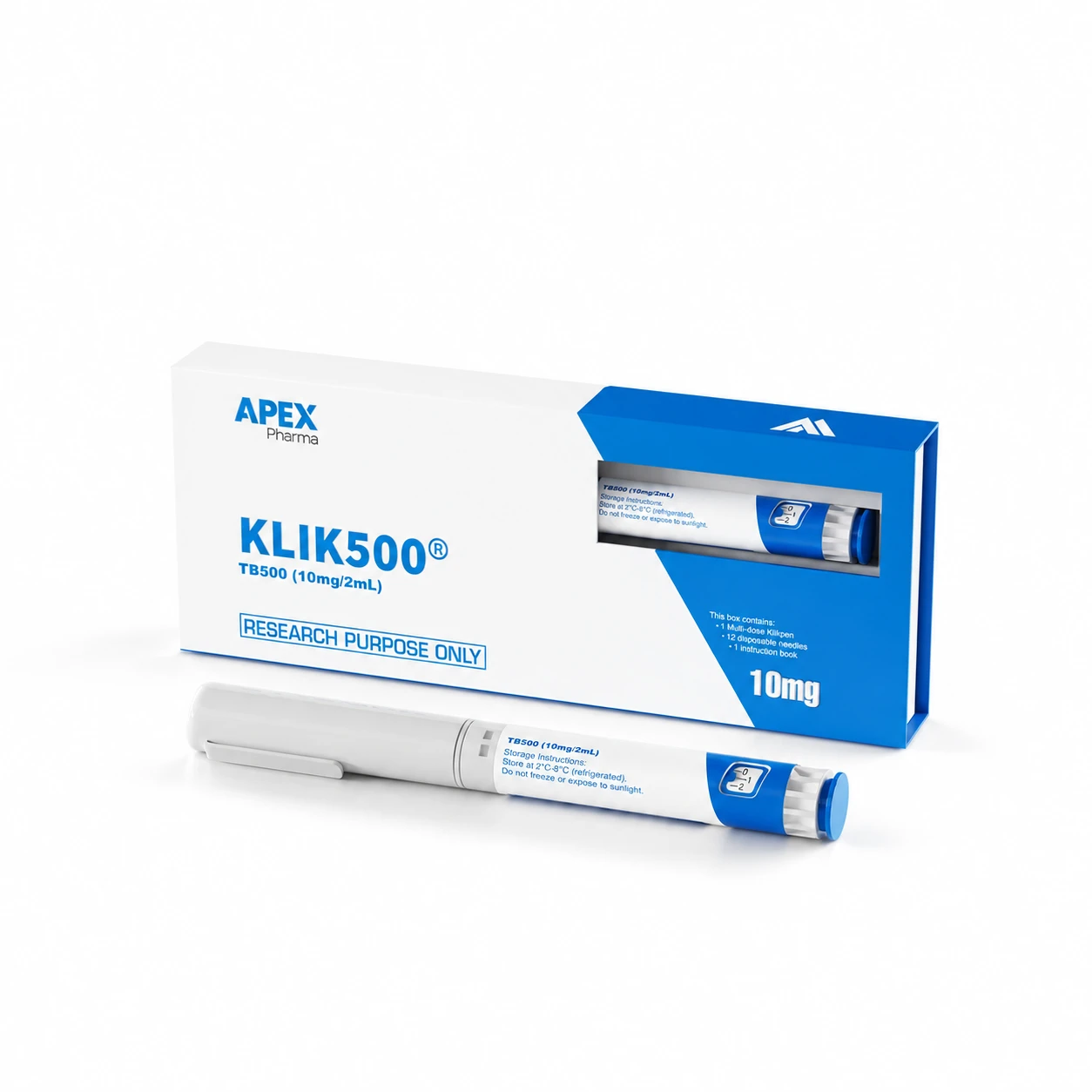
The STRENGTH bundle has two pens: KLIK157, BPC-157 10mg in 2mL, and KLIK500, TB-500 10mg in 2mL. Draw two columns, one per pen, and three rows for identity, content and purity.
In each box, write one of three entries:
- Reported for this batch. A document names this pen's material and batch and addresses the question. Note the document's name and date.
- Stated only. The label or product page says something, but no document you hold backs it up for this batch.
- Not yet known. You have nothing either way.
Resist the urge to write "pass" or "OK". The point of the grid is to show where you actually stand, not to deliver a verdict. The pens are supplied for laboratory research use only, so the grid is purely a documentation tool.
Reading a report for the right pen and batch
A bundle makes it easy to attach the wrong paper to the wrong pen. Before a report goes into a box, check three things: it names the material in that pen, it quotes a batch number, and that batch number matches the one on your label.
Reports are published on the Certificates of Analysis page and on product pages where one is available. Not every product or batch has one, so an empty box is a realistic outcome. If you can't tell which pen a report covers, or whether it refers to your batch, leave the box at "stated only" or "not yet known" and ask a specific question.
Don't copy a purity figure into the grid without noting what the report says was measured. A number on its own tells the next reader very little.
What an empty box does and doesn't mean
An empty box is missing information. It is not a failed test, and it is not a hidden defect. Those are different findings, and your note should keep them apart.
You can still decide not to go ahead because a box is empty and your project needs it filled. That is a legitimate conclusion for your organisation. Just write it narrowly: "No report seen for the KLIK500 batch addressing content; not proceeding until one is available," not "KLIK500 is poor quality".
The reverse also holds. A solid answer in one box should not be used to fill in a neighbour. Strong evidence on identity does not tell you anything about content or purity.
A checklist for the finished grid
Before the review goes to the person making the decision, confirm:
- All six boxes carry an entry, even if the entry is "not yet known".
- Every "reported" entry names a document, its date and the batch it covers.
- Each batch number on a document has been matched to the label on the pen.
- Nobody has averaged or combined the boxes into a single score.
- The note says who will interpret the evidence. Purchasing staff can collect documents, but judging whether a report answers the project's question is a technical call.
- Each open box has a specific follow-up question written next to it.
Frequently asked questions
Does one report cover both pens?
Not automatically. Check whether a document names both materials and the batch for each pen. If it covers only one, the other pen's boxes stay open until you have a second report or an answer from the supplier.
Can I ask CLOVA for a report that isn't listed?
You can ask, and a specific question, naming the product and your batch number, gets a more useful answer than a general request for "the test results". Where a report is available it appears on the Certificates of Analysis page or the product page.
Who fills in the grid?
Anyone can gather the documents and make the first pass. The interpretation, deciding whether a report really answers your project's question, should sit with someone who has the technical background to judge it.