How to Compare Wolverine Blend Specs Across Different Listings
Two listings can both say Wolverine and describe quite different products. Use three lenses, formulation, traceability and evidence, to compare them on equal terms.
"Wolverine" is a nickname, not a standard. Two listings can use the same word and describe different contents, different pen sizes and very different levels of documentation. If you need to compare Wolverine blend specifications across sources, the safest approach is to look at every listing through the same three lenses before you even glance at the price.
Those lenses are formulation, traceability and evidence. Each one asks a different question, and a listing can be strong on one and silent on another. Below, CLOVA's own blend serves as the worked example, but the method applies to any listing you are weighing up.
Lens one: formulation
Formulation asks what is in the pen, stated per component. This is where most comparisons go wrong, because a single headline figure can hide two very different meanings.
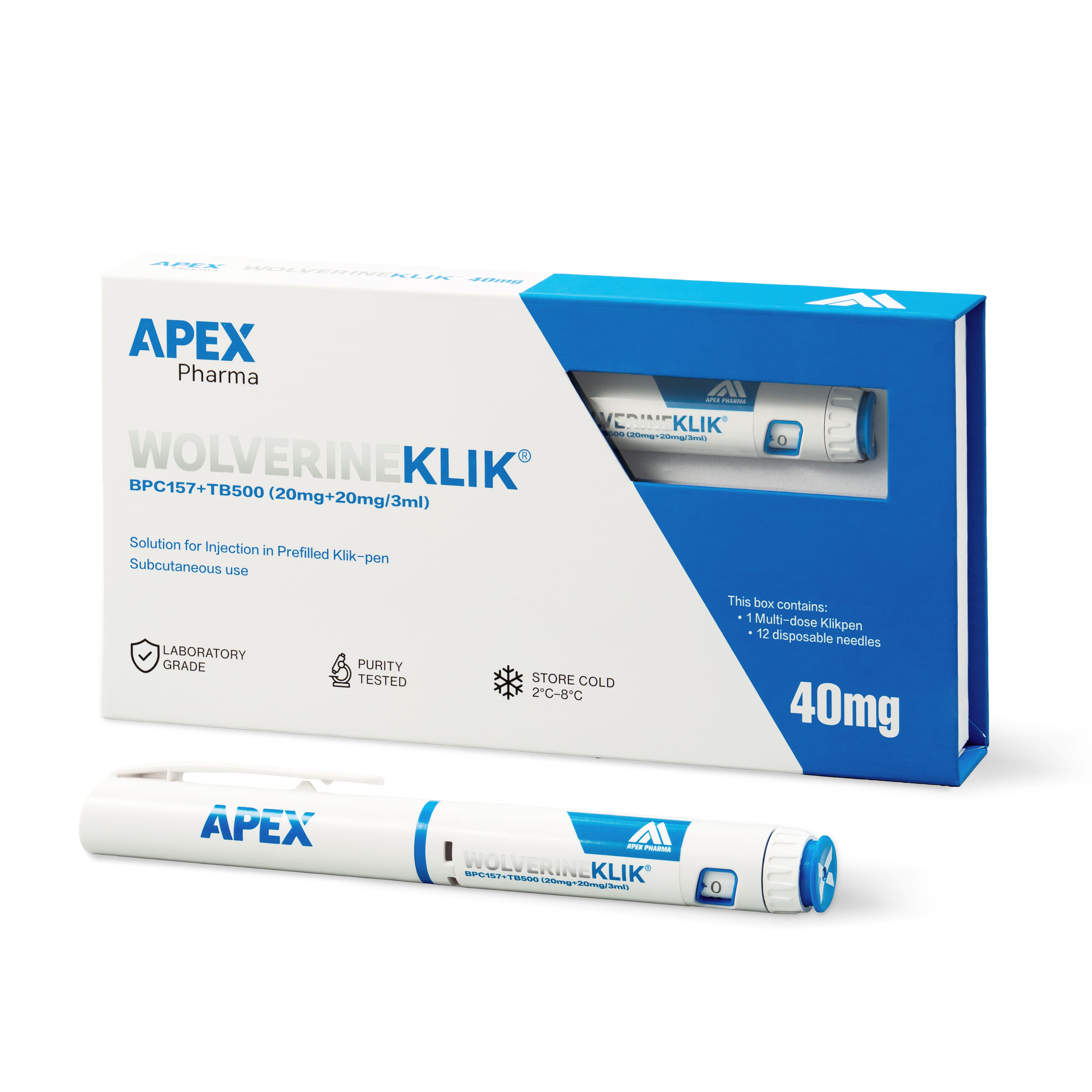
CLOVA's Wolverine BPC-157 + TB-500 listing states BPC-157 20mg and TB-500 20mg in one 3ml pen, 40mg in total. Now imagine a second listing that simply says "Wolverine 40mg". Does that mean 40mg in total, or 40mg of each? Until the seller tells you in writing, you cannot compare the two, and you should not guess.
Record for each listing:
- the stated amount of each component, not just the total
- the pen or container volume
- the label name printed on the product
If any of those is missing, mark it as unknown rather than filling it in from another listing.
Lens two: traceability
Traceability asks whether you can connect the product in your hand to the listing, the seller and the paperwork. A specification you cannot trace is only a description.
For CLOVA's blend, the label name is WOLVERINEKLIK and each pen carries a batch number. The seller is identifiable, and you can read more about CLOVA before you order. Products ship cold, by tracked delivery, in plain outer packaging, which gives you a dispatch record to keep with the order.
When comparing, ask the same questions of every listing. Is there a label name that will appear on the product? Is a batch number printed on it? Can you identify who is selling it and where it is dispatched from? A listing that cannot answer these may still be genuine, but it is harder to account for once it reaches your lab.
Lens three: evidence
Evidence asks what independent documentation supports the stated formulation, and for which batch. A Certificate of Analysis is the usual document, but its value depends on whether it covers the batch you will actually receive.
CLOVA publishes reports on its Certificates of Analysis page and on product pages where a report is available. The check is always the same: match the batch number on the label to the batch number on the report. A report for an earlier batch, or for a different product, tells you about that batch or product only.
For each listing, note whether a report exists, which batch it names and what it says it measured. If the report is generic, undated or cannot be linked to a batch, record that as a gap.
Putting the three lenses on one sheet
Once you have looked through each lens, bring the results together on a single worksheet with three columns for every row: stated, verified and unknown. "Stated" is what the listing says. "Verified" is what a document or the label confirms. "Unknown" is everything else.
This layout stops a confident listing from looking better than a careful one. It also turns your unknowns into a ready-made list of questions for the seller. Only when the rows line up should price come into it, and even then compare cost against confirmed contents, not against a headline figure. The sheet is also a quick way to spot a listing that does not make clear it is supplied for research use only, which is worth noting in its own right.
Frequently asked questions
Why not just compare the total milligrams on each listing?
Because a total can hide the split between components. Two listings with the same total may contain different amounts of each peptide, and a listing that gives only one figure may not even mean a total.
What if a listing has no batch number?
Record it as a traceability gap and ask the seller whether one will appear on the product. Without a batch number, you cannot match the product to any report.
Does a Certificate of Analysis confirm the whole specification?
Only the parts it reports, for the batch it names. Read what the report says it measured and match its batch number to your label before relying on it.