What UK Blend Reviews Can and Can't Tell You About GLOW
Reviews and research papers answer different questions. How to read UK blend reviews without letting anecdotes stand in for evidence in a lab purchase.

Search for BPC-157 TB-500 GHK-Cu blend reviews in the UK and you will find a mix of order comments, personal stories and links to scientific papers, often on the same page. They can feel like one body of evidence. They are not, and treating them as one is how weak claims end up in purchase justifications.
This article sorts those sources into their proper roles, explains why a personal account cannot support a research decision, and points to where product-specific documentation actually lives.
Three kinds of statement you will find
Most of what turns up under a review search falls into one of three groups.
Order and service comments. Remarks about dispatch, packaging, communication or delivery. These describe a transaction.
Personal accounts. Someone describing their own experience with a product. These describe one person's impression, with no way to check what material was involved or what else was going on.
Scientific references. Papers or summaries of research, usually about an individual peptide rather than a commercial blend.
Each answers a different question. The trouble starts when a sentence from one group is used to answer a question that belongs to another.
Why a personal account can't support a research decision
A personal story has no control, no defined material and no way to separate cause from coincidence. You usually cannot tell which product was used, which batch, how it was stored or whether the account is even genuine. However many similar stories you collect, the same gaps remain in each one.
That is why this article does not quote or assess any of them. For a lab buyer the question is not whether a story is persuasive, but whether it tells you anything you can check about the item you are ordering. Usually it does not.
Reading research papers for what they actually studied
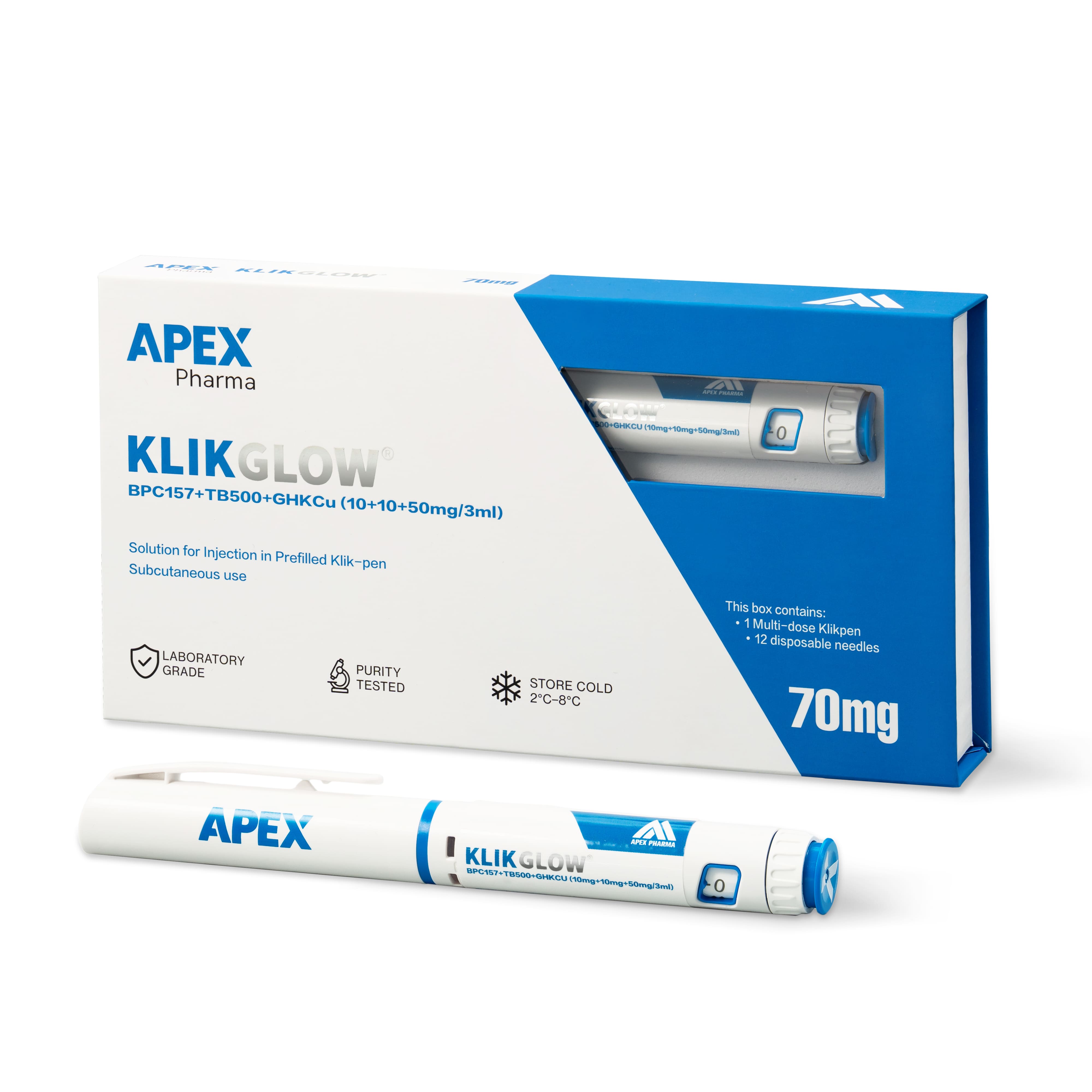
Scientific sources deserve more weight, but only for the question they examined. A paper about BPC-157 on its own is a paper about BPC-157. It does not test CLOVA's GLOW pen, which combines BPC-157 10mg, TB-500 10mg and GHK-Cu 50mg in one 3ml pen, and it should not be cited as though it did.
The setting matters too. Work done in a laboratory or preclinical setting should keep that label when you summarise it, rather than being shortened until it sounds broader than it is. A proposed mechanism is a reason to investigate, not a demonstrated result.
A filter for anything you read online
Before a review or reference goes into a purchase file, run it past these questions:
- Is this about the exact product and format you are buying, or something similar?
- Is it a service comment, a personal account or a scientific source?
- Can any part of it be checked against documentation you hold?
- If it is a paper, what material and setting did it actually study?
- Does your summary claim more than the source does?
- Would the purchase decision change if you removed it?
If the honest answer to the last question is no, leave it out. A shorter file with clear sources is easier to defend.
Where product-specific evidence actually sits
For the item you receive, the relevant evidence is the listing and the batch documentation. The GLOW product page gives the stated composition, and CLOVA publishes Certificates of Analysis on its reports page and on product pages where a report is available. Match the batch number on your pen's label to the report.
That match tells you something concrete about the material in front of you. No review can. If you want background on who you are buying from, the about page explains how CLOVA operates. GLOW is supplied for research use only, and any review suggesting otherwise is outside the scope of a lab purchase.
Frequently asked questions
Are positive reviews a sign that the blend is good quality?
Not on their own. A review might tell you an order arrived promptly, but it cannot confirm what was in the pen. Batch documentation matched to your label is the relevant check for the material itself.
Do studies on BPC-157 apply to the GLOW blend?
A study applies to the material and setting it examined. Research on a single peptide does not test a three-peptide combination, so it should not be presented as evidence about GLOW.
Why doesn't this article quote any reviews?
Because personal accounts cannot be verified and do not belong in a research purchasing decision. The useful approach is to classify sources by what they can establish, rather than repeat claims nobody can check.