Reading a Formulation Description Against Your Project Needs
A supplier's formulation paragraph is easy to skim and hard to compare. Mark each phrase as stated, descriptive or silent, then set it beside your requirement.
A supplier's formulation description reads smoothly, which is exactly why it is easy to accept. Component names are there, a pen size is there, a reassuring adjective or two. Whether the description meets your project needs is a separate question, and the answer rarely comes from skimming.
A reliable way to test a BPC-157 TB-500 GHK-Cu blend formulation description is to mark it up. Take each phrase and label it stated, descriptive or silent, then compare the result with a requirement you wrote beforehand.
Write the requirement before you read the listing
If you read the description first, it quietly shapes what you think you need. Write your requirement beforehand, in plain terms. For example: "all three components named, an amount given for each, and a report that identifies the batch."
Separate the essentials from the preferences. A purchasing colleague cannot tell which fields matter scientifically from the order of a template, so the researcher should say which differences would change the decision.
Mark up the description in three labels
Go through the description phrase by phrase and apply one of these:
- Stated. Specific and checkable: component names, amounts, pen size, label name, batch number.
- Descriptive. Wording you cannot check on its own, such as "premium", "carefully prepared" or "lab tested".
- Silent. Something your requirement needs that the description never mentions.
Use whatever method you like, whether three highlighter colours or three columns in a document. What matters is that descriptive phrases do not get filed as evidence.
A worked example with illustrative wording
Suppose a listing read: "Premium triple blend of BPC-157, TB-500 and GHK-Cu in a convenient 3ml pen. Lab tested for quality." This is invented wording for the exercise, not a real listing. Marked up, it looks like this:
- "BPC-157, TB-500 and GHK-Cu" and "3ml pen" are stated, though no amounts are given.
- "Premium", "convenient" and "lab tested for quality" are descriptive. There is no report, no batch and no method behind them.
- Amount per component, total, batch and report are silent.
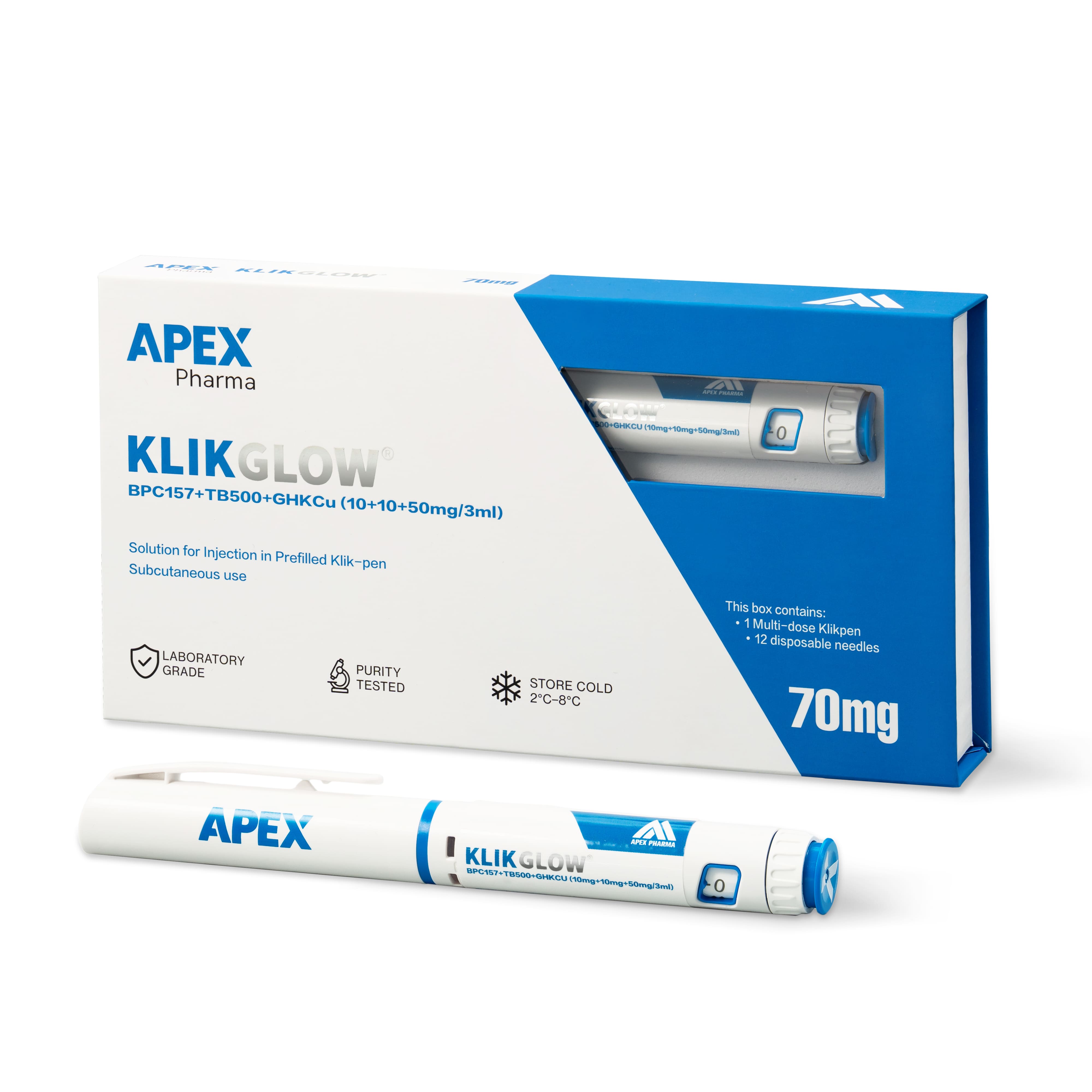
Set that against the requirement above and two of the three needs are unmet, even though the paragraph feels complete. Now compare it with the GLOW listing, which states BPC-157 10mg, TB-500 10mg and GHK-Cu 50mg in one 3ml pen, 70mg in total, under the label name KLIKGLOW. The difference is the number of stated items, not the tone.
When the description and requirement disagree
Do not soften the requirement to create a match. If the description is silent on an essential point, leave the cell empty, or write "not stated", and put one specific question to the supplier.
Be careful with alternatives. If the reply proposes a different item, assess it as a new candidate against the same requirement. Details from another listing should not be borrowed to make the first one fit.
Reports are published on the Certificates of Analysis page and on product pages where one is available. If one exists, match the batch number on the label to it. A report is evidence of the batch it names, which is not the same as a statement in the description.
Close with a plain note
Finish with a short note any colleague can follow:
- which requirements the description addresses
- which remain open, and why they matter
- whether the next step is a query, an internal judgement or a stop
Missing information does not prove the material is faulty. It means the description cannot yet be assessed. As these products are supplied for laboratory research use only, the note should stay with what is documented and leave out any view on how the material behaves.
Checklist for the comparison
- Is your requirement written down, separate from the listing?
- Has every phrase in the description been labelled stated, descriptive or silent?
- Are descriptive phrases kept out of the evidence column?
- Does each essential requirement have a source, or an open flag?
- Do the listing, label name and report agree on the product?
Frequently asked questions
Does the description have to match the label?
It should be consistent with it. Check the listing, the label on the pen and any report against each other, including aliases such as KLIKGLOW, and note any difference before you accept the item.
What if a requirement is not addressed anywhere?
Record it as "not stated" rather than copying your desired value into the candidate's column. A blank cell is more accurate than an assumed match, and it gives you a precise question to ask.
Who decides whether the description is close enough?
The researcher who owns the requirement. Purchasing can gather the information and keep the record straight, but should not decide that an unclear point is adequate. The comparison tool can help you line up listings, though the judgement remains with the researcher.