Go, Hold or Stop on a BPC-157 TB-500 GHK-Cu Blend Purchase
A supplier has replied about the GLOW blend. Three simple checks tell you whether to go ahead, pause with a named reason, or stop, and how to write it down.
You have asked a supplier about the GLOW blend and the reply is sitting in your inbox. Before anyone raises a purchase order, somebody has to decide what happens next. If you are trying to buy a BPC-157 TB-500 GHK-Cu blend in the UK for a lab, the useful answer is one of three: go, hold or stop.
The trick is to avoid a catch-all status like "in progress". Split the decision into three gates (the item, the paperwork and your own readiness) and judge each on its own. A pause then has a stated reason and an owner, and nobody has to reread a month of emails to find out why.
Gate 1: is the reply about the item you meant?
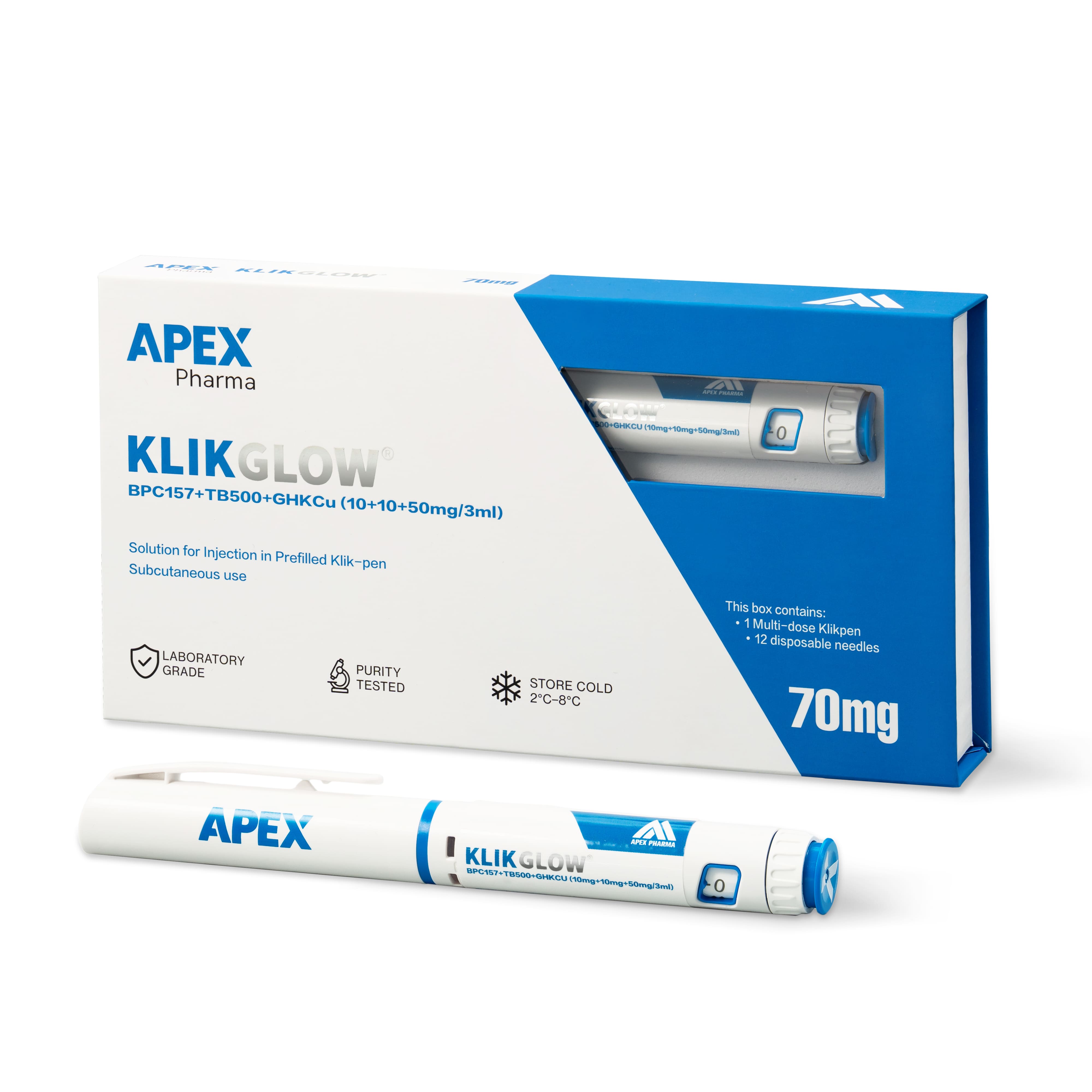
Compare what you have been told with the listing you shortlisted. The GLOW pen is BPC-157 10mg, TB-500 10mg and GHK-Cu 50mg in one 3ml pen, 70mg in total, with the label name KLIKGLOW. If the reply uses a shortened name, a different pack or a different set of components, you are no longer talking about the same item.
A reply about an alternative is not a bad outcome, but it does not answer your original question. Log it as a new candidate and run it through the gates from the top.
Gate 2: does the paperwork match?
Certificates of Analysis are published on the COAs page and on product pages where a report is available. Not every product or batch has one, so "no report found" is a legitimate result. Record it as unavailable, which is neither a pass nor a fail.
If you do have a report, check the batch number against the label and the component names against the pen. A report that names only one or two of the three components is a partial match, and your note should say so.
Gate 3: are you ready to approve and receive?
Having information is not the same as having permission. Before a "go", confirm:
- the right person has signed off the spend, under your organisation's own procedure
- the purchase fits the research use only basis on which the material is supplied
- there is room at 2–8°C away from light, with a plan not to freeze it (see the storage guide)
- someone will be there to receive a cold shipment, bearing in mind that orders paid before 1pm UK time Monday to Friday are dispatched the same working day (the delivery page has the rest)
What go, hold and stop look like
Go. The reply describes the exact GLOW pen, any report you found matches the label's batch number, and approval and storage are in place.
Hold. The item is confirmed, but something specific is outstanding: a batch report, an approval signature, a storage slot. Name the missing piece and who is chasing it.
Stop. After a reasonable follow-up, you still cannot tell which product is being offered, or the answers keep describing something other than your brief. Stopping does not need an accusation. It only means you could not establish that the item fits your requirement.
Writing the decision in four lines
A colleague should be able to pick up the file and understand where things stand without scrolling back. Something like this is enough:
Item: matches GLOW listing (3ml pen, 10/10/50mg, label KLIKGLOW).
Paperwork: batch report not yet received.
Readiness: approval pending.
Decision: hold until the report arrives. Owner: purchasing. Review when the supplier replies.
Notice what it does not do. It does not say "mostly fine", and it does not merge three separate questions into one comfortable-sounding status.
Frequently asked questions
Can I go ahead if one gate is still open?
That is for your organisation's own procedures to decide. Whatever you choose, record which gate is open and who is closing it. A "go" that hides an open gate usually comes back as rework later.
Does "go" mean the purchase is approved?
No. It means the information supports moving to the approval step. Approval and ordering are separate actions, and your note should keep them separate.
How long should a hold last?
Every hold needs an owner and a review point, such as "when the report arrives". An open-ended hold is how a perfectly sensible enquiry drifts into nothing.