Enquire, Park or Drop? Screening UK Sources for a Three-Peptide Blend
Search results for a three-peptide blend mix pens, bundles and vague listings. Sort each source into enquire, park or drop so the shortlist stays honest.
Searching for where to buy a BPC-157 TB-500 GHK-Cu blend in the UK gives you a mixed pile of results: single peptides, multi-vial bundles, one-pen blends, and pages that name all three peptides without saying what you would actually receive. Before anyone drafts a purchase request, the useful job is sorting that pile into sources worth an email and sources that are not.
A simple way to do it is to put every candidate into one of three bins: enquire, park or drop. The shortlist stays honest, because a source can be interesting without having been assessed. And a colleague who picks up the file later can see why each entry is there.
What can a search result actually tell you?
Less than it seems to. A result tells you that someone describes an item using some of the right names. It does not tell you whether the item matches your brief, and a prominent position or a familiar name proves nothing about fit.
So treat each result as a prompt for questions. The aim at this stage is not to rank sources or pick a winner. It is to decide which ones deserve a focused enquiry.
Enquire, park or drop: what each bin means
- Enquire. The page names all three peptides, gives an amount for each, says what format you would receive (one pen or separate items) and identifies the item clearly enough to ask about it by name.
- Park. The item looks relevant, but a detail that matters is missing. Write down the single question that would move it into "enquire" and leave it there until that question is worth asking.
- Drop. The listing does not answer this brief, for instance because it covers only one peptide, or because you cannot tell which three peptides it contains. Dropping is about fit, not a verdict on the seller.
A worked example you can check for yourself
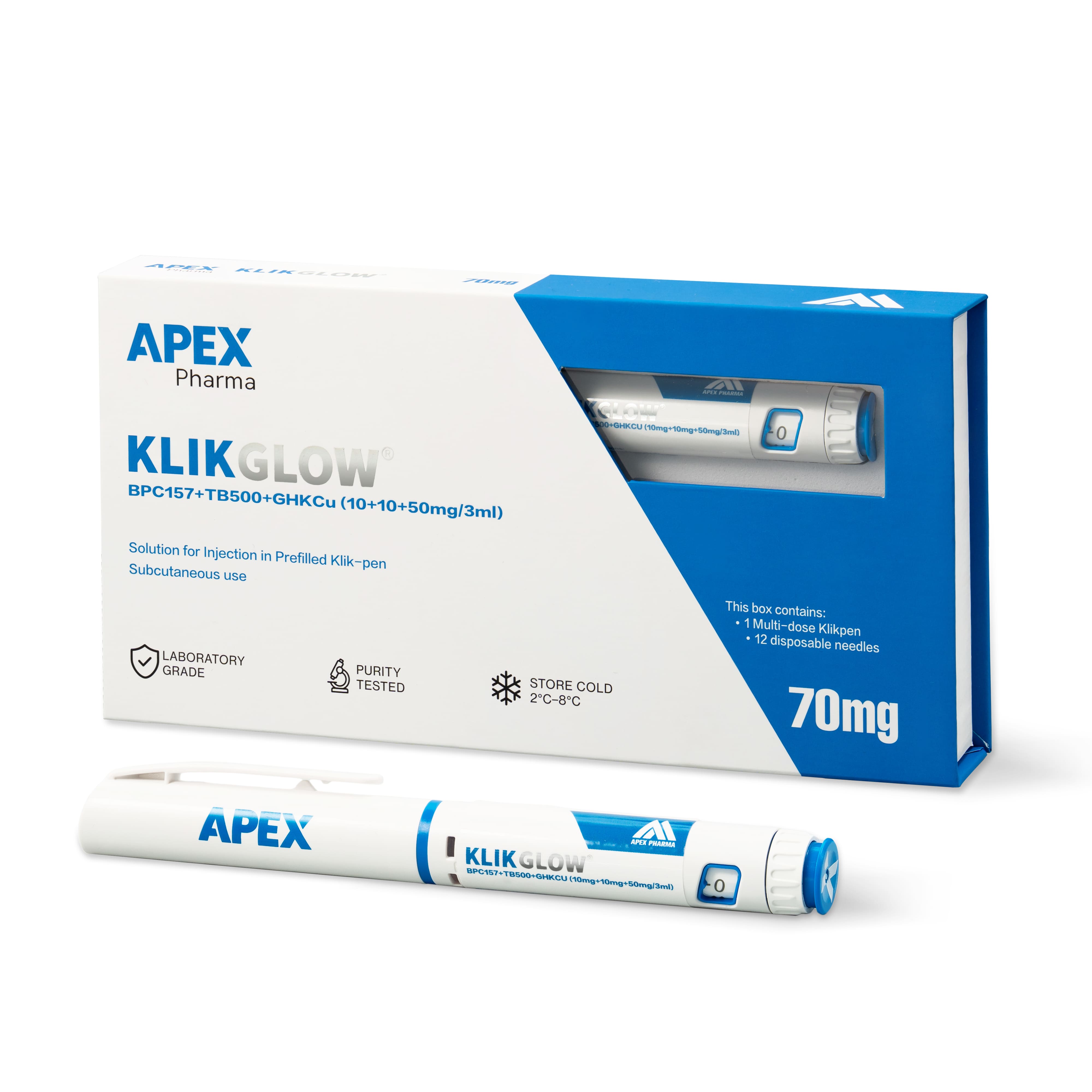
CLOVA's GLOW listing is a handy reference for what a complete description looks like: BPC-157 10mg, TB-500 10mg and GHK-Cu 50mg in one 3ml pen, 70mg in total, with the label name KLIKGLOW. All three components, their amounts, the format and the label name are on the page. A listing like that goes into "enquire", and your first questions turn to batch documentation and delivery, not to what the item is.
Now picture a page that names the same three peptides but gives no amounts and no pen or vial format. That goes into "park", and the question writes itself: what does one unit contain? A page selling a single peptide goes into "drop" for this brief, although it may be exactly right if your brief later splits into separate items from the shop.
None of this says GLOW is the right choice for anyone. It is a yardstick for how much a listing should tell you before you spend time on it. It is supplied for laboratory research use only, and suitability for your project is a judgement for your own team.
Keep each entry honest
A shortlist goes wrong in a few predictable ways:
- Composite products. If one page gives the amounts and another gives the pen size, you have two partial pages, not one complete item. Do not merge the attractive details into a single imaginary listing.
- Ranking words. Avoid "safest", "purest" or "most reliable" unless you have actually assessed evidence for that claim.
- Inclusion read as approval. Being on the list means "worth a question". When the list is forwarded to someone who did not do the search, say that plainly.
- Quiet substitution. If a source suggests a different item, it is a new entry to be judged against the brief, not a replacement that slides in.
Checklist: what to write down for each source
- The product name exactly as written on the page, with the web address and the date you viewed it.
- Each component named, with its amount.
- The format and the stated total, such as one pen or separate vials.
- Whether a batch report is linked or offered, and where. CLOVA publishes Certificates of Analysis on the COAs page and on product pages where a report is available, so expect some items to have none.
- What is still unknown, in one line.
- The first question you would ask, aimed at the point most likely to change your next decision.
- The bin you chose, with a reason.
A broad "send me everything" request tends to produce attachments while the decisive gap stays open. One precise question gets a more useful answer.
Frequently asked questions
Does being on the shortlist mean a source has been checked?
No. It means the description was relevant enough to justify a question. Checking happens afterwards, when you read the replies and any documents against your brief.
Should I contact every source on the list?
Only the ones in the "enquire" bin. Parked sources can wait until the question that would unlock them is worth asking, and dropped ones need no contact at all.
What if nothing fits the brief?
Record that outcome and why. You can then decide whether the brief needs revising or whether separate single-peptide items would serve the project better. The comparison tool can help line up CLOVA listings side by side.