Which of the Three Peptides Does the Purity Figure Describe?
A report for a three-peptide pen may show one purity percentage. Before it goes on a purchasing form, work out what it measures and which peptide it belongs to.

A Certificate of Analysis for a three-peptide blend might show one purity percentage, and it is tempting to read that as "the blend is this pure". It is rarely that simple. Before any BPC-157 TB-500 GHK-Cu blend purity figure goes into a purchasing form, you need to know what the number is measuring and which of the three peptides it speaks for.
This article covers three ways one figure can be read, how to tell which reading applies from the report itself, and what to write down. It quotes no figure for any batch, because the only figure that matters is the one on the report for the pen you actually receive.
Three things one number can mean
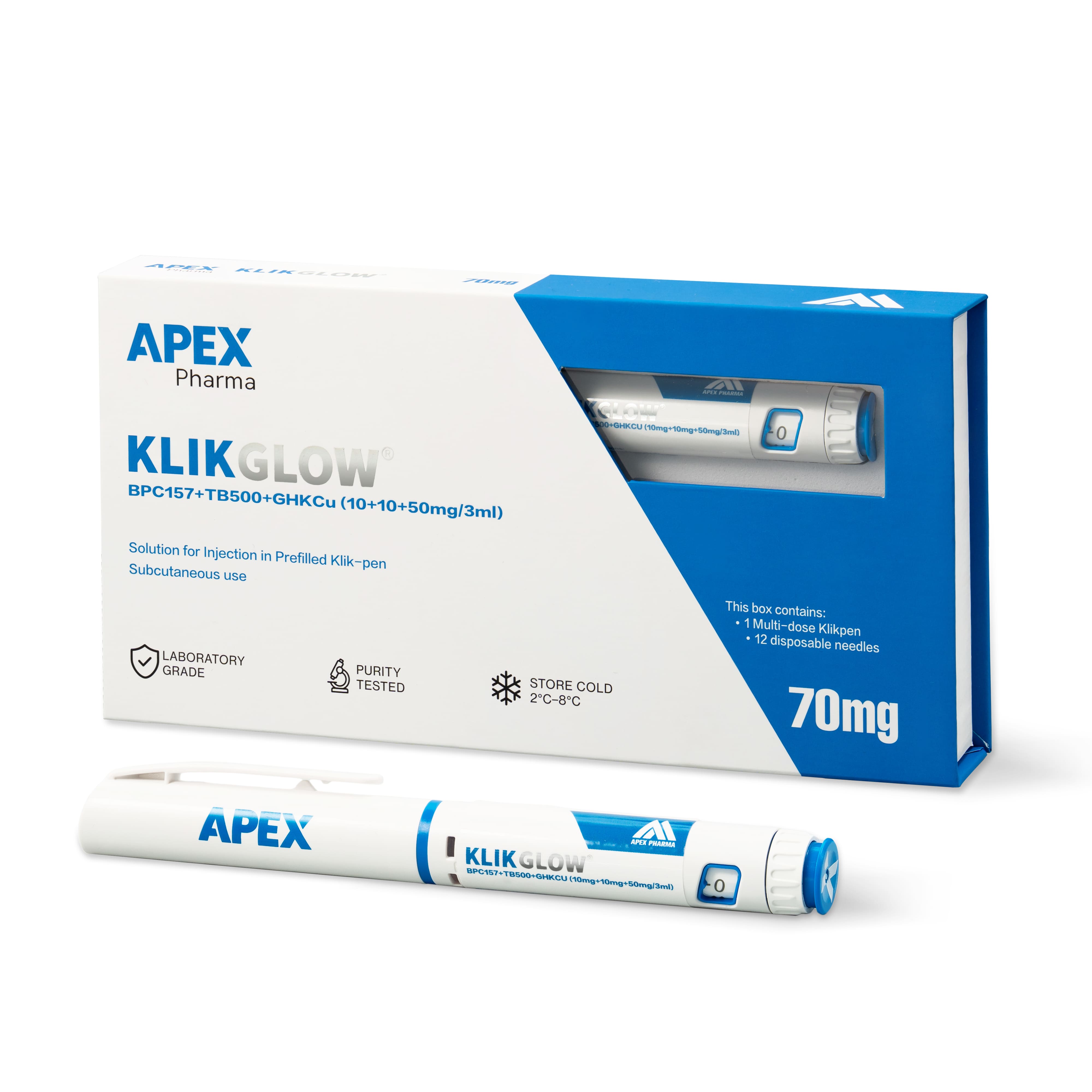
Take the GLOW pen, which holds BPC-157 10mg, TB-500 10mg and GHK-Cu 50mg in a single 3ml pen. A purity line on its report could be any of these:
- A whole-sample figure. One result for the analysed blend as a single sample.
- Per-component figures. A separate result for each of the three peptides.
- A single-component figure. A result for one named peptide, with the other two unreported.
They are not interchangeable. If you assume the first and the report actually gives the third, your records will say something about three peptides that the evidence only supports for one.
Where to look on the report
The answer is almost always on the page. Check these in turn:
- Sample name. Does it name the GLOW blend, or one individual peptide?
- Component. Which compound or compounds is each figure attached to?
- Batch number. Does it match the number printed on your pen's label?
- Method. Is an analytical method named, and does the report say how purity is calculated?
- Date and issuer. Who produced the report, and when?
- Scope notes. Does the report say what it did not test?
Reports are published on the COAs page and on product pages where one is available. Not every product or batch has one, so finding none is a reason to ask rather than a reason to assume.
Purity is not the same as amount
A purity figure normally describes how much of the analysed material is the named compound, according to the method the report states. It says nothing about how many milligrams of each peptide are in the pen.
The declared amounts on the GLOW listing are what the label states: 10mg, 10mg and 50mg, 70mg in total. A purity result does not confirm those amounts. It is an analytical statement about a material supplied for laboratory research use only, and it does not speak to anything beyond what the method measured. If your project depends on measured content, ask whether the report covers it rather than inferring it from a percentage.
When the report is silent on a peptide
Suppose a report gives a figure for BPC-157 and says nothing about TB-500 or GHK-Cu. That is a gap in the evidence, not a failed result. Your log should say so plainly, for example: "Purity reported for BPC-157 only. Not reported for TB-500 or GHK-Cu."
Resist the urge to invent a pass mark either. A purchasing form that expects a yes or no will not tell you what threshold your work needs. That should come from the researcher responsible for the project, not from whatever number looks reassuring. Entering the figure in a "quality checked" box with no context turns a narrow result into an apparent guarantee.
Asking the supplier a sharper question
Vague requests such as "can I have a higher purity" do not clarify anything. A specific question does:
- Does the report for this batch give purity separately for each of the three peptides?
- If it gives one figure, which component or sample does it describe?
- Is a component-level report available for this batch?
Include the batch number and the listing name so the answer can be attached to a defined item. If you are weighing the pen against separate single-peptide listings, the comparison tool lays out declared amounts side by side, but each listing's report still has to be read on its own terms.
Frequently asked questions
Does a purity figure confirm that a GLOW pen contains the stated amounts?
No. Purity and content are different questions. The amounts are what the label declares, and a purity result addresses how much of the analysed material is the named compound. If you need measured content, ask whether the report includes it.
Is a report published for every GLOW batch?
Reports are published where available, and you should not assume one exists for every batch. Check the COAs page and the product page, and match the batch number on the label to the report.
What if the report gives one figure for the whole blend?
Log it as a whole-sample figure and note exactly how the report labels it. If you need to know how it relates to each of the three peptides, ask the supplier to clarify before relying on it.