BPC-157 TB-500 GHK-Cu Blend Legal UK? Status Versus Permission
A one-line yes or no hides three different questions. Learn to separate what a product is, whether your organisation may hold it, and whether your planned work is approved.
Procurement sends one line to the lab manager: "Is the BPC-157 TB-500 GHK-Cu blend legal in the UK? Yes or no." A day later the reply comes back: "Yes, plenty of UK shops sell it." The form gets ticked and the request moves on.
Nothing in that reply answered what procurement needed to know. It answered "can I find it for sale?", which is a different question from "may our organisation buy, hold and use it for this work?" This article shows how to split a legality question into its parts so each one reaches the person who can answer it. It gives no legal advice and says nothing about whether the blend is or is not permitted.
The three questions inside one
"Is it legal?" tends to hide three separate enquiries:
- What is the product, and how is it presented? This is about status or classification: what category the product falls into, and how its description and presentation bear on that.
- May our organisation acquire and hold it? This is about permission, covering any licences, policies or approvals that apply to your organisation and site.
- Is our planned activity approved? This is about the work itself, including internal sign-off from safety, ethics or whoever governs research in your organisation.
An answer to one is not an answer to the others. A sound reply on the first question may leave the other two exactly where they were.
Which of these count as legal questions and which are institutional policy is for your advisers to say. Your job is to make sure each one gets asked.
What the documents in your file can and cannot answer
You probably already hold three kinds of paper, and none of them settles all three questions.
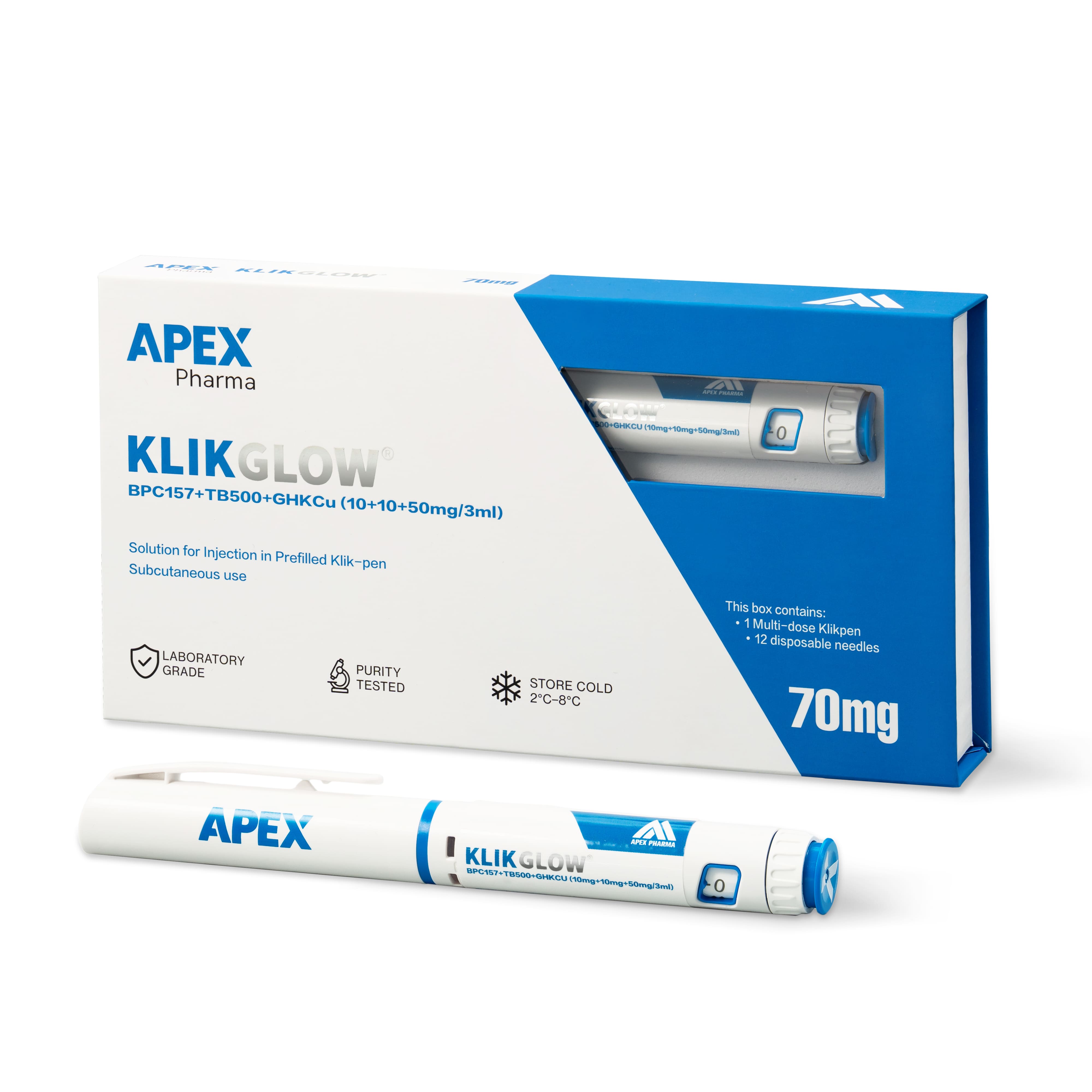
- The listing. On the GLOW product page you can see exactly what is sold: BPC-157 10mg, TB-500 10mg and GHK-Cu 50mg in one 3ml pen, 70mg in total. That helps with question 1 by pinning down the product. It is the seller's description, not a ruling.
- A Certificate of Analysis. Where one is available on the CoA page or the product page, it addresses properties of a tested sample for the batch named. It is not an official clearance and says nothing about permission.
- The research use only wording. It describes how CLOVA supplies the product. It does not exempt anything or approve any activity.
A genuine document does not become permission just because it sits beside one that supports a different part of your assessment.
Questions to send, in the right order
Before anything goes to a compliance or legal adviser, prepare these items, kept separate so each can be answered on its own:
- The exact product name, composition and the page address, with the date you viewed it.
- Question 1: how the product is categorised, and what in its description or presentation matters.
- Question 2: whether your organisation may acquire and hold it, and under what conditions.
- Question 3: what the planned work is, who proposed it and which internal approval it needs.
- Whether anything about the plan has changed since the first draft.
Say plainly if you are unsure which question applies. A clear description of the proposal helps the reviewer identify the right one, and it is better than inventing a category to make the request look complete.
Keeping each answer attached to its scope
When replies come back, write down the question each one addressed. "Adviser confirms product category as described on the page seen on [date]" is a narrow, useful line. "Cleared" is not.
If the proposal changes, such as a different pen, different quantity or different activity, earlier answers may no longer apply. Note which ones need revisiting. And if advice arrives with conditions, carry those conditions forward with every later recommendation that relies on it.
A good file ends with a short status line for each question: answered, pending, or not yet asked. That way the next colleague knows which task is still open, and a yes to the first question is never quoted as a yes to the third. If you want to understand who CLOVA is before you write to the team, there is more on the about page.
Frequently asked questions
Does a "yes" from a retailer answer all three questions?
No. A retailer can describe what it sells and how it is supplied. It cannot know your organisation's policies, permissions or planned work, so those questions still need an internal answer.
Can a Certificate of Analysis be used as proof of permission?
No. A report addresses what was tested in a sample from a named batch. It does not authorise anything and should be kept in the file for what it is.
What if my adviser's answer covers only one question?
That is a normal and useful outcome. Record exactly which question was answered, mark the others as pending, and ask again with the specific gap named.