Keeping BPC-157 TB-500 GHK-Cu Blend Ingredient Names Consistent
Listing, pen label, order email and inventory sheet can each name the same blend differently. A mapping note keeps your ingredient record accurate when someone tidies it up.
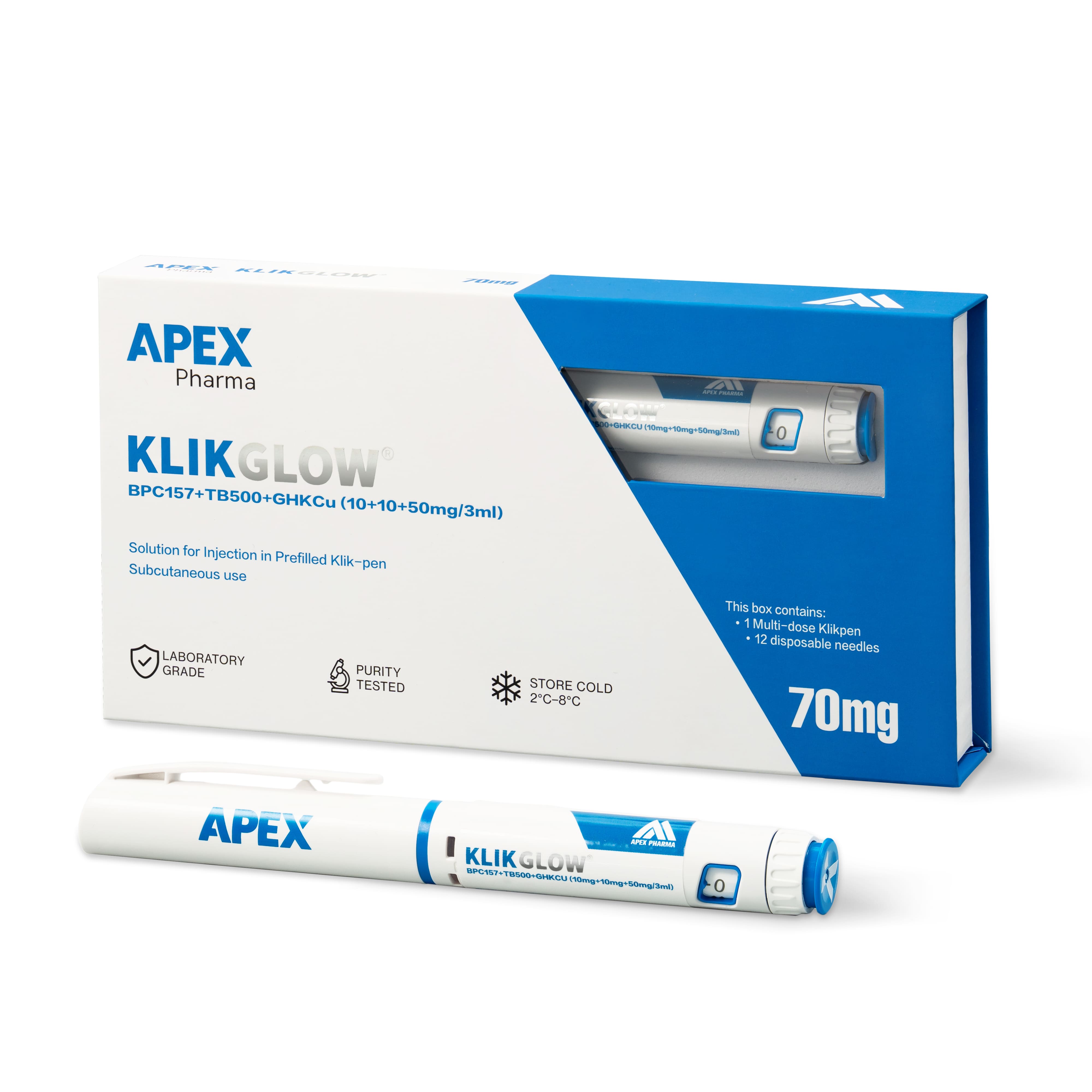
Four records, one blend, four spellings. The listing says "BPC-157 + TB-500 + GHK-Cu". The pen label reads KLIKGLOW. The order confirmation says "GLOW peptide pen", and the lab inventory sheet, which someone tidied last month, says "GHK blend". All four may refer to the same GLOW pen, but anyone reading only one of them would struggle to say what is in it.
This article is about keeping BPC-157 TB-500 GHK-Cu blend ingredients named accurately in your own records. It focuses on the quiet edits that cause trouble after the order has been placed, not on analytical identity, which is a separate question for a researcher and a matching report.
How names drift
Drift is rarely careless. A tired colleague shortens a name so it fits a column. Someone replaces an abbreviation with a longer term from another website because it looks more formal. A template autofills a preferred label. Each change seems reasonable on its own, but the record slowly stops matching the source.
The risk is highest in blends, because three names appear together and any of them can be dropped, merged or reordered. The GLOW pen holds BPC-157 10mg, TB-500 10mg and GHK-Cu 50mg in one 3ml pen, 70mg in total. If your sheet lists only two names, or lists three amounts that do not match those, the discrepancy needs explaining before the record is used for anything.
Record the source wording first
Start with a literal copy. From the GLOW product page, take the exact ingredient wording and the amounts as shown, along with any research use only statement, then note the address and the date you saw them. Do the same for the label when the pen arrives.
Do not fill gaps by borrowing a fuller list from a different page. A longer description elsewhere may concern another product, and a record that is more detailed but less accurate is worse than a short one.
Add a mapping note, don't overwrite
If your system insists on its own preferred term, keep the original and record the relationship beside it. A simple register works:
| Where seen | Wording as shown | Our internal term | Confirmed by | Date |
|---|---|---|---|---|
| Listing | (as copied) | (as used internally) | name | date |
| Pen label | KLIKGLOW | GLOW pen | name | date |
Fill the last two columns only when someone has actually confirmed the mapping. If nobody has, leave them empty. An empty cell tells a later reader that the equivalence is an assumption, whereas a smooth, finished-looking record would hide that.
Ask about the specific term
If a name is unclear, the question to the supplier should quote the wording and say why it matters. "Is this product genuine?" invites a general assurance that settles nothing. A better version is "The listing shows X and our form uses Y; can you confirm in writing whether they refer to the same ingredient in this pen?"
The reply may settle one name and leave another open. Record exactly that. It should not be stretched into a guarantee about the whole composition, and it should not be dismissed because something is still unanswered.
Where the exact chemical entity matters to your project, the right person to decide the level of detail is the researcher. Purchasing staff do not need to invent identifiers to make an enquiry sound precise.
Fixing a correction everywhere
Sooner or later someone spots a wrong name. The edit then has to reach every version actually relied on, not just the one on their screen. Use this checklist:
- List every place the old wording appears: listing capture, order record, inventory sheet, internal approval, any shared slides.
- Correct each one, or mark it as superseded with the date.
- Keep the original wording in the mapping note so the history is readable.
- Tell the people who used the earlier version, especially whoever signed off on it.
- Check that the amounts still match the source after the edit.
Without step 4, a corrected inventory sheet can sit alongside an old approval form that still carries the mistake.
Frequently asked questions
Should I replace BPC-157 or TB-500 with a longer name?
Only if the supplier or your researcher has confirmed the relationship and you record why. Keep the wording from the listing and label next to your own term so both stay visible.
Is KLIKGLOW the same product as GLOW?
KLIKGLOW is the label name used for the GLOW pen. Record both, with the label name noted as shown on the pen, and let your mapping register show the link.
Does a correct name prove what is in the pen?
No. A name in a record shows what a source states. Whether a particular batch matches is a separate question, addressed by a report for that batch where one is available on the CoA page.