BPC-157 TB-500 Blend Legal in the UK? Rank Your Sources First
Seller pages, forums and social posts all sound sure about UK status. Rank the sources by authority and know what a listing like the Wolverine page can and cannot tell you.
Type "BPC-157 TB-500 blend legal UK" into a search engine and you will find seller pages, forum threads, social posts and the occasional regulator page, all written in the same confident tone. Some of them contradict each other. None of them knows what your organisation plans to do with the material.
This article does not give a legal opinion, and it will not tell you that anything is or is not allowed. What it offers is a way to rank the sources you find, so you know whose answer carries weight and whose is background noise. Then you can take a clear question to the right person instead of relying on whichever page ranked first.
Why the results disagree
Most pages answer slightly different questions while appearing to answer the same one. A shop may mean "we sell this to UK customers". A forum poster may mean "I was never stopped". A news item may be about a different product altogether. Each can be sincere and still not address the rules that apply to your organisation.
Add the fact that blends are described inconsistently from listing to listing, and it becomes easy to treat a statement about one product as if it covered another. Before you weigh any claim, check which product it is about.
A ladder for ranking what you find
Put the sources you collect in this order, strongest first:
- Your organisation's own compliance, legal or safety adviser, answering about your specific activity. Nothing else reflects your situation.
- The regulator's published guidance, read by someone qualified to apply it. General guidance is not a ruling on a particular product, so the reading matters.
- A seller's statement about its own offering. It tells you how the seller describes and supplies the product. It is evidence of the listing, not a conclusion about your obligations.
- Forums, social media, reviews and word of mouth. These can suggest questions to ask, but they carry no weight on status.
If an answer you are relying on sits at level 3 or 4, treat the question as unanswered.
What a listing can tell you, using Wolverine as the example
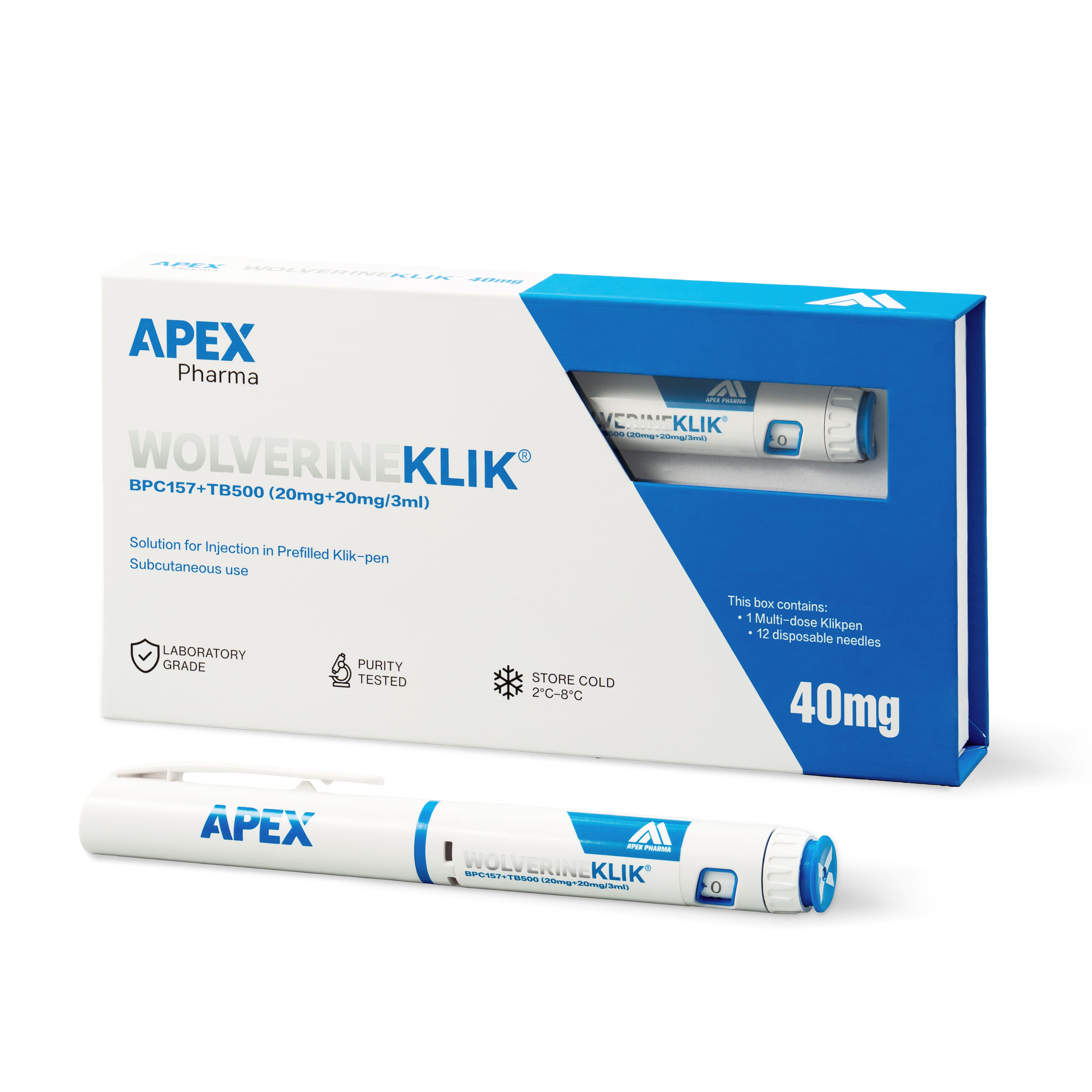
The Wolverine blend page tells you things a seller can actually know: the product is BPC-157 20mg and TB-500 20mg in one 3ml pen, 40mg in total, with the label name WOLVERINEKLIK. It ships cold in discreet unbranded outer packaging by tracked delivery, and should be stored at 2–8°C.
What it cannot tell you is whether your organisation may buy it, hold it or use it for your intended work. The phrase "research use only" is the seller's description of how it supplies the product. It is not a legal conclusion in either direction, and the page on what research use only means explains why.
Checklist for judging any legality statement you find
When a page, post or email makes a claim about UK status, ask:
- Which exact product is it about, and does that match the listing you are considering?
- Who wrote it, and what is their role or interest?
- Is it dated, and could the position have changed since?
- Does it say which rules or guidance it relies on, or just assert a conclusion?
- Does it describe an activity like yours, or a different one?
- Does it admit its own limits, or claim to cover everyone?
A statement that fails more than a couple of these is not worth carrying into a purchase request.
Writing down what you actually know
"Unconfirmed" is a perfectly respectable entry in a procurement file. It says the question is open, who will answer it and what is waiting on that answer. It is much more useful than a hopeful "OK to buy" copied from a web page.
Record the source, the date and its level on the ladder next to each claim. If you later take the question to your adviser, those notes show them what you were told and where it came from. If you want to know more about who supplies the product and how, CLOVA's about page is a sensible place to start.
Frequently asked questions
Is a seller saying the product is fine to buy enough?
No. A seller can describe its own offering, but it cannot know your organisation's obligations or intended activity. Treat the statement as evidence about the listing, and put the legal question to your own adviser.
Does a Certificate of Analysis answer the legality question?
No. A report addresses selected properties of a tested sample, such as the batch it names. It says nothing about regulatory status or whether your activity is permitted. Match the batch number on the label to the report, and use it for what it covers.
Who should I ask?
Start with whoever handles compliance or legal questions in your organisation. Give them the product name, the listing page, your intended activity and the specific question you need answered.