Blanket Legal Claims on Peptide Blend Pages, and What to Ask Instead
No shop page can tell you whether a blend is legal for your organisation. Here is how to spot sweeping claims and what to put in writing instead.
Anyone typing "is BPC-157 TB-500 blend legal UK" into a search box wants a straight yes or no. A product page can't honestly give one, and neither can a blog post. The answer depends on what the material is, how it is described and sold, who is buying it and for what purpose. Those are questions for your own organisation's compliance or regulatory contact.
What a listing can do is describe the product accurately and be clear about who is selling it. What you can do is notice when a page offers sweeping reassurance instead, and keep a record of exactly who said what. That is the practical focus here.
Why a one-word answer rarely holds up
A seller can only speak for its own product and the way it presents it. It cannot speak for your site, your project or your internal approvals. When a page announces that a blend is simply "legal", it has answered a question that nobody can answer in the abstract.
The same peptide names also turn up in listings that are described and sold in very different ways. Treat the name as the start of your enquiry, not the end of it. What matters is the specific product, the wording around it and the party selling it.
Phrases that deserve a second look
A handful of patterns appear again and again on blend pages. None proves anything on its own, but each is a reason to ask a follow-up before you rely on the page.
- "Legal everywhere" or "100% legal", with no explanation of what is meant or who decided.
- "Approved" or "certified", with no named body, document or date.
- Any wording about safety or effects on people or animals. A listing for laboratory material has no business making it.
- Language that blurs buying a research material with using it on a person or animal.
- Reassurance with no company name, no contact route and no date.
- A label or disclaimer presented as though it settles every compliance question.
That last one is worth a pause. A "research use only" label tells you how a supplier presents its product and what it expects the material to be used for. It doesn't decide anyone's compliance position on its own. Our page on what that wording means explains how to read it sensibly.
What a seller can reasonably tell you
A decent listing carries plenty of checkable information: the product name, the composition, the label wording, whether a batch document is available, who the seller is, and how delivery and returns work.
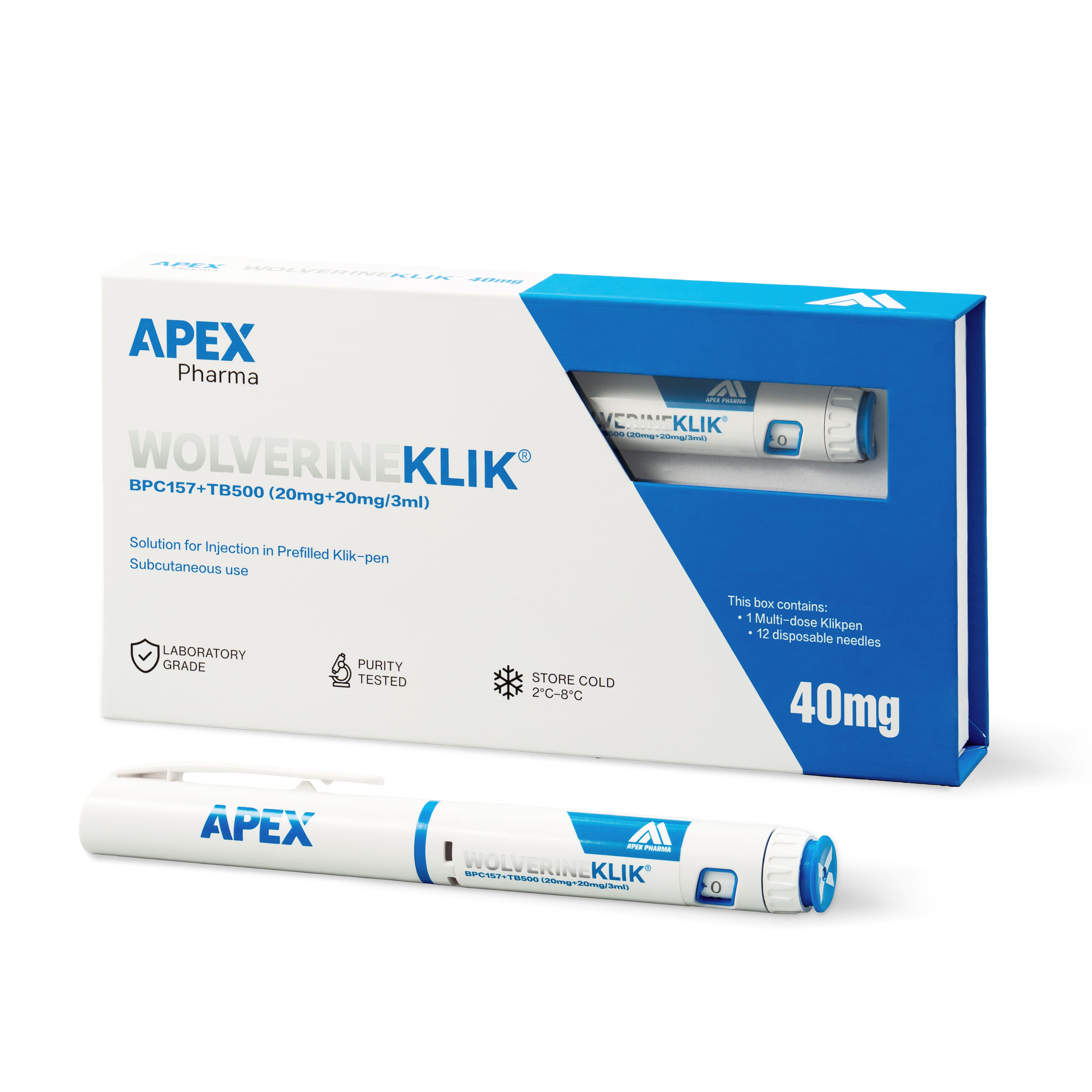
Take the Wolverine blend. It is listed as BPC-157 20mg plus TB-500 20mg in one 3ml pen, 40mg in total, with the label name WOLVERINEKLIK. You can compare that description with the label when the pen arrives, and with any Certificate of Analysis published for the batch. Reports are posted on that page and on product pages where one is available, so match the batch number on your label to the report rather than assuming.
Those are facts you can verify. Whether the purchase suits your organisation's rules is a separate judgement, and it stays with you.
Questions to put to a seller in writing
Email gives you something you can file. These five questions are a reasonable start:
- What exactly is the product, including its name, composition and pack format?
- How does the listing describe its intended purpose, and does the label say the same thing?
- Which company is selling it, and how do I reach a named person?
- Is a batch document available for the lot I would receive?
- Does the seller make any statement about compliance, and if so, on what basis? Or does it say that is for the buyer to determine?
A seller that replies "that is for your own compliance team to confirm" is giving you a more trustworthy answer than one promising that everything is fine. If you want to know who you are dealing with before you write, the about page is a sensible place to begin.
How to record what you find
Your file should show what you saw and what you concluded, so a colleague can follow it months later.
- Save a dated copy of the listing, including any wording about legality or intended purpose.
- Note the date and substance of each reply from the seller.
- Name the colleague or team who reviewed the question on your side.
- Record the outcome as your organisation's decision, not as something the seller confirmed.
If a seller never answers, log the point as unanswered. That is neither a yes nor a no, and it is perfectly reasonable to pause the purchase until it is resolved.
Frequently asked questions
Can CLOVA tell me whether a blend is legal for my organisation?
No. We can describe our listings, point you to published documents and explain delivery and returns. Whether a purchase is appropriate for your organisation is something your compliance or regulatory contact needs to decide.
What if the seller won't answer questions about compliance?
Record it as an open item and decide whether your project can proceed without the answer. Silence is not a reason to assume the best, or the worst, so the decision is best taken by whoever is responsible for approvals.