Does the Total Add Up? Checking a Peptide Blend Description
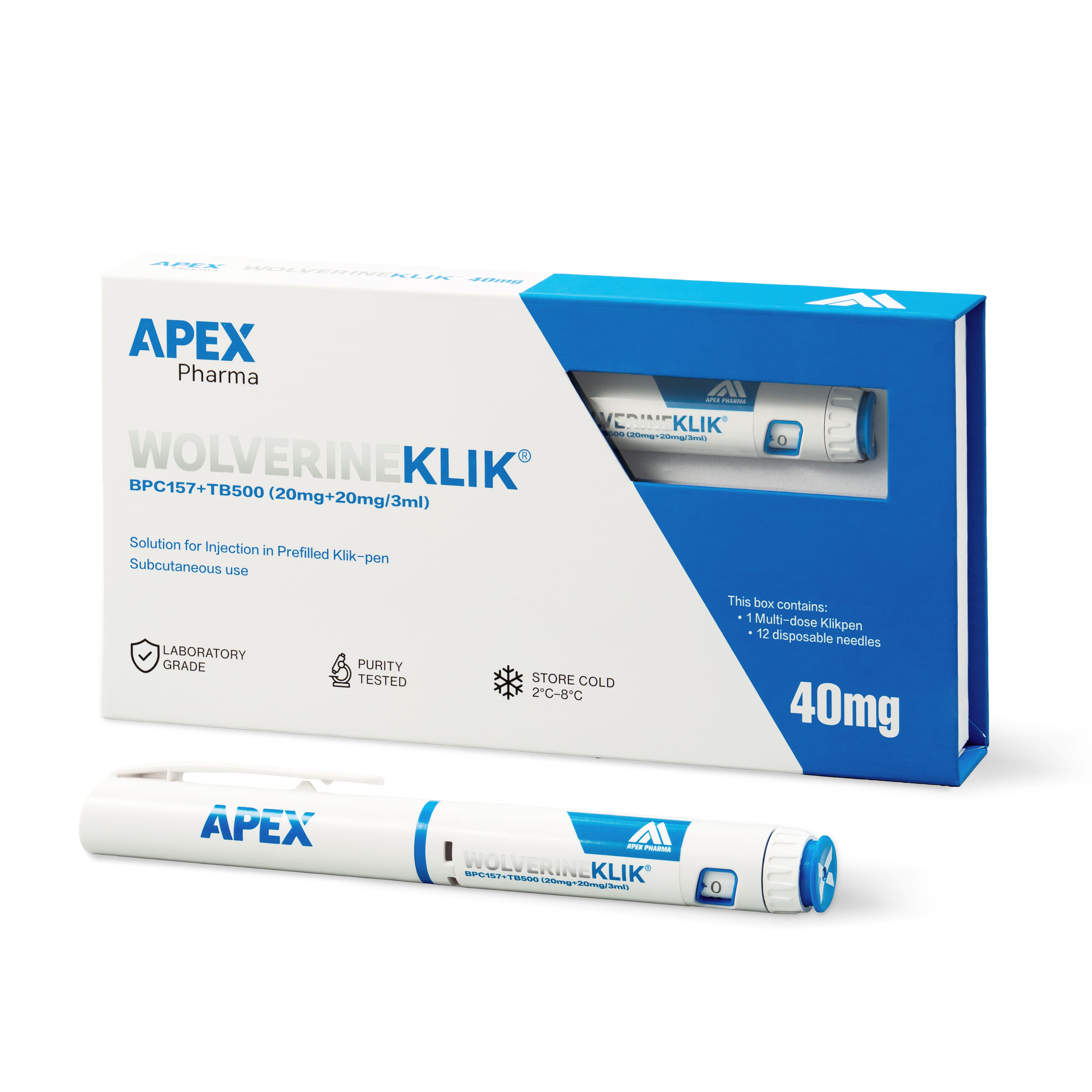
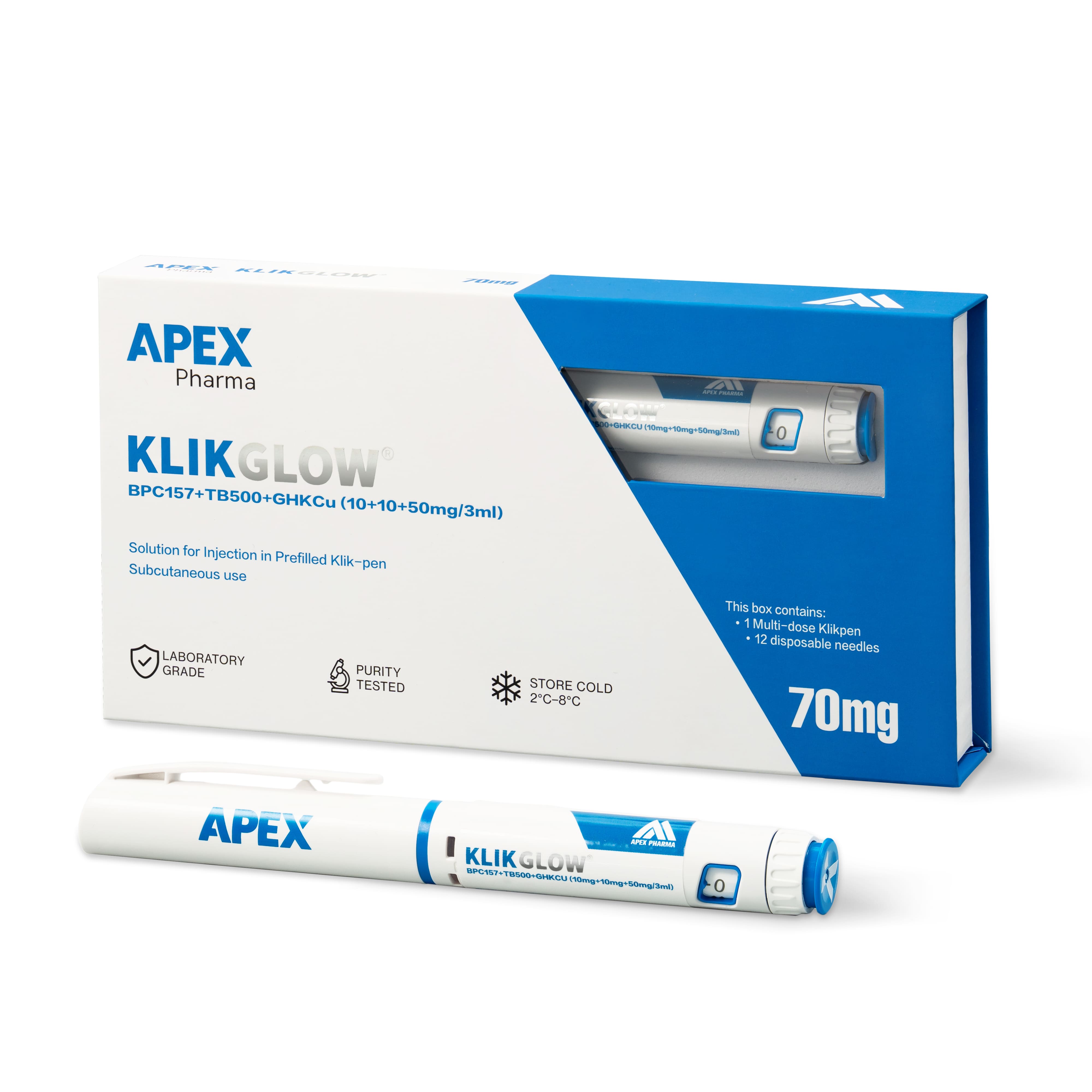
Headline totals add different compounds together. Use the GLOW (70mg) and Wolverine (40mg) listings to learn how to read component lines first and totals second.
A peptide blend description usually leads with a total: 40mg here, 70mg there. It is a handy number and a poor first check, because it adds different compounds into one figure. Two pens can have very different make-ups behind totals that look comparable.
The two blend pens in the CLOVA catalogue make a good worked example. Wolverine lists 40mg and GLOW lists 70mg, which makes GLOW look like the bigger product. Yet GLOW states only half as much BPC-157 and TB-500 as Wolverine. The sections below show why, and how to check any description the same way.
Two listings, worked through
| Wolverine | GLOW | |
|---|---|---|
| Label name | WOLVERINEKLIK | KLIKGLOW |
| Pen | One 3ml pen | One 3ml pen |
| BPC-157 | 20mg | 10mg |
| TB-500 | 20mg | 10mg |
| GHK-Cu | Not listed | 50mg |
| Total | 40mg | 70mg |
The Wolverine blend lists two compounds. The GLOW blend lists three. GLOW's higher total comes entirely from the GHK-Cu line, while its stated BPC-157 and TB-500 amounts are half of Wolverine's.
Why a total is the wrong first field
A total answers a question you rarely have: how many milligrams of anything are in the pen. Your records are more likely to need to say which compounds, and how much of each.
If you compare totals first, two mistakes become easy. You may treat the larger figure as "more" of everything, or you may overlook that one listing contains a compound the other does not mention. Go through the components first, then use the total as a check.
Use the arithmetic as a sanity check
The sums are simple, which makes errors easy to spot. Wolverine: 20 + 20 = 40mg. GLOW: 10 + 10 + 50 = 70mg. If a description gives a total that does not match its own components, or names only some compounds while quoting the full total, something has been shortened or mixed up.
A common slip is describing GLOW as a "BPC-157 and TB-500 blend", which drops the GHK-Cu line entirely. When a description leaves a component out, do not guess. Ask the source what the total includes, or go back to the product page.
Read any description in the same order
Whether you are looking at two pages on this site or a third-party description of either pen, work down the same fields:
- Product name and label name
- Pen volume
- Each compound, listed by name
- The amount stated beside each compound
- The total, only after the lines above
- Batch number, and the report where one is available
An apparently complete table can put different things under one heading. Keeping the fields in a fixed order exposes that quickly, and it stops a missing line from hiding behind a confident-looking total.
What the numbers do not tell you
Stated amounts describe contents. They do not describe how a material behaves, whether it suits a particular project or which pen a team should choose. Those are questions for the researchers involved, and both pens are supplied for laboratory research use only.
Certificates of Analysis are published on the CoA page and on product pages where a report is available. If one is listed for the pen you choose, match the batch number on the label to the report before relying on it.
Frequently asked questions
Which pen lists more BPC-157?
On the listings, Wolverine states BPC-157 20mg and GLOW states 10mg per pen. That is a statement about contents only, not about performance or suitability.
Why is the GLOW total higher if its BPC-157 and TB-500 amounts are lower?
Because GLOW also lists GHK-Cu 50mg, which Wolverine does not contain. The total is simply the sum of three lines instead of two.
Where can I compare the two pens side by side?
The comparison tool shows listings together, and each product page carries the full stated contents. Use the pages themselves as the source of truth for your records.