Splitting a GLOW Specification Into Needed, Stated and Evidenced
A spec sheet with every field filled in looks finished, even when wishes, claims and measurements share one column. Here is a simple three-part layout that keeps them apart.

A specification with every field completed looks finished. Often it is a blend of three different things: what you wanted, what a listing says and what a report actually shows, all written in the same column in the same confident tone. A reader cannot tell which is which, and that is how a hoped-for property ends up recorded as a fact.
A GLOW peptide specification becomes far more useful when you split it into three parts: needed, stated and evidenced. It takes a few minutes to set up, and it turns every gap into a question you can ask.
Why does one column cause problems?
When a requirement and a description sit in the same cell, they start to look like each other. "Batch-matched report" might be something you need, something the listing offers, or something you have already received. Three very different situations, one phrase.
Separating them is not extra bureaucracy. It simply makes it clear who said what, so that nobody mistakes an aspiration for a result.
Column one: what do you need?
Write this before you look at any listing, so the listing cannot shape your requirements. Typical rows:
- Item and format, such as a single pen or separate peptides
- Components you expect to see named
- Quantity required
- Documentation wanted, for example a report that matches the batch on the label
- Delivery and storage expectations
- Any numerical limits, which come from the person responsible for the research
That last row deserves a note. Buyers should not invent limits to make a form look complete. If nobody has set a figure, write "to be defined by [role]" and leave it there.
Column two: what does the listing state?
Now fill in what the supplier says, quoting the listing rather than paraphrasing it. For the GLOW pen that includes:
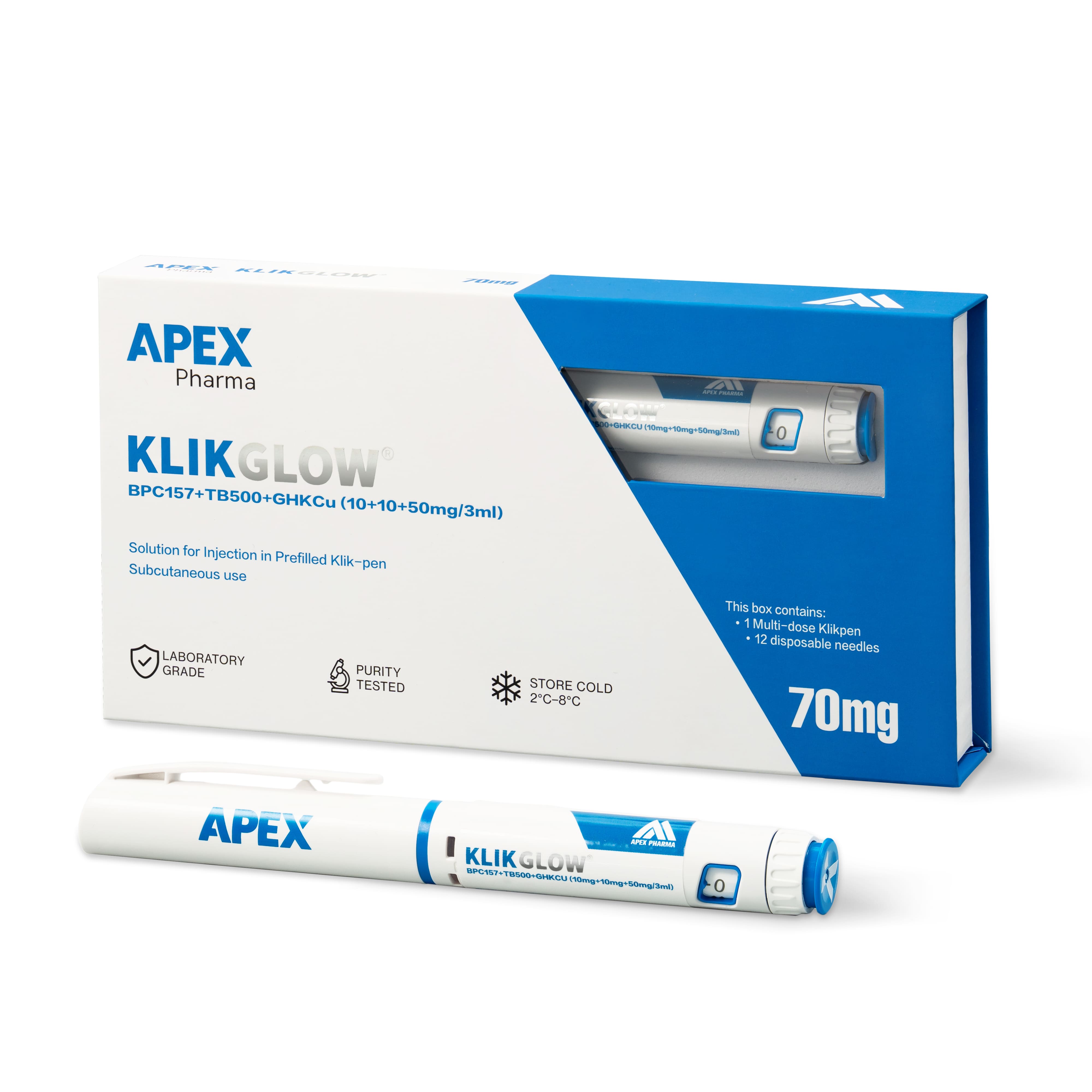
- One 3ml pen carrying BPC-157 10mg, TB-500 10mg and GHK-Cu 50mg, 70mg in total
- Label name KLIKGLOW
- Shipped cold, in discreet unbranded outer packaging, by tracked delivery (the delivery information has the detail)
- Stored at 2 to 8°C, not frozen and away from light
Notice that every line is a statement from the seller. None is a measured finding, and the column heading should make that obvious.
Column three: what is actually evidenced?
This column is for anything backed by a document you hold. For a report, that means the batch number, the subject named on it, what it states and its date. Reports are published on the COA page and on product pages where one is available, so for some batches this column will be empty. Leave it empty, or write "no report available". Never copy in something from another product's paperwork to fill the space.
If you are weighing GLOW against buying the three peptides separately, the comparison tool can help you line up the listing statements. The evidence column still has to come from reports for the batch you will actually receive.
How do you mark and use the gaps?
Give every row a status so the sheet is readable at a glance:
- Matches. The listing or report meets the requirement as written.
- Does not match. A clear difference, with a note of what and where.
- Not stated. The source is silent on this point.
- Needs a question. Something is ambiguous or the wording could mean two things.
Rows marked "not stated" or "needs a question" become your enquiry list, and the questions write themselves: "Does the report for batch [number] name each of the three components?" Specific questions get specific answers.
Keep the sheet for the next order too. CLOVA supplies GLOW for laboratory research use only, and a repeatable spec makes the next purchase a quick check rather than a fresh investigation.
Frequently asked questions
Do I need all three columns for every purchase?
For a one-off, low-stakes order you might skip column three. The split between needed and stated is the part worth keeping every time, because that is where assumptions creep in.
Who should set the numerical requirements?
Whoever is responsible for the research. Purchasing staff can ask for the numbers and record them, but should not make up pass marks to finish a form.
What if the listing doesn't state something I need?
Ask the supplier directly and write the answer, with the date, in column two. Resist inferring it from a similar product, since a shared name does not guarantee a shared specification.