Handing Over a GLOW Reading List Without Losing Context
A folder called "GLOW research" suggests every paper is about the blend. A good handover note says what each source names, why it was kept and what it does not cover.
Imagine you inherit a project from a colleague who has moved on. There is a shared folder called "GLOW research", twenty-odd PDFs, and a spreadsheet of links with no explanation. The folder name suggests everything inside is about the same thing. It almost certainly is not.
GLOW is a catalogue name for a pen containing three peptides, so a paper is unlikely to use it. A sensible handover note for GLOW peptide research says what each source is actually about and why it was kept. This article shows how to write one, so the next reader does not inherit assumptions along with the files.
Why is a folder called "GLOW research" misleading?
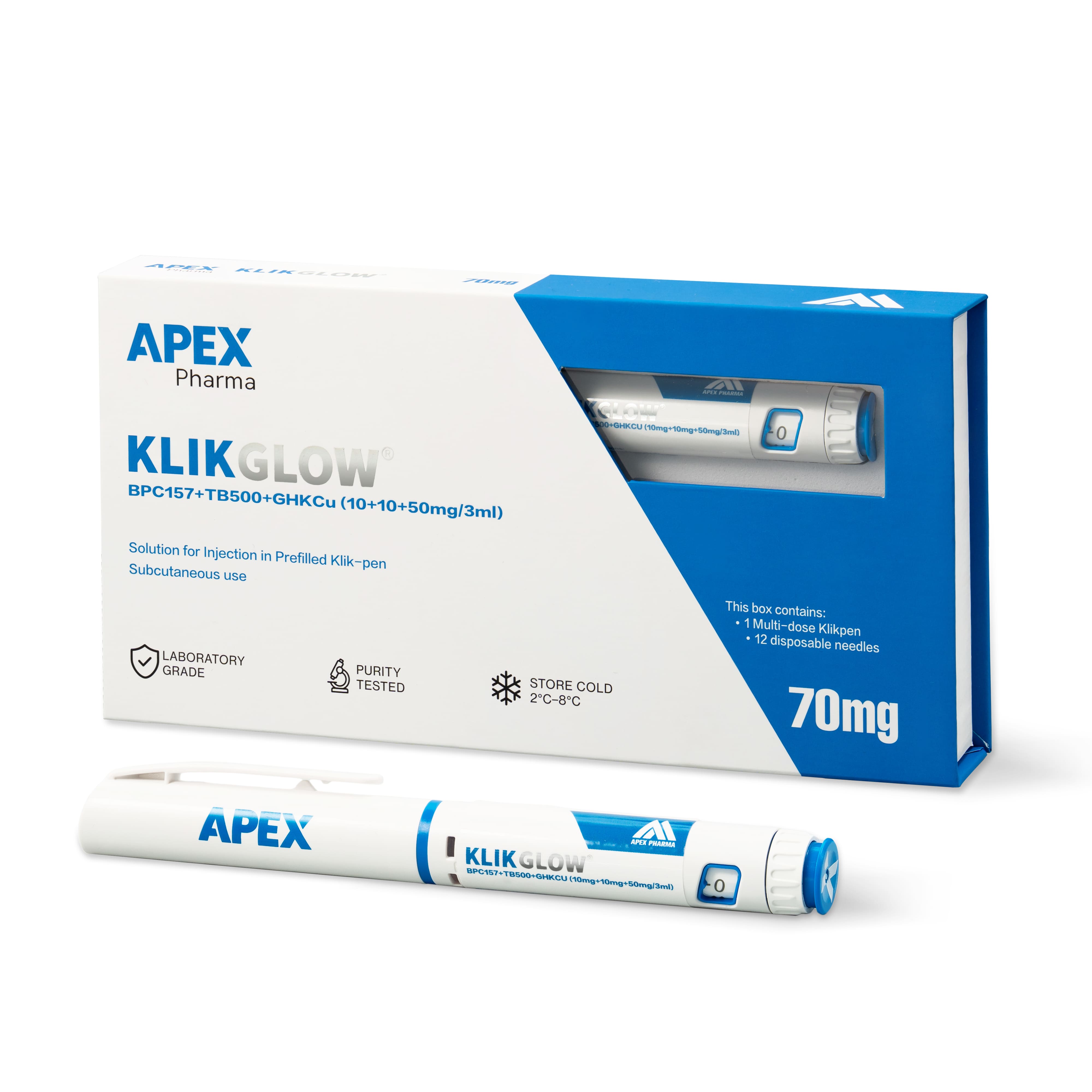
On the GLOW product page, the item is a 3ml pen with BPC-157 10mg, TB-500 10mg and GHK-Cu 50mg, 70mg in total. A paper that discusses one of those names is a paper about that substance. It is not a paper about the pen, the combination, or any particular batch.
That distinction is easy to lose once files share a folder. A summary that begins "the research on GLOW shows..." has already stretched its sources. Better to name the subject of each one and let the reader decide how far it reaches.
What question was the reading meant to answer?
Open the note with a sentence on why the reading was done. Typical answers are "to identify which compounds the pen contains", "to understand one component for background", or "to find out what documentation a supplier should provide". These are different jobs, and a source kept for one may be irrelevant to another.
If the question has changed since the folder was started, say so. Older sources may still be useful, but they should not be carried forward as if they answered the new question.
What should every source entry record?
A short entry per source is enough. Aim for these points:
- Subject. The substance or item named, in the source's own words.
- Role. Background, method reference, supplier document or internal note.
- Use. What you or your colleague relied on it for, and what it does not cover.
- Provenance. Where it came from and when it was last opened.
- Voice. Whether the summary restates the source or records someone's interpretation of it.
- Depth. Read in full, skimmed, or only the abstract seen.
The last two are the ones people skip, and they are the ones a successor needs most. "Abstract only" tells the next person where to look before leaning on a source.
How do supplier documents fit in?
Keep them in their own section. A product page or Certificate of Analysis describes a particular item and, for a report, a particular batch. Published literature describes concepts and substances in general. Mixing the two blurs which statements are about the pen in your fridge and which are background.
CLOVA publishes reports on the COA page and on product pages where one is available, so note the batch number beside any report you keep. If a batch has no report listed, write that down too. An empty slot in your records is more honest than a document that belongs to a different product.
How do you hand over what is still unresolved?
End the note with the loose ends, each with a name against it:
- The open question, written as a question.
- Whether it blocks the purchase or is only nice to know.
- Who needs to decide, such as the researcher, the buyer or an approver.
- What would settle it: another source, an answer from the supplier, or a technical reading of something already in the folder.
Repeating the original search will not always help. If the gap is how to read a paper already in the folder, a fresh search just adds more files.
Remember that this reading supports a purchasing decision for laboratory work. CLOVA supplies GLOW for research use only (see what that wording means), so nothing in your notes should read as a claim about outcomes.
Frequently asked questions
Do I need to read every source before handing over?
No, but be explicit about which ones you have read in full, which you skimmed and which you only know from a title or abstract. A candid "not read" is more useful than an implied "reviewed".
Can I treat a paper on one component as evidence about the whole blend?
Record it as a source about that component and nothing more. Whether it bears on the combination is a question for the person responsible for the research, and your note should leave that question visible rather than answer it by default.
Where should I put the supplier's paperwork?
In a separate section from the literature, labelled with the item and batch it describes. That way nobody mistakes a general background paper for a document about the pen you ordered.