Sorting GLOW Peptide Claims by the Evidence Behind Them
A line like "backed by research" can mean three different things. Here is how to split a GLOW claim into parts and match each to the right source.
Someone sends you a line saying GLOW is "backed by research". Before it goes into a purchasing note, it is worth asking what that sentence is actually claiming, because the phrase can mean three quite different things.
Searching for GLOW peptide evidence tends to mix them together: a statement about what is in the pen, a statement about how a batch was tested, and a statement about what a material does in a living system. Each needs its own kind of support, and a source that answers one says nothing about the others.
CLOVA supplies GLOW for laboratory research use only, so its listings describe contents and documentation. They make no outcome claims, and this article makes none either. It is about telling one kind of claim from another.
Three kinds of claim, three kinds of support
Most statements about a blend fall into one of these groups.
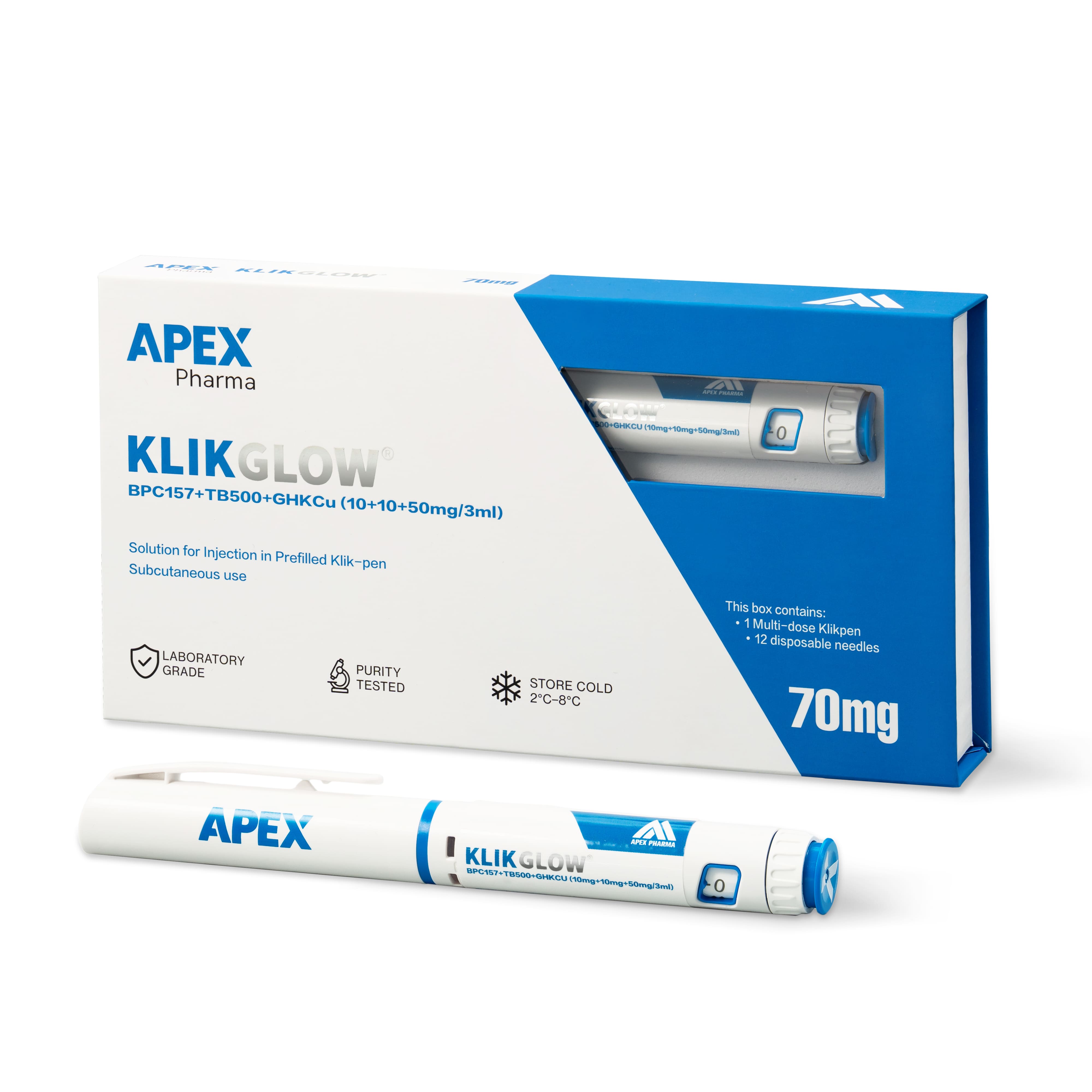
- Description claims say what the product is. For example, that the GLOW pen is a 3ml pen holding BPC-157 10mg, TB-500 10mg and GHK-Cu 50mg, 70mg in total. The support is the label (KLIKGLOW) and the product page.
- Analytical claims say something about a specific batch, such as identity, purity or measured content. The support is a Certificate of Analysis for that batch, where one is published on our COAs page or on the product page.
- Outcome claims say what a material does in people or animals. A label, a listing or a Certificate of Analysis cannot support these, whoever makes them.
The last group deserves the most caution. If a claim of that kind turns up in a forum post or a message, keep it out of your purchasing record, or log it only as an unverified statement with its source.
A worked example with one pasted sentence
Suppose a colleague forwards this: "GLOW is 70mg of tested, research-proven peptides." Pull it apart one phrase at a time.
- "70mg" is a description claim. Check it against the listing and the label. The three components add up to 70mg (10 + 10 + 50), so as a total for the pen, it holds.
- "Tested" is an analytical claim with no detail. Which report, on which batch, covering which product? Until you can point at a document and a batch number, all you can say is that the word was used.
- "Research-proven" is too vague to check. Ask what was shown, by whom, and about which material.
Only the first phrase could be confirmed in five minutes. The other two turn into questions, which is exactly what the exercise is for.
Why a study of one component does not transfer to the blend
If someone cites a paper on one of the three components, that paper tells you what was studied in that paper, with that material, in that setting. It does not tell you what is in a GLOW pen, how a particular batch tested, or anything about the three components together.
The same applies in reverse. A batch report for a single-peptide product does not describe a different pen that happens to contain the same ingredient. Match each report to its product and batch number, and treat everything else as background reading.
Checklist before a claim goes in your record
- Write the claim as one sentence, with who said it and where you saw it.
- Decide whether it is a description, an analytical or an outcome claim.
- For description claims, compare it with the product page and the KLIKGLOW label.
- For analytical claims, find the report (where one is published) and match the batch number on the label to the one on the report.
- For outcome claims, record them as unverified and leave them out of the reasoning for the purchase.
- Note which source supports which conclusion, and what is still open.
Writing "not established" in your notes
A record is allowed to say that something has not been established. It is a legitimate finding, and a more honest one than a vague tick. Three short lines are often enough:
Description: confirmed against the product page.
Batch analysis: report found; batch number to be matched when the pen arrives.
Outcome statement: not a listing claim, not relied on.
Keep "no support found" separate from "shown to be false". Failing to find evidence for a claim does not prove the opposite. It just leaves the question open, and your note should leave it open too.
Frequently asked questions
Does a Certificate of Analysis back up what people say GLOW does?
No. A Certificate of Analysis reports on testing of a particular batch. It has nothing to say about effects in people or animals, and CLOVA does not present it as if it did. Reports are published where one is available, so always check the batch number against the label.
Is there a study of the GLOW blend itself?
The product page describes contents and documentation, not outcomes. If someone sends you a paper as support, check which material it actually examined and whether that was this combination or only one component.
How should I record a claim I cannot verify?
As an unverified statement, with its source and the date you saw it, kept apart from the facts you have confirmed. That way anyone reading the file later can see what the purchase did and did not rely on.