Got a Total but Not the Breakdown? Following Up on Blend Amounts
When a supplier replies with one total instead of per-component amounts, guessing is risky. Here is how to follow up and keep your records accurate.
You asked what is in a three-peptide pen and the reply says "70mg". That is a real number, but it is one figure standing in for three components, and a buyer who needs BPC-157 TB-500 GHK-Cu blend component amounts for a record can't use it as it stands. Partial replies like this are common, and they are usually innocent: someone answered quickly with the figure that was closest to hand.
The right move is neither to accept the answer nor to chase it aggressively. It is to work out exactly what is missing and ask for that, in terms the supplier can answer in a line or two.
Why one figure isn't a breakdown
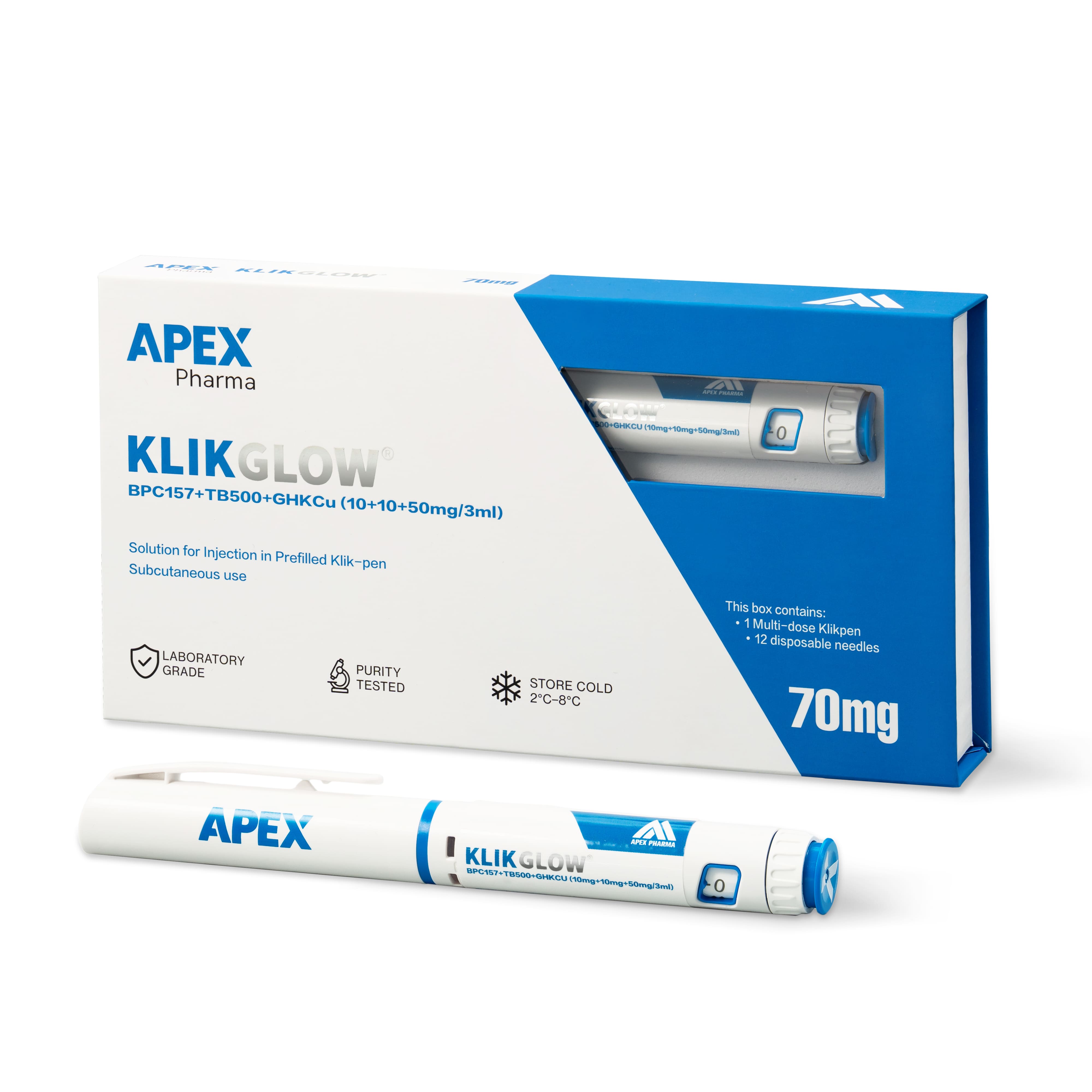
A total tells you the combined quantity in the pen. It doesn't tell you how that quantity is divided, and it says nothing about volume. On CLOVA's GLOW listing, for instance, the pen holds BPC-157 10mg, TB-500 10mg and GHK-Cu 50mg in 3ml, which makes 70mg in total. Even there, the "70mg" and the "3ml" describe different things.
Notice too that the split isn't even. An equal division of 70mg would match none of the three real figures. That is why it is never safe to work out the missing numbers yourself; any unevenness in a blend is exactly what you need the supplier to state.
Common partial replies and the follow-up each one needs
- A total only. Ask for the amount of each named component, with units.
- Some components but not all. Name the missing one in your reply and ask for its figure specifically.
- Figures with no units. Ask whether they are milligrams, and whether any of them refers to volume instead.
- Figures for a different product. Ask the seller to confirm which listing the figures belong to; the same peptide names can appear on separate single-peptide pens and blends.
- "As per the label" or "as per the page". Ask them to quote the wording, or send a photo of the label, so you can see the actual text.
- A description rather than a number. Thank them and repeat the one question you still need answered.
Keep the question you actually asked
Before replying, re-read your original message. Were you asking what the seller declares for the product, or what a laboratory measured? Those are different needs. A label or listing states what the product is declared to contain. A Certificate of Analysis, where a report is available for your batch on the COAs page, may show something measured. A reply that answers one doesn't answer the other, so note which one you've received.
A short follow-up you can adapt
Thanks for the reply. You gave a total of [figure]. Could you tell us the amount of each component in the pen (BPC-157, TB-500 and GHK-Cu), with units, so we can record it against the product listing?
Keep it narrow. Repeating your original broad question tends to produce the same answer again, whereas one precise gap is easy to close.
Update the record that approvers use
Once the answer arrives, correct any earlier summary that used the incomplete figure. A fix that lives only in an email thread won't reach the document your approver is reading.
Before you mark the question as answered, check that:
- Each component is named, with its own figure.
- Units are stated, and mass is not confused with volume.
- The figures refer to the same product, pack and format as your quote.
- The reply is dated and filed with the original question.
- Anything still unknown is written down as unknown.
If the supplier can't provide the breakdown, that is an open item, not proof of a problem. Explain your decision in terms of what your brief requires.
Frequently asked questions
Where can I see the amounts for CLOVA's GLOW pen?
They are on the GLOW product page: BPC-157 10mg, TB-500 10mg and GHK-Cu 50mg in one 3ml pen, 70mg in total. The label name is KLIKGLOW, so you can match the pen you receive to that description.
Is the amount on a label the same as a measured amount?
Not necessarily. A label or listing states what the product is declared to contain, while a report may show what was measured on a particular batch. Match the batch number on your label to the report if one is published.
Should I ask again or just estimate the missing figure?
Ask again, and make it a specific question about the missing component. Estimating by splitting a total is the one approach that is most likely to put a wrong number in your records.