Does the COA Answer Your Question? Matching Blend Reports to the Brief
A certificate can be genuine and still not answer what your project needs to know. Start with the question, then check what the report actually covers.
A Certificate of Analysis can be perfectly genuine and still say nothing about the thing your project needs to know. That is easy to miss with a BPC-157 TB-500 GHK-Cu blend COA, because a tidy document with a batch number and a signature looks finished. It only counts as evidence for the questions it actually addresses.
The fix is simple: decide what you are asking before you open the report. This article shows how to turn a vague "we need the COA" into specific questions, and how to record what the document does and doesn't establish. The GLOW blend is used as the example throughout, though the method suits any multi-component listing.
Write the question before you open the report
"Is the paperwork OK?" is not a question a document can answer. These are:
- Is this the product I ordered?
- Does this report belong to the batch printed on my label?
- Does it mention each component in the pen, or only some of them?
- Does it give an amount for each component, with units?
- Who issued it, and when?
Each one points at a different part of the report. If you write them down first, you read with a purpose and you notice what is missing instead of what is reassuring.
What to look for, question by question
Take the questions above and match each to a place in the document.
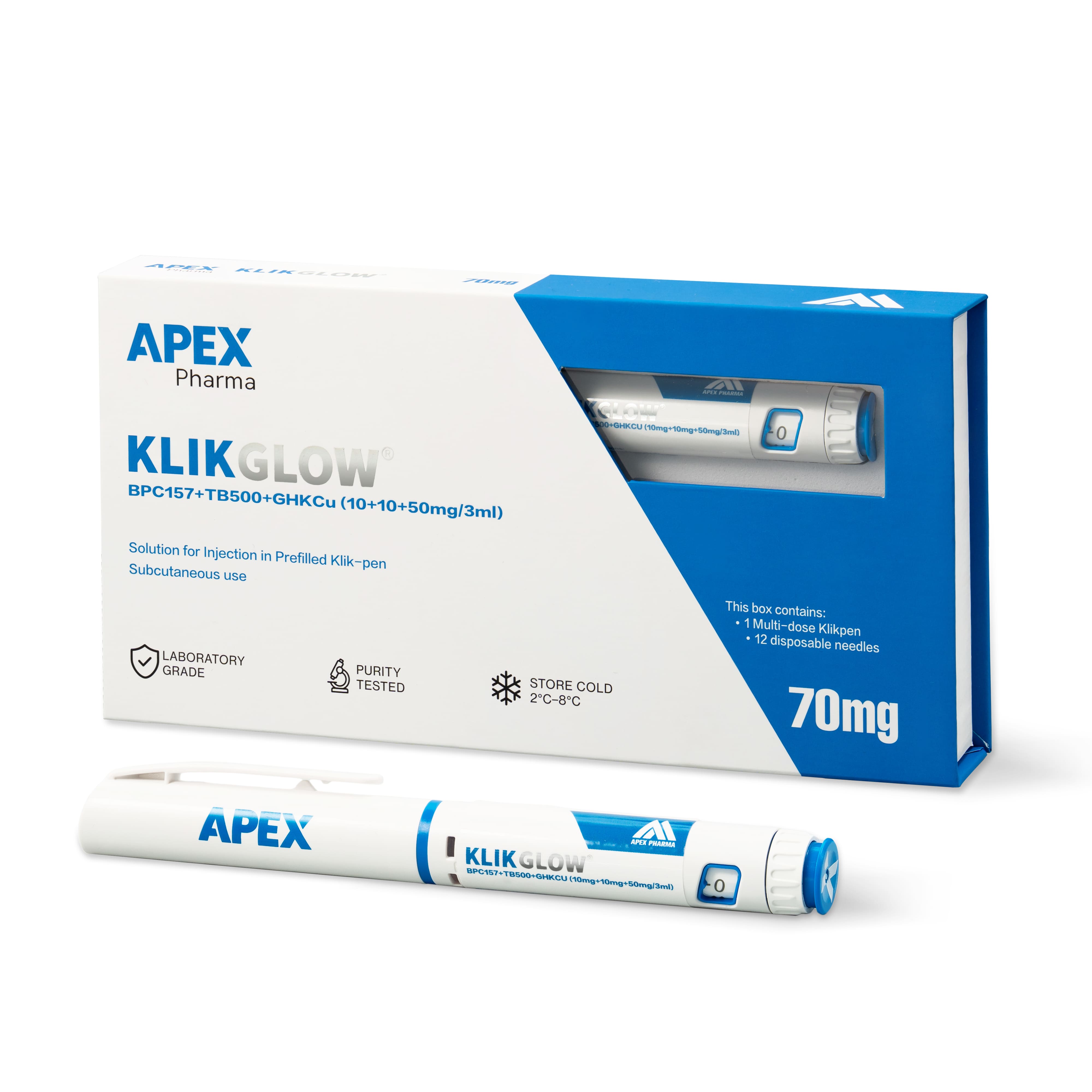
- Same product? Compare the product name and composition on the report with the listing. GLOW is listed as BPC-157 10mg, TB-500 10mg and GHK-Cu 50mg in one 3ml pen (70mg in total), with the label name KLIKGLOW.
- Same batch? The batch number on the report should be identical to the one on your pen. A report for a different batch tells you about that batch, not yours.
- All components covered? Check whether the report names BPC-157, TB-500 and GHK-Cu, or just one or two. A finding about one peptide says nothing about the others.
- Amounts stated? See whether figures are given per component with units, or only as a single overall number.
- Issuer and date? A report should say who produced it and when, so you can judge whether it is current for the stock you hold.
- Limits? Read what the report says about what was tested. Where something is unclear, ask the seller rather than guessing.
Published reports are listed on the COAs page and on product pages where a report is available. Not every product or batch has one, so a missing report is a prompt for a question, not a conclusion.
When a report only covers part of your question
This is the usual situation, and it is not a failure. A report may settle identity for one component and leave amounts for the others open. Say so plainly in your notes: this much is established, this much isn't.
Two habits keep you honest. First, don't stretch a useful finding into a broader guarantee just because a purchasing form has a box marked "COA received". Second, don't throw out a report that answers some of your questions because it can't answer all of them. Keep what it contributes and make the remaining question the next enquiry, aimed at the seller or at a technical colleague.
Don't let the report set your requirements
It's tempting to look at a headline figure and adopt it as the standard. Resist that. Your acceptance criteria should come from the research brief and the people with the technical expertise to judge it, written down before the report arrives. Otherwise the document ends up defining what counts as good enough.
A one-line evidence note
When you finish, leave a note that a colleague can read in ten seconds:
"Report [reference], batch [number], issued [date] by [issuer]. It shows [what it establishes]. It does not address [what is still open]. Next step: [action and owner]."
That format keeps each conclusion tied to the record and stops a half-answered question from being filed as settled.
Frequently asked questions
Is one COA enough for a blend?
It depends on what that report covers. Check that it relates to your batch and that it speaks to each question in your brief; anything it leaves out remains an open item.
What should I do if the batch number on the report doesn't match my pen?
Don't treat the report as applying to your stock. Contact the seller with both batch numbers and ask which report corresponds to the pen you received.
Does every CLOVA product have a Certificate of Analysis?
No. Reports appear on the COAs page and on product pages where one is available. Always match the batch number on your label to the report before relying on it.