How to Choose Research Peptides: Decide What Rules One Out First
Most selection advice starts with what you want. Starting with what would rule a candidate out keeps a shortlist honest and easy to defend to an approver.
Most advice on how to choose research peptides starts with what you want: the right compound, a sensible amount, a fair price. That is the easy half. The more useful half is deciding in advance what would rule a candidate out, because a shortlist built only on attractions tends to survive every awkward question.
Write your exclusion rules before you open the catalogue and you will be comparing listings against the project instead of against each other. It also gives your approver something firm to react to.
Start with the information the project needs
"Promising compounds" is not a requirement. A requirement sounds like: which material or materials the work involves, whether they must come as a single peptide or a combined pen, what stated amount and pack format are needed, what batch documentation you must hold, and when the material has to arrive.
Split those into essentials and preferences. Essentials become exclusion rules. Preferences become tie-breakers.
Turn essentials into exclusion rules
Plain wording works best. A candidate drops out if:
- the listing does not state the amount of each component you need
- no report is available for the product, or you cannot match one to the batch number on the label
- the pack format differs from your specification, for example one pen holding two peptides when you need two separate pens
- delivery cannot meet your date, or you cannot store the pen at 2–8°C on arrival
- a required answer is still missing after a focused enquiry
- your organisation has not authorised ordering that material, since everything in the catalogue is supplied for laboratory research use only
There is a real difference between "unsuitable" and "not assessable on current information". Use the second wording when the problem is a missing answer. The source may well be able to supply it, and calling the candidate unsuitable closes a door that was only ajar.
The same ingredients can fail different rules
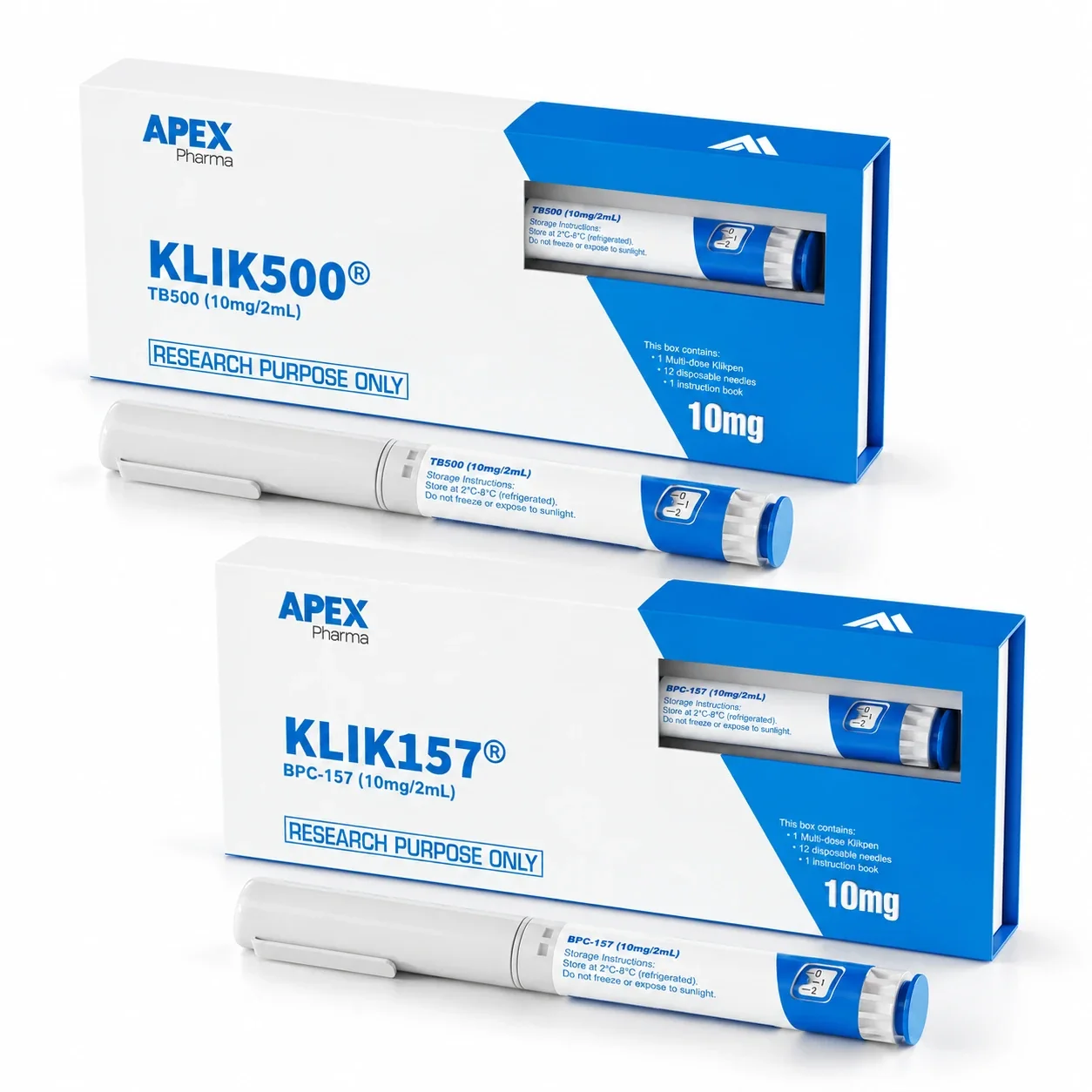
Two CLOVA offerings show how this works. The Wolverine blend is one 3ml pen with BPC-157 20mg and TB-500 20mg, 40mg in total. The STRENGTH bundle is two separate pens, TB-500 10mg/2mL and BPC-157 10mg/2mL. Both involve the same two names, yet a rule about pack format or per-component amount gives different answers for each.
If you are weighing options like these, the comparison tool can put their descriptions side by side. Remember that a shared ingredient name does not make two listings interchangeable for your brief.
Apply the rules in three passes
Keep the stages distinct, because each carries a different status.
- Candidate. The listing is worth a look. No decision has been made.
- Shortlisted. It has survived your exclusion rules on the information currently available. Open questions are written down.
- Approved. The researcher has interpreted the supporting information and the right person has authorised the spend.
A shortlist is not an approval. Authority to ask questions is a smaller thing than authority to buy, and the request you send upwards should say which one you want.
Record the reason for every exit
One line per candidate is enough. "Not assessable: no report matched to a batch number as at [date]; enquiry sent." Someone reading it later can see that the candidate was not judged on its merits, only that information was lacking, and can reopen it if an answer arrives.
Check what is published on the certificates page before writing that line, since a report may already exist for the product.
Frequently asked questions
Should price be an exclusion rule?
Only if you have a real budget ceiling. Otherwise treat price as a tie-breaker once the information fits. A lower price does not show that a listing meets your brief, and it may describe a different product altogether.
How many candidates should a shortlist hold?
Enough to compare, and few enough that you can read each listing properly. There is no magic number. Two or three well-documented candidates usually tell you more than ten skimmed ones.
What if every candidate fails a rule?
Either ask a focused question that could close the gap, or ask whether the rule is truly essential. If it is, the outcome is useful: you have a documented reason for not proceeding.