Blend or Individual Peptides? What a Fair Comparison Needs
A blend and three separate peptides can be compared on contents, format and paperwork. Claims of advantage need much more. Here is how to word the difference honestly.
When people compare a BPC-157 TB-500 GHK-Cu blend vs individual peptides, the sentence they usually reach for is some version of "the blend is better". It is a tidy line and almost impossible to defend. Better at what, measured how, against which alternative, and by whom?
A listing can support some comparisons very well and others not at all. This article sorts the two, then shows how to reword a shaky sentence into one you can stand behind in a procurement note.
What does "advantage" actually mean here?
In practice, the word is covering three quite different ideas. One is convenience: a single pen instead of several. One is administrative: fewer lines on an order. The third is a claim about how the materials perform, which is a research question and not a shopping one.
The first two are things a buyer can check on paper. The third needs evidence of a different kind, and no catalogue page can stand in for it. CLOVA's listings describe contents and supply details; they do not claim that one arrangement is superior to another.
Comparisons a listing can support
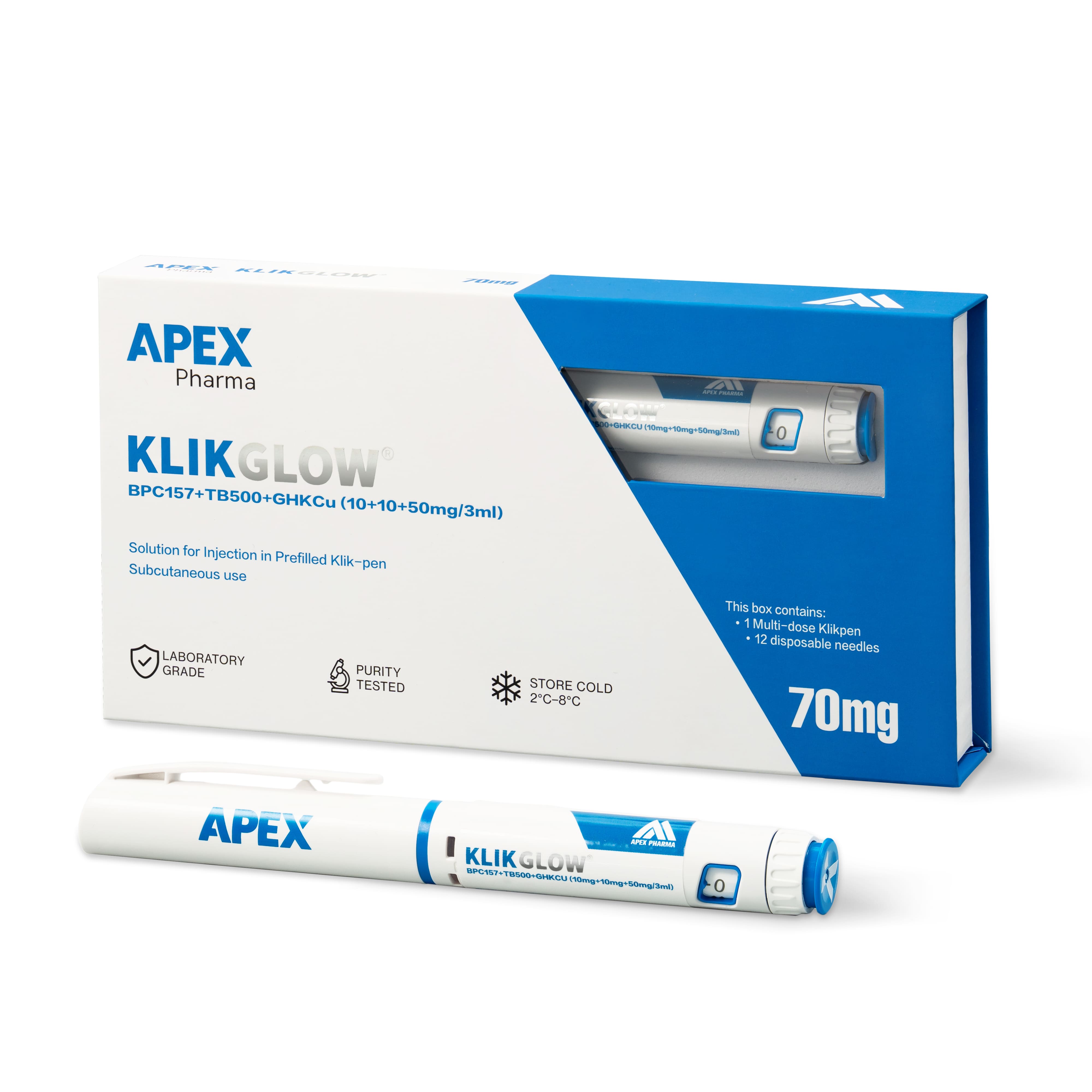
Take CLOVA's GLOW blend, which is BPC-157 10mg, TB-500 10mg and GHK-Cu 50mg in one 3ml pen, 70mg in total. Compare that with sourcing the same three names as separate listings. These are all fair, checkable points:
- Number of items on the order line: one pen versus three.
- Stated amount of each component, and the total.
- Number of labels to match against documents: one pen label versus three.
- Which documents are available for each item, bearing in mind that a report is published only where one exists.
- Whether a fixed-content pen suits your design, or whether you need the flexibility of separate items.
That last point is a genuine trade-off. A fixed pen is simple but fixed; separate items give you flexibility that the blend does not. Neither is "better" without knowing your design.
Comparisons that need other evidence
A statement that the combination performs differently from its parts needs a direct comparison: the same subject, the same setting, the same outcome measured, and the materials tested against each other. Material about one component, or about the components in a different arrangement, does not add up to that.
Equally, a batch report does not settle it. A report describes an analysed sample. It can tell you something about what that sample contained; it cannot rank one product format against another.
If someone wants to make a performance comparison for a project, that belongs with the researchers and the literature, not with the purchasing note. The buying decision can stay perfectly sound without it.
Rewriting a comparison sentence
A quick way to test a draft line is to ask whether a colleague, reading only that sentence, would know exactly what was compared. Here are some before and after examples:
- Before: "The blend is superior to the individual peptides." After: "The blend is supplied as one pen listing three components; the individual peptides are separate listings."
- Before: "Combining the three makes more sense than buying them apart." After: "A single pen means one label and one batch number to record; three single items mean three of each."
- Before: "The blend is the smarter choice." After: "The blend has fixed stated amounts; separate items allow different amounts to be ordered."
Each "after" says what the product is and how it is supplied, and none of them says how anything behaves.
A short check before the comparison goes in a record
- Does every sentence compare something stated on a listing, label or report?
- Is each source named, with the date you looked at it?
- Have you avoided words such as better, superior or optimal unless you can point to the exact basis?
- Are components kept as components, rather than described under the blend's name?
- Has a researcher, not a buyer, written anything about performance?
If you want a structured way to line the options up, the comparison tool lets you set listings next to each other, and the shop shows each component as its own item.
Frequently asked questions
Is a blend cheaper than buying the peptides separately?
That depends entirely on the current listings and the amounts you need, so work it out from the actual prices for your quantities. Compare like for like, using total stated content and the number of items, rather than a headline figure.
Does a blend need a different kind of paperwork?
The paperwork questions are the same ones: which batch, which report, and does the label match. With a blend you are checking one label against the report; with separate items, several.
Can I describe the blend as an improvement on its components in my notes?
Only if you hold evidence that actually compares them, and even then you should describe what was compared. For a purchasing note, it is safer and clearer to stick to contents, format and documents.